
hit and run · car accidents
Hit and Run Lawyer California: Who Pays Your Claim?
The driver fled, but your claim doesn't disappear with them. Here's how uninsured motorist coverage works and the deadline most people miss.
Mihran M. Ghazaryan··6 min read
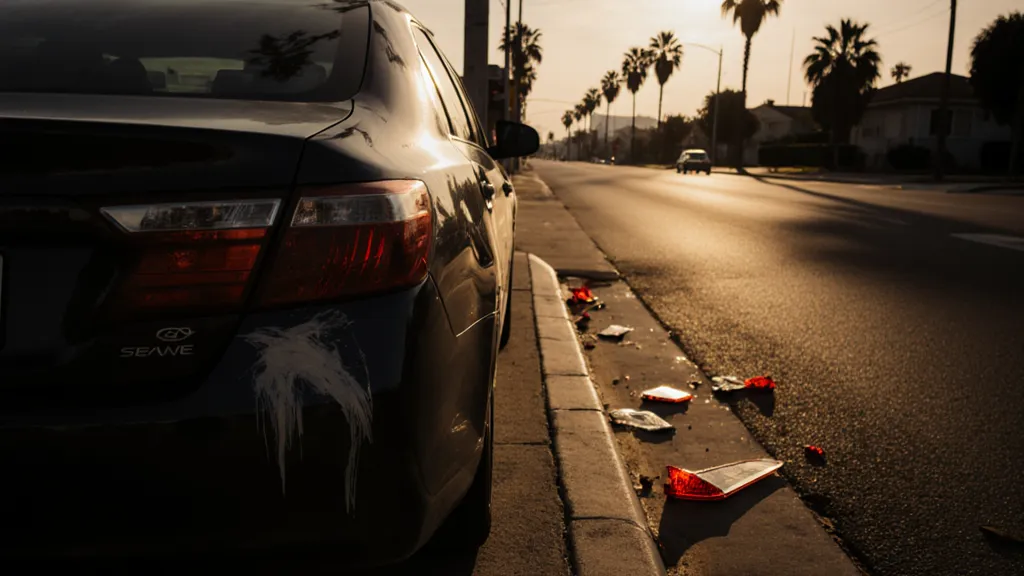
The other driver didn't stop. Maybe you got a partial plate, maybe you got nothing at all — and now you're holding an ER bill for a crash someone else caused. In California, a hit-and-run does not mean you have no claim. It means the claim gets built differently, and the clock on it is unforgiving.
What Counts as a Hit and Run Under California Law
California splits hit-and-run into two statutes, and the difference matters to the criminal case against the driver — not to your right to compensation.
- Vehicle Code § 20001 applies when the crash caused injury or death. Fleeing is a "wobbler": prosecutors can charge it as a felony or a misdemeanor depending on the harm and the driver's record.
- Vehicle Code § 20002 applies when only property was damaged — a parked car, a fence, a mailbox. Leaving without identifying yourself is a misdemeanor, even if the damage is minor.
Both statutes require a driver to stop, give their name, address, and vehicle registration, and render reasonable assistance. Whether the district attorney ever files charges is a separate question from your civil claim: you do not need a conviction — or even an identified driver — to recover.
What to Do After a Hit and Run in California
The first hour shapes everything that follows. If you are able:
- Call 911 from the scene. A police report created at the scene is the single most persuasive document in a hit-and-run file. Insurers are skeptical of unwitnessed claims, and a contemporaneous report answers that skepticism.
- Write down whatever you saw — partial plate, color, make, body damage, direction of travel, a decal, a dent. Partial plates get solved more often than people expect.
- Photograph everything before the vehicles move: paint transfer, debris field, skid marks, your injuries, the surrounding intersection.
- Canvass for cameras. Doorbell cameras, gas stations, parking structures, and transit buses overwrite footage within days. A written preservation request sent early is sometimes the whole case.
- Get medical care the same day. Adrenaline hides soft-tissue and head injuries, and a gap between the crash and the first visit becomes the insurer's main argument.
- Report the crash to your own insurer promptly. Uninsured motorist coverage carries notice requirements, and late notice is a defense carriers actually use.
Two reporting deadlines people miss
If anyone was injured or killed, the driver involved must report to the CHP or local police within 24 hours (Vehicle Code § 20008). Separately, you generally must file an SR-1 report with the California DMV within 10 days of a crash involving injury, death, or property damage above the statutory threshold. The California DMV publishes the SR-1 form; filing it protects your license and creates another record of the collision.
Who Pays When the Driver Is Never Found
This is the question that actually decides a hit-and-run claim. With no at-fault driver to sue, recovery usually runs through your own policy.
Uninsured motorist bodily injury (UM/UMBI). California Insurance Code § 11580.2 defines an "uninsured motor vehicle" to include a hit-and-run vehicle whose operator is unknown. This is the coverage that pays your medical bills, lost earnings, and pain and suffering in a hit-and-run — and it is why UM is the most important coverage most Californians own. Insurers must offer it, but you can waive it in writing, so check your declarations page rather than assuming.
The physical-contact requirement. For a UM claim based on an unidentified driver, California law requires actual physical contact between the phantom vehicle and you or your car. A driver who ran you off the road without touching your vehicle creates a genuinely difficult claim, and corroborating evidence becomes essential.
Collision coverage, not UMPD, repairs your car. California's uninsured motorist property damage coverage is capped and generally requires an identified at-fault party, which a hit-and-run by definition lacks. Vehicle damage is normally handled under your collision coverage, subject to your deductible.
Medical payments (MedPay) and health insurance can cover treatment while the UM claim is pending, though expect reimbursement or lien claims out of any eventual recovery.
A UM claim is not a friendly process. You are now making a claim against your own carrier, which has every financial incentive to value your injuries low and to argue the contact never happened. That adversarial posture surprises people more than anything else about these cases.
Deadlines: Two Clocks, Not One
| Claim | General deadline |
|---|---|
| Injury lawsuit against an identified driver | 2 years from the crash (Code Civ. Proc. § 335.1) |
| Claim against a city, county, or state entity | 6 months to file a government claim |
| Property damage lawsuit | 3 years |
| Uninsured motorist claim | Generally 2 years from the crash to file suit or formally start arbitration |
The UM deadline is the trap. It comes from your policy and Insurance Code § 11580.2, and simply reporting the claim and exchanging letters with an adjuster does not satisfy it. Negotiations that drift past the two-year mark can extinguish an otherwise strong claim. Deadlines also shift with minors, wrongful death, and government defendants — the California Courts self-help center explains the basics, but confirm your own dates with a lawyer rather than relying on a general rule.
What a Hit and Run Claim Can Be Worth
It depends on what coverage exists and how serious the injuries are. Recoverable damages include past and future medical treatment, lost wages and lost earning capacity, vehicle damage, and non-economic damages for pain, suffering, and disruption to your life.
Two realities shape the number. First, a UM claim is capped by your UM limits — if you carry limits at or near California's statutory minimums, that ceiling binds no matter how severe the injury. Second, if the driver is later identified and insured, their policy pays first and UM may fill the gap as underinsured motorist coverage. How insurers and juries actually arrive at a figure is covered in our guide to how car accident settlements are calculated. Anyone quoting a dollar figure before reviewing your policy and your medical records is guessing.
Frequently Asked Questions
Does insurance cover a hit and run in California?
Usually, yes — but through specific coverages. Injuries go through uninsured motorist bodily injury coverage; vehicle damage goes through collision coverage. Basic liability coverage pays for harm you cause others, so it does not cover your own hit-and-run losses.
Is hit and run a felony in California?
It can be. Under Vehicle Code § 20001, fleeing a crash involving injury or death can be charged as a felony or a misdemeanor. Property-damage-only hit-and-run under § 20002 is a misdemeanor. The charging decision belongs to prosecutors and is independent of your civil claim.
Will a hit-and-run claim raise my insurance rates?
California law limits surcharges for accidents where you were not at fault, and you are not at fault when someone hits you and flees. Carriers do differ in practice, so ask yours directly — but fear of a rate increase is rarely a good reason to leave a legitimate claim unfiled.
What if my car was hit while parked and nobody left a note?
That is a § 20002 hit-and-run. File a police report, photograph the damage and location, and look for nearby cameras. With no injury and no identified driver, repairs typically run through collision coverage.
Do I need a lawyer if I'm only dealing with my own insurance company?
A UM claim is litigated or arbitrated under your policy's terms, and the adjuster evaluating your injuries works for the company paying them. Handling the physical-contact proof, the medical documentation, the liens, and the two-year arbitration deadline matters more here than in an ordinary liability claim.
Talk to a California Hit and Run Lawyer
If a driver hit you and left, you likely have a claim even if that driver is never found — but the UM deadline and the evidence that proves these cases both disappear faster than people expect. MMG Law Firm offers a free, no-obligation consultation to review your policy and your options, and we handle car accident cases on contingency: no fee unless we win. We serve clients across California. Contact us to talk through what happened.
This article is general information about California law, not legal advice for your situation. Deadlines and coverage questions turn on facts specific to your case and your policy — speak with an attorney about yours.