
CALIFORNIA CAR ACCIDENTS
California Intersection and T-Bone Accident Lawyer
When accounts conflict, the evidence matters.
Understand signals, right of way, and injury evidence.

Traffic signals
What the signals showed and when.

Witness accounts
Different perspectives can matter.

Injury evidence
Medical records help tell the full story.
Who had the right of way?
The point of impact alone does not decide fault. Review what happened before the vehicles collided.

Conflicting signal accounts
Drivers may describe the same signal differently.

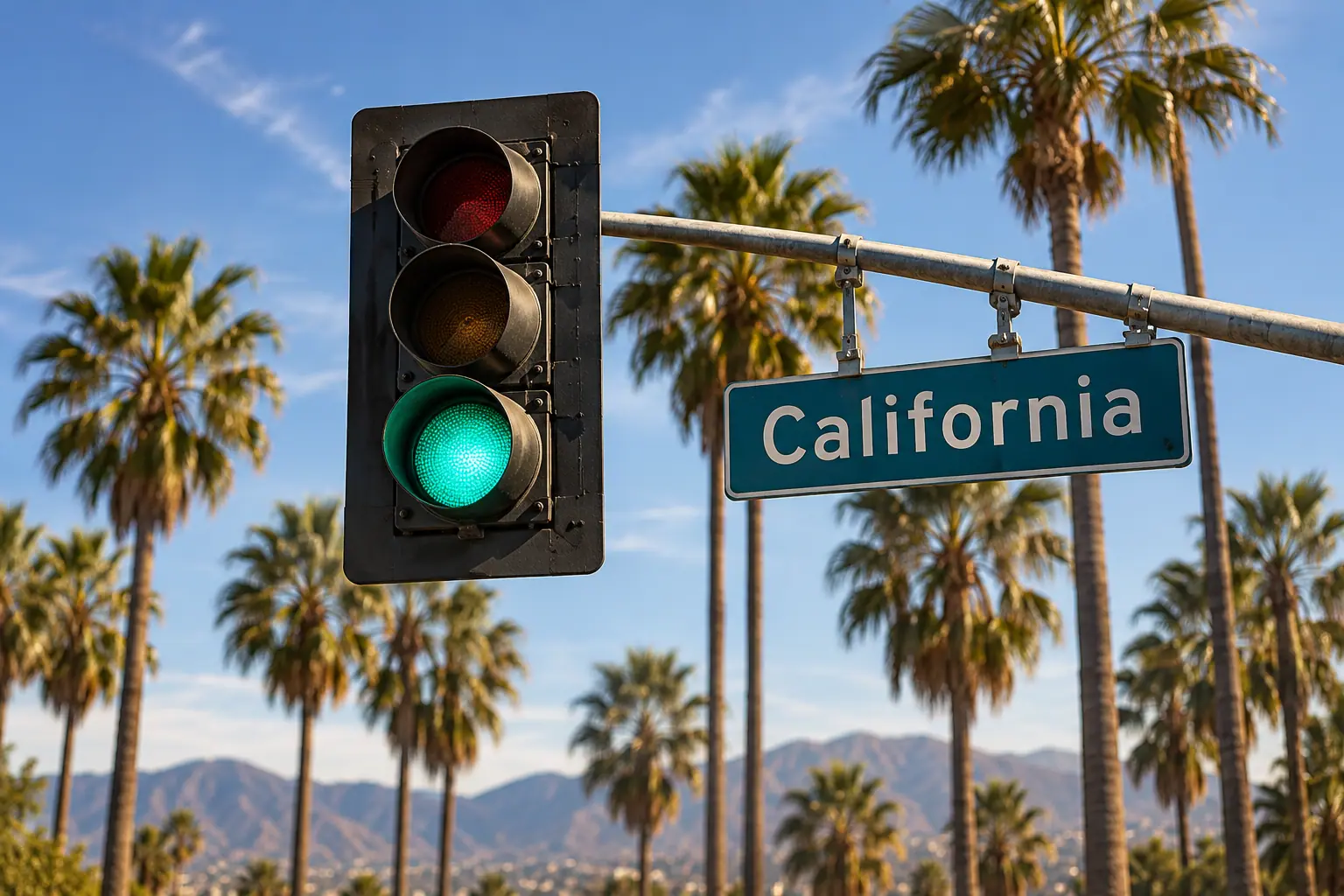
Preserve signal and video evidence
Traffic camera, business, and nearby video may show what happened.
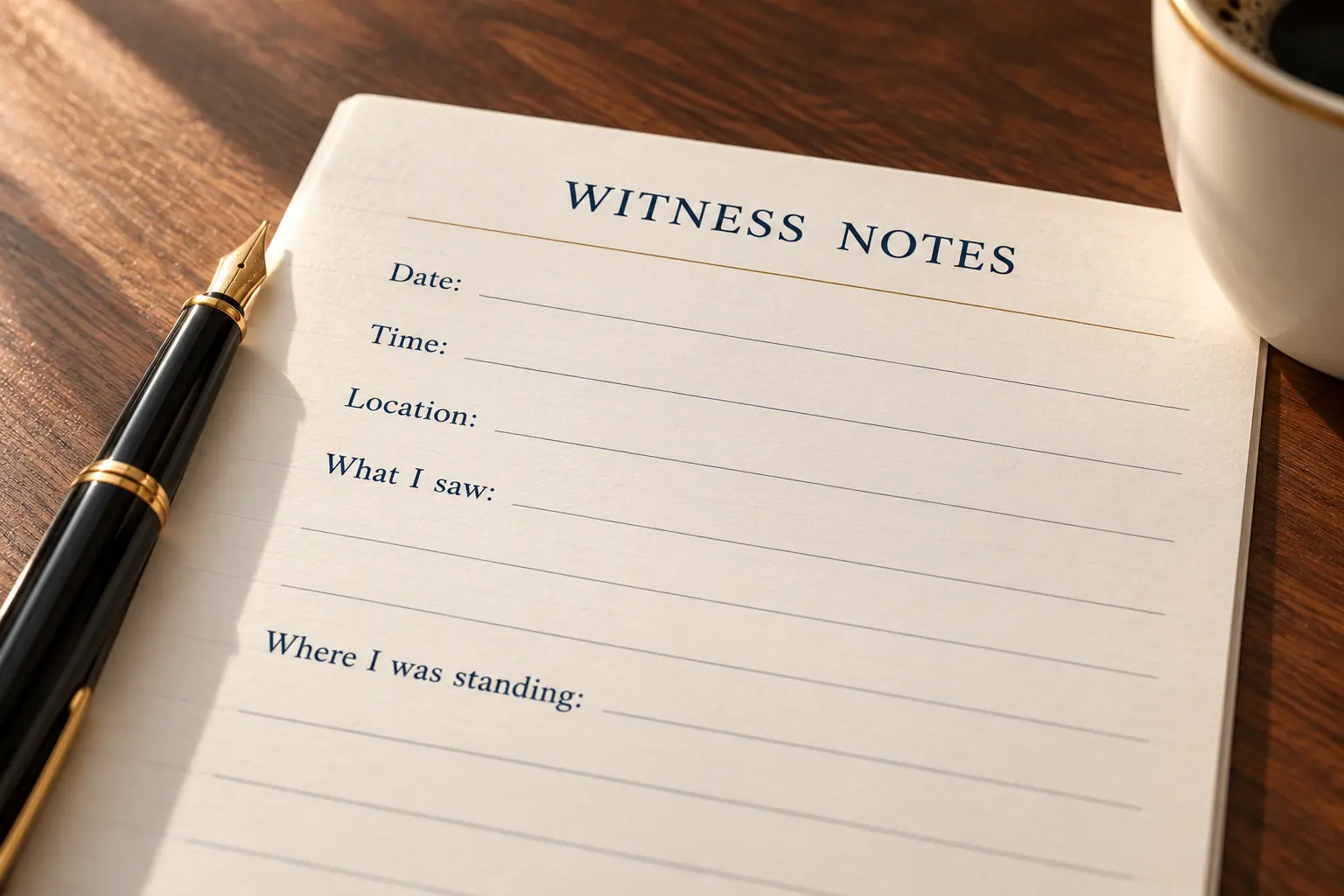
Separate observation from assumption
A clear, factual account is more persuasive than speculation.
When accounts conflict, the evidence matters
One driver says the light was green. Another says a turning vehicle crossed their path. After an intersection crash, the point of impact alone may not explain who had the right of way or whose conduct caused the collision.
MMG Law Firm helps people evaluate California accident claims from its Glendale office. A case evaluation can address disputed signals, witness accounts, injury documentation, insurance, and approaching deadlines.
Call (818) 539-7969 or request a free case evaluation. You can contact MMG before every document is ready. No recovery, no attorney fees or case expenses owed to MMG. Medical bills and other third-party obligations are separate.
What is a T-bone accident?
A T-bone collision generally describes the front of one vehicle striking the side of another. It can happen when a driver crosses an intersection, turns across traffic, or enters a roadway. Not every intersection crash is a T-bone collision, and not every side impact happens at an intersection.
Being in the struck vehicle does not automatically establish that you were fault-free. Being in the striking vehicle does not automatically establish that you caused the crash. The investigation must consider each driver’s conduct before impact, the traffic controls, and the available evidence.
First steps after an intersection collision
Prioritize safety and medical care. Call 911 for an emergency and follow responders’ directions. Do not walk into an active intersection to take photographs or search for evidence.
- Exchange driver, vehicle, and insurance information when safe.
- Record the intersection, travel directions, lanes, approximate time, and responding agency’s report number.
- Photograph damage, road markings, signs, and the broader scene only from a safe position.
- Obtain witness names and contact details without coaching their accounts.
- Preserve original dashcam video, including footage before and after the impact.
- Keep medical records, repair estimates, receipts, and insurer correspondence.
A photograph taken afterward can show the layout, but it does not necessarily show the signal phase at the time of the crash. Make that distinction clear in your notes.
California DMV requires a separate SR-1 report within 10 days when someone is injured or killed, or property damage exceeds $1,000. A police report does not replace it. Review DMV accident-reporting instructions and what to do after a California accident.
Traffic signals and right of way
Red lights, arrows, and permitted turns
The signal governing the driver’s lane and movement matters. A circular green light, a protected turn arrow, and a red arrow are not interchangeable. A permitted right turn on a circular red light generally requires a complete stop and yielding, and may be prohibited by posted signs. A red arrow prohibits the indicated movement. See the California DMV guide to navigating the roads.
Left turns across traffic
California Vehicle Code section 21801 requires a left-turning driver to yield to opposing vehicles close enough to present a hazard during the turn. The statute also addresses the duties of approaching drivers after the turning driver has properly yielded and signaled. A wave from one motorist does not establish that every other lane is clear. See section 21801 and CACI 704, the Judicial Council’s left-turn instruction.
Having priority still requires reasonable care
Right of way does not eliminate a driver’s duty to exercise reasonable care in the face of an apparent hazard. An investigation may need to address speed, visibility, attention, and the opportunity to avoid impact as well as signal color. Read CACI 701 on right of way.
Stop-controlled intersections, uncontrolled intersections, flashing signals, and signal outages require their own rule analysis. Do not assume that a rule for one setting decides another.
How can you prove who had the green light?
Conflicting statements are a reason to investigate, not to assume the case is unwinnable. Potential evidence includes original dashcam footage, nearby business or residential recordings, independent witnesses, and records from the agency responsible for the signals.
Ask promptly whether relevant footage exists and can be preserved. Some cameras only detect vehicles or provide a live view; they do not necessarily record. Availability, retention periods, access requirements, and usefulness vary.
Signal timing plans may explain how an intersection was intended to operate. They do not always establish exactly which indication was displayed at the collision time. Event logs, maintenance records, accurate timing, and qualified interpretation may be needed. A camera timestamp may also differ from the actual time.
Physical evidence can help test competing accounts: damage locations, final positions, roadway marks, and recorded vehicle information where available. That evidence must be interpreted in context rather than treated as a shortcut to fault.
What makes a witness account useful?
A helpful account separates what the witness actually saw from what they inferred after hearing an impact. Preserve contact information and tell counsel whether the witness was driving, walking, or looking from a nearby building.
Useful questions include which direction the witness faced, whether anything blocked their view, which signal they observed, and whether they saw the vehicles before impact. A statement that “the light was green” needs context: whose light, for which lane, and at what moment?
Do not suggest answers, edit original recordings, or pressure a witness to agree with your account. Preserve the collision report too; it may identify witnesses and observations even when its conclusions are disputed.
Side-impact injuries and medical evidence
The effect of a side impact depends on the actual collision and the person involved. Document where you were seated, the area of impact, restraint use, airbag deployment, and any intrusion into the occupant space, without guessing about what caused a particular diagnosis.
Seek appropriate medical evaluation and accurately explain symptoms, their timing, and relevant prior conditions. Medical records should guide discussion of head, neck, spinal, chest, or other injuries. Crash photographs and vehicle type cannot diagnose an injury or establish a person’s prognosis.
After a possible head injury, worsening headache, repeated vomiting, seizures, weakness, or difficulty waking require emergency attention. Call 911 or seek emergency care. Review the CDC’s concussion symptoms and danger signs.
For lasting injuries, records of treatment recommendations, work restrictions, assistance needs, and day-to-day limitations can help document losses. Read about traumatic brain injury after an accident, spinal cord injury and paralysis, and medical bills and treatment costs.

Historical research. Individual circumstances.
The linked study uses 1999–2001 fatal-crash data. It does not predict your outcome or establish fault.
What the side-impact study tells us
The study you can read below examined paired passenger-car–SUV side impacts using 1999–2001 FARS data. It reported greater driver mortality odds for passenger cars in those selected crashes, with an overall matched odds ratio of 10.0 and a 95% confidence interval of 7.9–12.5.
That is not a current prediction that every passenger-car driver is ten times more likely to die in a side impact. FARS concerns fatal crashes, the vehicle fleet was historical, and an odds ratio is not an individual’s probability of death. In the authors’ analysis, adding vehicle weight explained nearly all of the car–SUV mortality difference.
The research provides context for investigating vehicle compatibility and crash circumstances. It does not establish fault, a particular injury, a vehicle defect, or compensation in your case. Read Driver Mortality in Paired Side Impact Collisions Due to Incompatible Vehicle Types and NHTSA’s explanation of FARS.
What if both drivers contributed?
California comparative-fault rules can reduce recoverable damages according to an injured person’s share of responsibility. A disputed turn and another driver’s unsafe speed may both require examination. A proposed percentage should be supported by evidence, not simply assigned because your vehicle struck the other car.
Read CACI 405 on comparative fault and our partial-fault guide. Passengers may have claims involving one or more responsible drivers; each person’s position should be evaluated separately.
Compensation, coverage, and settlement decisions
Depending on proof and applicable law, a claim may include medical expenses, future care, lost earnings, reduced earning capacity, pain and suffering, and property losses. These categories are not automatic awards. Fault disputes, available insurance, and other recovery sources affect the practical evaluation.
The gross settlement amount also differs from what remains after attorney fees, case expenses, and valid repayment obligations. Explore compensation available after an accident and uninsured and underinsured motorist claims.
Before accepting an offer, consider unresolved medical needs and the rights a release would end. A property-damage discussion and an injury settlement are not necessarily the same agreement. Review the actual wording and see insurance settlement offers and releases.
Deadlines and your next step with MMG
California injury lawsuits generally have a two-year filing period, but exceptions and shorter requirements can apply. A potential government claim—for example, one involving a public entity’s alleged responsibility—often requires an administrative claim within six months. A signal issue does not by itself prove public-entity liability. Prompt review matters. See the California Courts personal-injury guide and accident claim deadlines.
An MMG evaluation can address preservation requests, disputed traffic movements, medical and financial records, insurance, and whether specialist investigation is warranted. If representation is agreed upon, the scope of work and fees will be set out in the agreement. No result is guaranteed.
MMG advances case expenses without upfront payment. Contingency rates vary by case stage. No recovery means no attorney fees or case expenses owed to MMG; medical bills and other third-party obligations are separate. Read attorney fees and case costs.
Preserve the competing accounts and investigate independent evidence. Relevant video may not exist, but witness observations, signal records, and physical evidence may still help. No single source should be promised before it is located and evaluated.
A ticket is not the same as a final determination of civil liability or damages. Its significance depends on the proceedings, evidence, and applicable rules. Bring the citation and related paperwork to the evaluation.
Possibly. The duty to yield is important, but the complete sequence and the other driver’s conduct still matter. Do not assume that turning left automatically defeats a claim or that a green signal automatically proves it.
No. Bring what you have: the accident date and location, photos, witness details, insurance letters, and available treatment information. Do not put sensitive medical or financial details into a general website message; ask how to provide them securely.
Talk through what happened
Call (818) 539-7969 or request a free case evaluation. Phone and video consultations are available. Visits to 100 W Broadway, Suite 540, Glendale, are by appointment.
Contacting MMG does not by itself establish an attorney-client relationship or extend a deadline. This page provides general California legal information, not individual legal or medical advice.
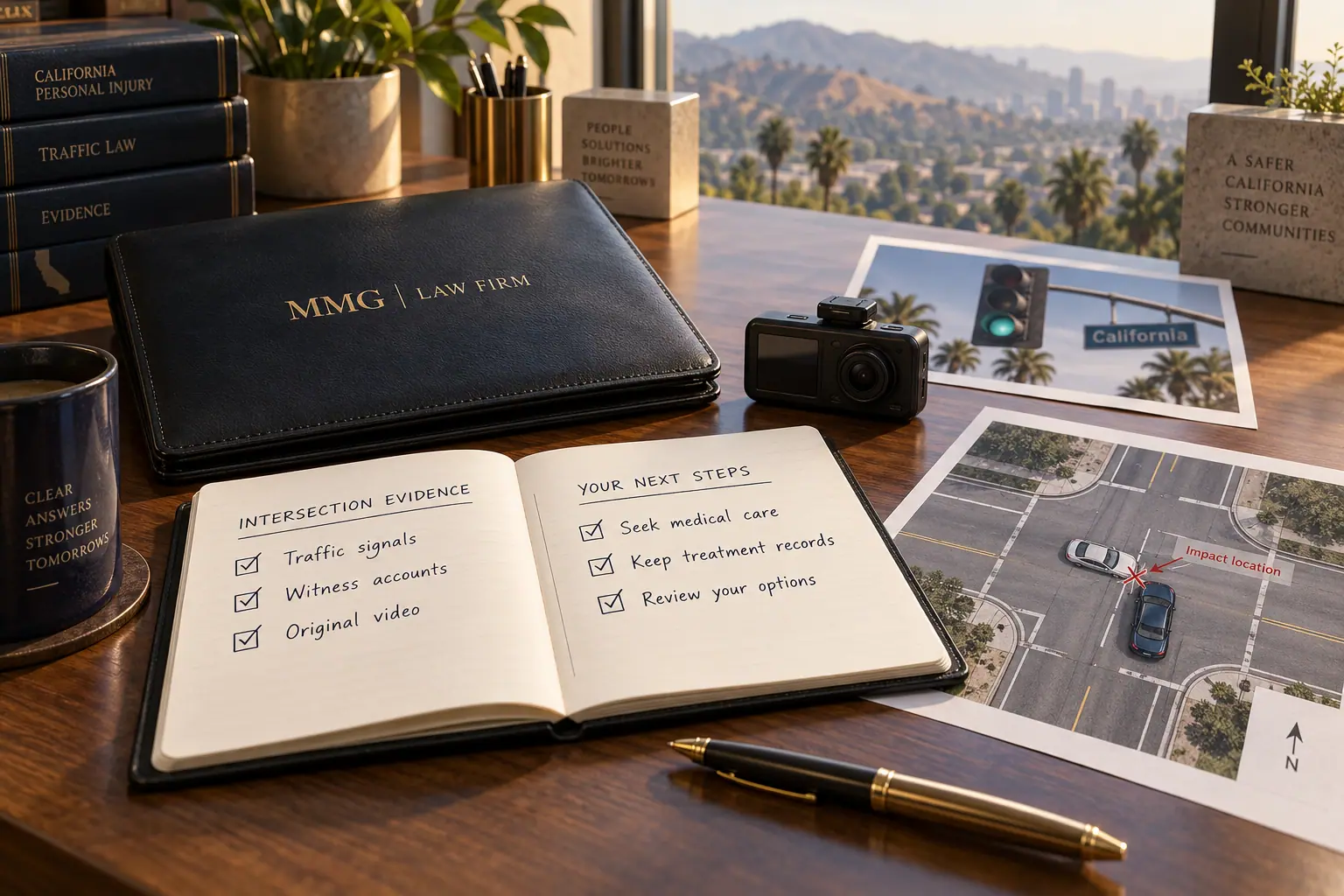
INTERSECTION EVIDENCE
Clarify what happened.
Preserve facts before records disappear.
Traffic signals
Note the lane, movement, and time.

Original video
Ask promptly whether recordings exist.
Witness accounts
Record what each person actually saw.
Scene and vehicle records
Keep original photos and repair records.

A camera may not record.
A later signal photo does not prove the earlier phase.
RESEARCH DETAILS
Research in context.

Historical data
Passenger-car and SUV side impacts in 1999–2001 fatal-crash data.
What the study examined
Driver mortality within paired crashes.

What it cannot establish
Your injury, legal fault, or case value.
The reported odds ratio is not an individual probability of death.
