
Hit and Run · Car Accidents
Hit and Run Accident Lawyer in California
The driver who hit you took off — here is how California law, your own insurance, and a fast investigation can still get your losses paid.
Mihran M. Ghazaryan··7 min read
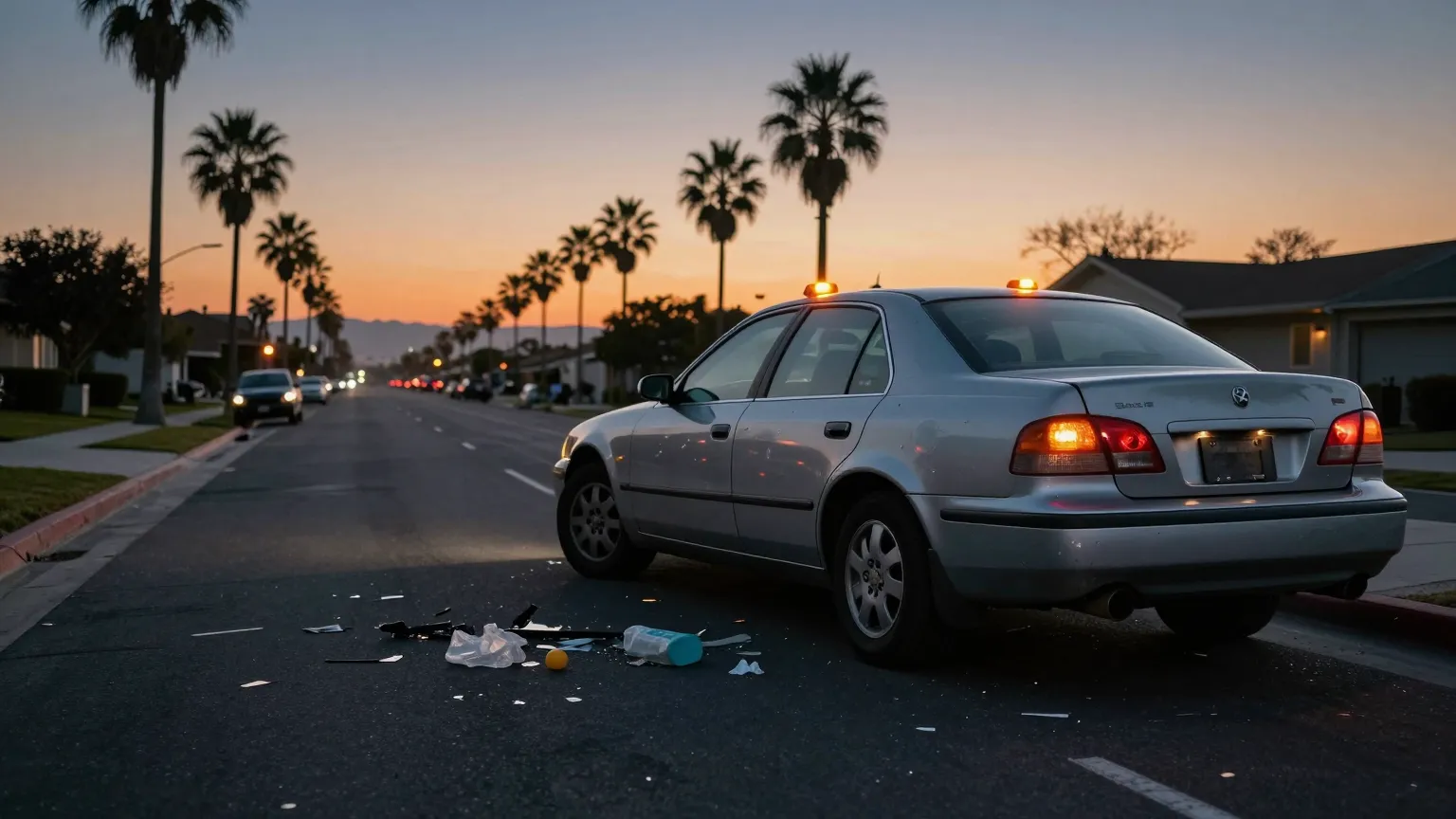
The other driver hit you, paused for a second, and then drove off. Now you are standing on the shoulder with a wrecked car, a sore neck, and no license plate — and no idea who is supposed to pay for any of it.
That situation is more common in California than most people realize, and it is not the dead end it feels like. A hit and run accident lawyer in California can pursue the fleeing driver if they are identified, and can also build a claim through your own insurance if they never are. Here is how these cases actually work.
What Counts as a Hit and Run in California
California law does not require a dramatic high-speed escape. Under Vehicle Code section 20002, any driver involved in a crash that causes property damage must stop, provide their name, address, and vehicle registration, and leave a note if the owner is not present. Leaving without doing that is a misdemeanor.
Vehicle Code section 20001 covers crashes involving injury or death. Fleeing one of those is a "wobbler" — prosecutors can charge it as a misdemeanor or a felony, with substantially higher penalties when someone is seriously hurt or killed. You can read the statutes directly at California Legislative Information.
One point people miss: the criminal case is not your case. Even if the district attorney prosecutes the driver, that proceeding does not compensate you. Your recovery comes from a separate civil claim — though a conviction and any restitution order can help it.
What to Do After a Hit and Run
The first hours matter more here than in an ordinary collision, because the evidence that identifies the driver disappears fast.
- Call 911 and get a police report. This is not optional if you plan to make an insurance claim — most California policies require a hit-and-run report to law enforcement within 24 hours.
- Write down everything you remember immediately. Partial plate, color, make, body style, direction of travel, any damage to their vehicle, anything about the driver. Memory degrades within hours.
- Look for cameras. Doorbell cameras, business security systems, parking structures, and traffic cameras overwrite footage on a cycle that can be as short as 72 hours. Someone needs to request it now.
- Get witness contact information before people leave, and photograph your vehicle, the roadway, debris, and any paint transfer — paint and part fragments can identify a vehicle's make and model.
- See a doctor the same day or the next. Adrenaline hides injuries, and a gap in treatment is the first thing an adjuster will use against you.
- Report to your own insurer promptly — and file a DMV form SR-1 within 10 days if anyone was injured or property damage exceeded $1,000. The California DMV publishes the form and instructions.
Who Pays When the Driver Is Never Found
This is the question that brings most people to a lawyer, and the answer usually lives inside your own auto policy.
Uninsured Motorist Bodily Injury (UM/UMBI)
California insurers must offer uninsured motorist coverage, and it treats an unidentified hit-and-run driver as an uninsured driver. For a hit-and-run UM claim, Insurance Code section 11580.2 imposes requirements that trip people up constantly:
- There generally must have been actual physical contact between the fleeing vehicle and you or your car. A phantom driver who ran you off the road without touching you is a much harder claim.
- The accident must be reported to police or the CHP within 24 hours.
- You must file a statement under oath with your insurer within 30 days.
Miss those and a valid injury claim can be denied on procedure alone. If you already have a UM claim in motion, our guide to uninsured motorist claims in California walks through the process in more detail.
Collision Coverage and MedPay
Your vehicle damage is usually handled by collision coverage in a hit-and-run, because California's uninsured motorist property damage coverage generally requires the at-fault driver to be identified. Medical payments (MedPay) coverage pays medical bills regardless of fault and is often the fastest money available in the early weeks.
The Driver Is Identified
Police solve more hit-and-run cases than people expect, especially with camera footage and paint evidence. When the driver is found and insured, the claim becomes a standard liability case — and the flight itself tends to make insurers and juries far less sympathetic to the defense. How the numbers get built from there is covered in how car accident settlements work in California.
Deadlines You Cannot Miss
California deadlines are strict and courts rarely forgive a late filing:
- Personal injury: generally 2 years from the date of the crash (Code of Civil Procedure § 335.1).
- Property damage: generally 3 years.
- Claims against a government entity — a city bus, a public works truck, a dangerous road condition — generally 6 months to file an administrative claim.
- Uninsured motorist claims: under Insurance Code § 11580.2, you generally must sue the uninsured driver, agree in writing to arbitration, or formally demand arbitration within 2 years of the accident. Your policy may impose shorter notice requirements on top of that.
Deadlines shift based on the specific facts — who was involved, whether the injured person is a minor, when an injury was discovered. Verify your own dates with an attorney rather than assuming. The California Courts Self-Help Center has general background on civil filing timelines.
What a Hit and Run Claim May Be Worth
No honest lawyer will quote a number before reviewing the file. Value is driven by the severity and permanence of your injuries, medical expenses past and projected, lost income and reduced earning capacity, property damage, and pain and suffering.
One factor is specific to hit-and-run claims: if you are recovering through your own UM coverage, your policy limits are a hard ceiling — a $250,000 injury against a $50,000 UM limit recovers $50,000 from that source. That is why identifying the driver, and finding every applicable policy, matters so much.
How a Lawyer Actually Helps
The practical work is investigative and adversarial: canvassing for surveillance footage before it is erased, working with law enforcement and accident reconstruction, tracing the vehicle through body-shop and parts records, and stacking every available coverage layer. Then there is the awkward reality of a UM claim — you are negotiating against your own insurance company, which is now financially adverse to you despite years of premiums. Having someone else handle that conversation is often the whole point. Learn more about our California car accident practice.
Frequently Asked Questions
Is a hit and run a felony in California?
It depends on the harm. A property-damage-only hit and run under Vehicle Code § 20002 is a misdemeanor. A hit and run involving injury or death under § 20001 is a wobbler that prosecutors may charge as either a misdemeanor or a felony, with the most serious penalties reserved for cases involving death or permanent, serious injury.
Does uninsured motorist coverage pay for a hit and run?
Usually yes, if you carry it. California treats an unidentified hit-and-run driver as uninsured. But the statute generally requires physical contact between the vehicles, a police report within 24 hours, and a sworn statement to your insurer within 30 days.
Will filing a hit-and-run claim raise my insurance rates?
California regulations limit surcharges for accidents where the insured was not at fault, and you are not at fault when someone hits you and flees. Rate practices still vary by carrier, so ask your insurer directly — but fear of a surcharge is rarely a good reason to leave a legitimate injury claim unfiled.
What if I have no idea who hit me and there were no witnesses?
You may still have a claim. Physical evidence — paint transfer, broken trim, debris — can identify a vehicle, and nearby cameras frequently capture what people did not. Even if the driver is never identified, your UM, MedPay, and collision coverages can still respond.
How long do I have to file a hit and run lawsuit in California?
Generally two years from the date of the crash for personal injury, three years for property damage, and only six months to file a claim if a government entity is involved. UM claims carry their own two-year arbitration deadline. Because exceptions exist, confirm your specific deadline early.
Talk to a California Hit and Run Attorney
If you were hit by a driver who took off, the evidence that identifies them is disappearing while you read this. MMG Law Firm offers a free, no-obligation consultation to review your options, and injury cases are handled on a contingency fee — no fee unless we win. We serve clients across California. Contact us to talk through what happened and what coverage may be available to you.