
CALIFORNIA TRUCK ACCIDENT CLAIMS
Trucking Company Liability in California
Look beyond the driver. Follow the evidence.
Who assigned the trip, maintained the truck, and made the safety decisions?
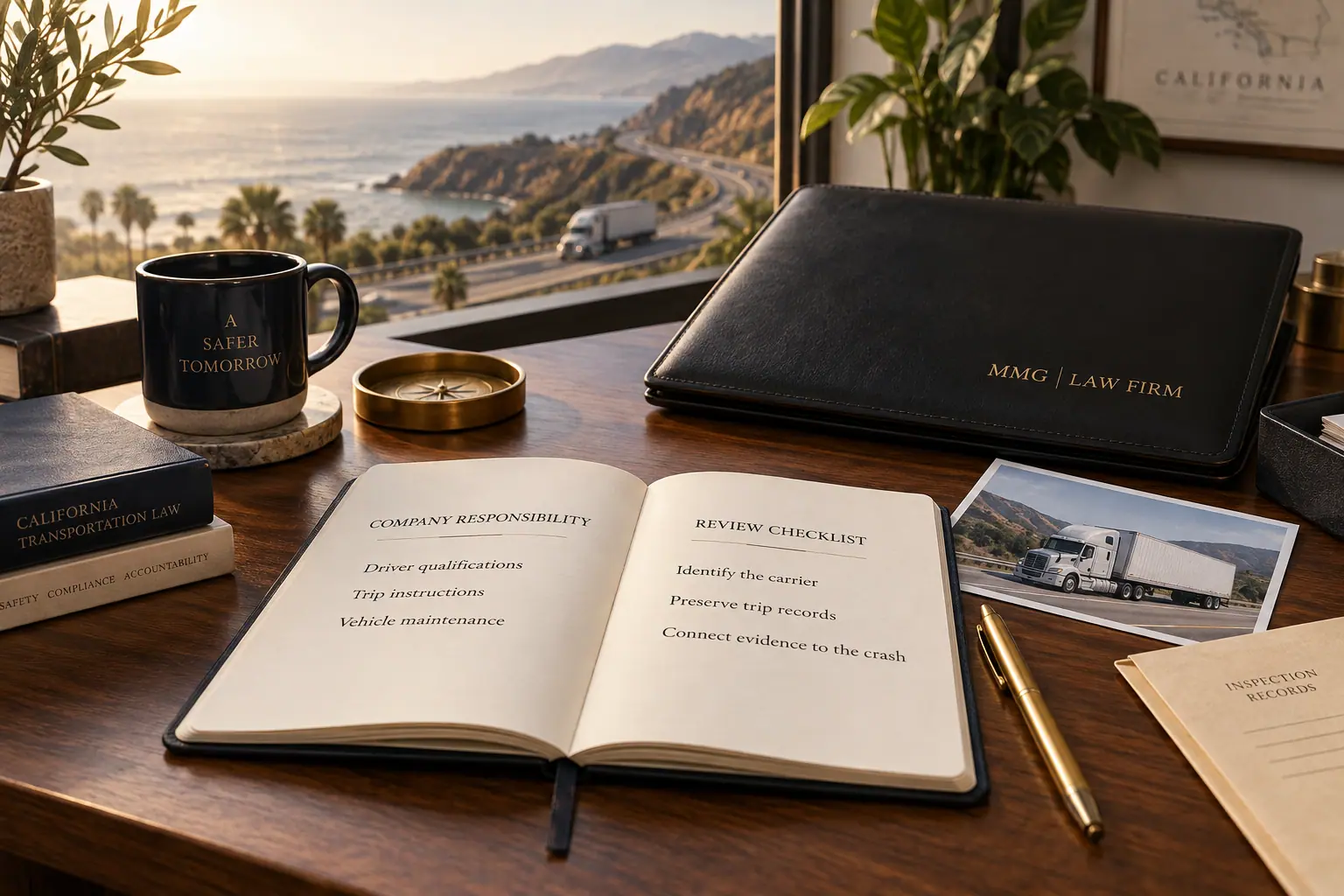
Two paths to company responsibility

Company involvement alone does not establish liability.
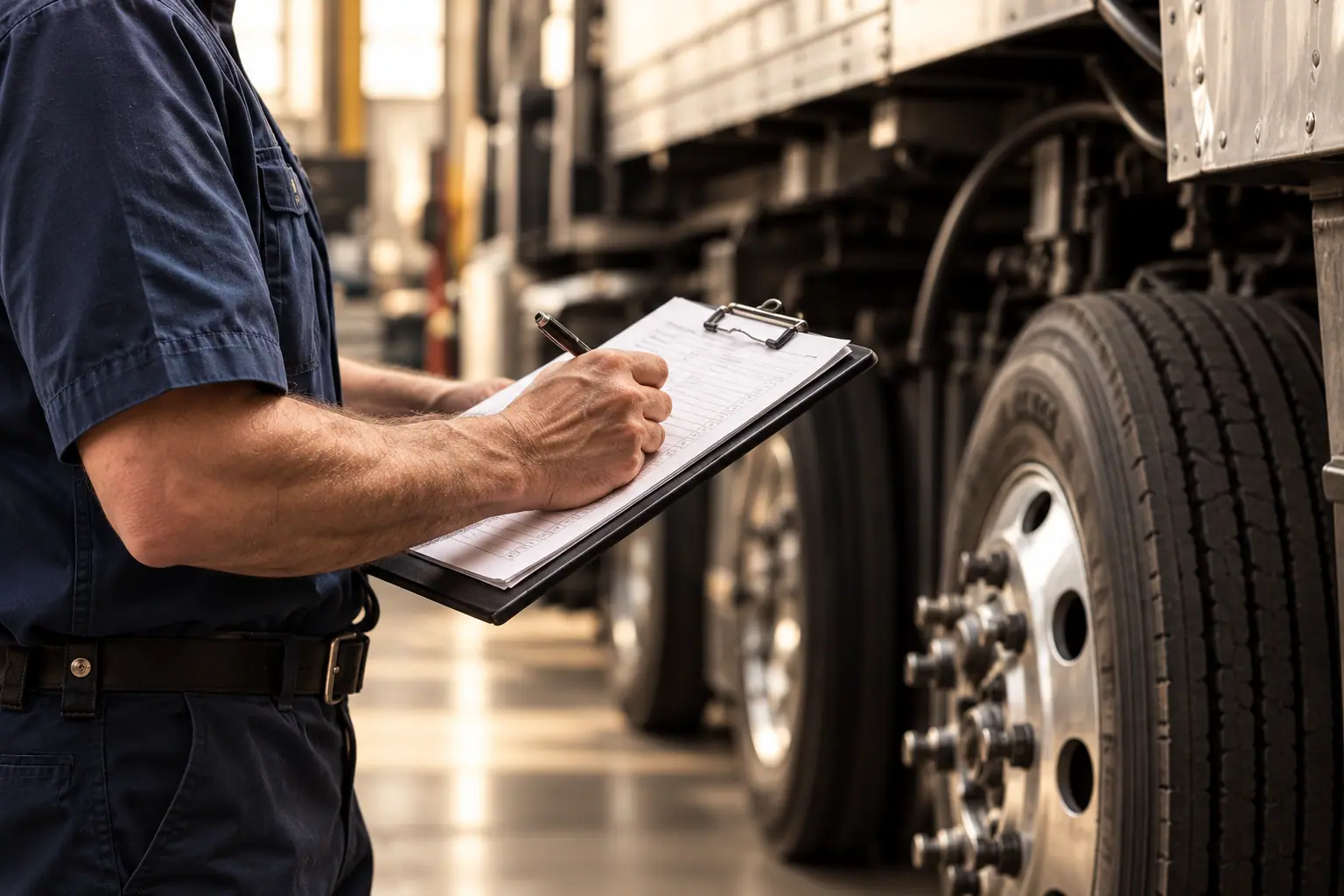
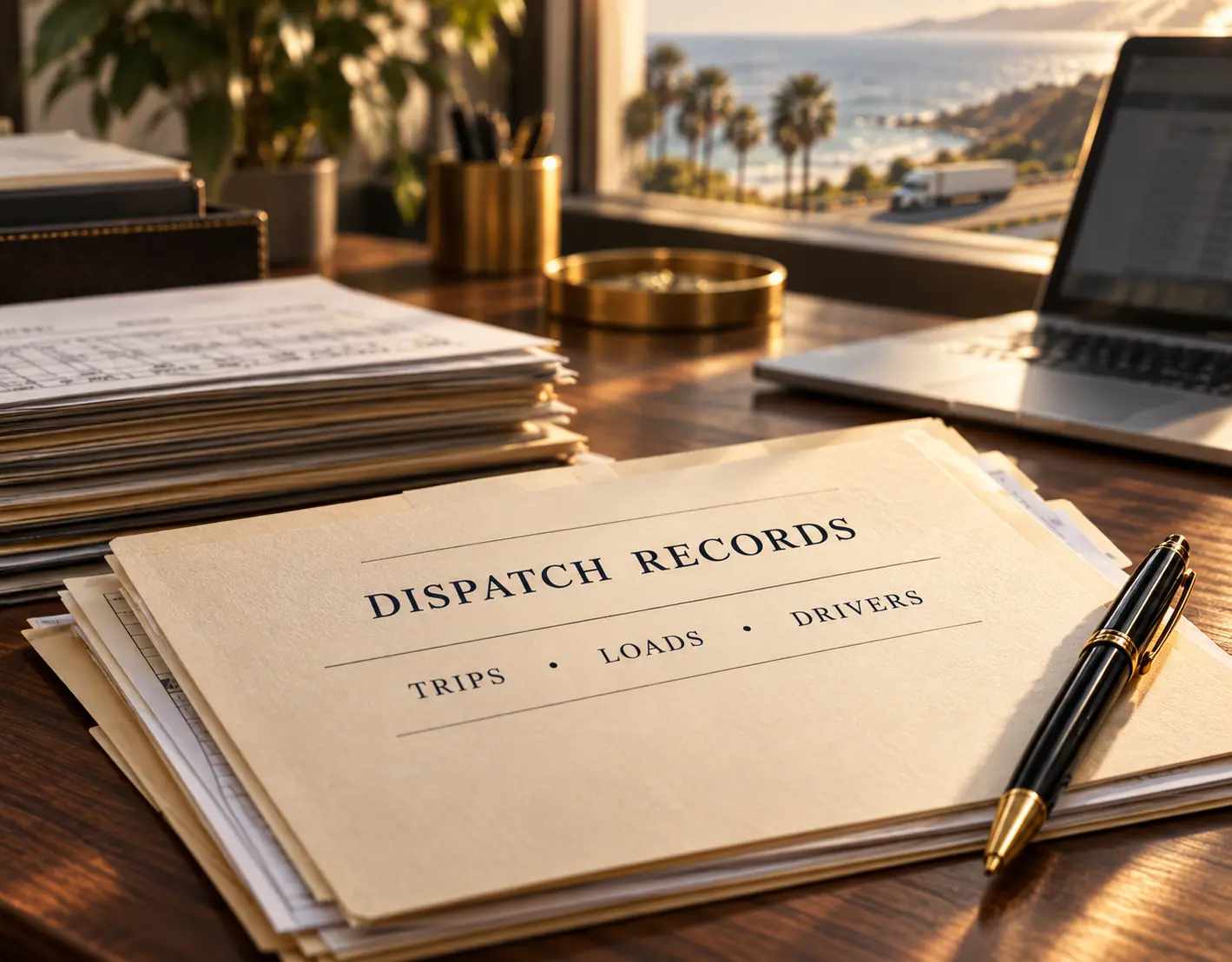
Responsibility may extend beyond the driver
After a serious truck crash, the driver’s actions are only part of the picture. Who assigned the trip? Who maintained the truck? Was the driver qualified for the work? Those questions may reveal responsibility beyond the person behind the wheel.
A trucking company may be responsible for a driver’s negligence within the scope of employment, or for its own negligent decisions that helped cause the collision. Other businesses may also need to be investigated. Company involvement alone does not establish liability: the legal relationship, applicable duties, and connection to your injuries matter.
MMG Law Firm offers free case evaluations for people injured in California accidents. Call (818) 539-7969 to discuss the crash, the companies involved, and records that may need to be preserved. You can call before you have every document.
Two ways a trucking company may be responsible
Responsibility for a driver’s work-related negligence
An employer can be legally responsible for harm caused by an employee’s negligence while acting within the scope of employment. This is often called vicarious liability. A separate company safety violation is not necessarily required for this route to liability.
The investigation may examine who employed or controlled the driver, the assigned work, and what the driver was doing when the crash occurred. A delivery assignment, dispatch messages, and trip records may help establish that relationship. Whether a particular detour or activity was within the scope of employment depends on the facts. California civil jury instruction 3701 explains the employer or principal liability framework.
Responsibility for the company’s own negligence
A separate question is whether the company’s own conduct contributed to the harm. For example, did it retain a driver despite known safety problems, ignore a repair issue, or impose an unsafe schedule?
Negligent hiring, supervision, or retention requires more than showing that an employee caused a crash. Relevant issues include whether the employer knew or should have known of unfitness or incompetence that created a particular risk, and whether its negligence was a substantial factor in causing harm. California civil jury instruction 426 describes these elements.
These are distinct legal theories. Which claims should be pursued depends on the evidence and the company’s position in the case.
Company decisions that may deserve investigation
Driver qualifications and safety concerns
Applications, driving-history reviews, qualification records, training materials, and earlier safety complaints may help show what the company knew and when. A prior incident is not automatically proof of negligence in your crash; its relevance and admissibility require review.
For covered operations, federal rules prohibit a carrier from requiring or permitting an unqualified person to drive a commercial motor vehicle. Qualifications address matters including licensing, experience or training, and physical qualification, subject to applicable exceptions. Read 49 CFR 391.11 through Cornell Law School.
Dispatch instructions and delivery schedules
Dispatch messages, appointment times, route assignments, and duty records can help test whether the schedule and instructions supported safe operation. A demanding deadline does not, by itself, prove that it caused a crash.
Federal rules prohibit carriers from scheduling or requiring a run in a time that would necessitate unlawful speeds. 49 CFR 392.6 addresses delivery schedules and speed limits. Another rule places responsibility on carriers to require observance of covered driver duties and prohibitions. See 49 CFR 390.11.
Inspection, maintenance, and repairs
Brake, tire, steering, or other equipment issues may require inspection of the vehicle and review of maintenance records. Useful questions include whether a defect existed before the crash, who knew about it, who was responsible for repairs, and whether it contributed to the collision.
Federal regulations require covered carriers to systematically inspect, repair, and maintain vehicles subject to their control. 49 CFR 396.3 explains the maintenance duty and associated records. Outsourcing a repair does not eliminate the need to examine the carrier’s own duties as well as the repair provider’s conduct.
Federal requirements vary by operation and exemptions. California requirements may also apply. A violation is an issue to analyze—not an automatic finding that the company caused your injuries.
What if the driver is an independent contractor?
An independent-contractor label does not end the investigation. The driver agreement, equipment lease, operating authority, actual working relationship, and circumstances of the trip may all matter. The tractor owner, trailer owner, and motor carrier can be different businesses.
For covered leases, federal regulations require provisions giving the authorized carrier possession, control, and responsibility for the equipment during the lease. The same regulation expressly says those provisions do not determine whether the lessor or driver is an employee or independent contractor. Read the distinction in 49 CFR 376.12(c).
Do not assume the company is protected because the driver received a particular tax form. Equally, do not assume a company name or USDOT number on the truck resolves every liability question.
Who else may share responsibility?
Owners, repair providers, and other businesses require a fact-specific review.
Explore potential partiesWhich other businesses may need review?
- Truck or trailer owner: ownership, leasing arrangements, maintenance responsibilities, and applicable legal duties may matter.
- Repair or inspection provider: work orders and physical evidence may help determine whether negligent work contributed to a failure.
- Shipper or loading company: loading records and cargo evidence may be relevant when the load’s placement or securement played a role.
- Manufacturer or component supplier: a suspected product defect requires its own technical and legal analysis.
- Broker or other transportation intermediary: contractual labels and actual conduct need review; federal law can limit some claims.
These are investigation possibilities, not a list of businesses automatically responsible for every crash. Each proposed claim needs a supported legal basis and a connection to the harm.
Evidence that connects the company to the crash
An effective investigation connects records to specific questions:
- Who was operating the trip? Dispatch instructions, shipping documents, employment agreements, and equipment leases may identify roles.
- Was the driver qualified and supervised? Qualification files, training records, and relevant safety communications may provide context.
- Was the vehicle properly maintained? Inspection reports, defect notices, repair invoices, and an appropriate vehicle examination may help.
- What happened before impact? Available video, witness accounts, trip records, and vehicle data may help establish the sequence.
- How did the crash affect you? Medical records, work information, and documentation of daily limitations help connect injuries and losses to the event.
Different systems preserve different information. Electronic driving logs are not interchangeable with vehicle crash data, and no device should be assumed to contain every answer.
Preservation requests should identify relevant records and equipment promptly. A request to preserve evidence does not itself compel production or give access to a company’s systems. Lawyers may need appropriate discovery procedures to obtain records. California Courts explains requests for documents and other evidence.
For a practical guide to logs, video, inspection records, and preservation requests, see Truck Accident Evidence Preservation.
What you can do now
- Get appropriate medical attention and keep your treatment records.
- Save photographs already taken of company names, identifying numbers, license plates, and vehicle damage.
- Keep the crash report number, witness details, insurer letters, and original video files.
- Write down what you personally remember, separating observations from guesses.
- Seek advice before signing a release or authorizing disposal of potentially relevant evidence.
Do not enter a truck yard, access another person’s account, or approach an unsafe vehicle to gather evidence. You do not need to investigate the company yourself before seeking help.
Multiple companies do not guarantee a larger recovery
Identifying a responsible business can affect available claims and insurance, but a company’s size does not establish the value of a case. Recovery depends on proven liability, injuries and losses, applicable coverage, available assets, and other case-specific issues. Overlapping policies do not necessarily provide separate recoveries for the same loss.
Medical expenses, lost earnings, future care, and the effects on everyday life may require careful documentation. Learn more in Compensation Available After an Accident and Partial Fault in a California Accident.
Potentially. The appropriate parties depend on the employment or agency relationship, the company’s own conduct, and the evidence. Naming multiple defendants does not mean every defendant will be found liable.
A crash report may not address hiring practices, dispatch decisions, or maintenance history. It can be an important starting point, but the company-liability investigation may require records beyond the report.
No. Bring what you have: photographs, report details, an insurer’s letter, or the name displayed on the vehicle. The displayed brand may differ from the legal business operating the trip.
Prompt review helps address preservation and identify filing deadlines. Evidence can disappear before a lawsuit deadline arrives. Government involvement and other circumstances can create different requirements. See California Accident Claim Deadlines for an overview; your specific deadline needs individual review.
The case evaluation is free. MMG advances case expenses, and contingency rates vary by case stage as explained in the written agreement. No recovery means no attorney fees or case expenses owed to MMG. Medical bills, liens, and other third-party obligations are separate. Read Attorney Fees and Case Costs.
Talk with MMG about the companies involved
You do not have to know who is legally responsible before contacting the firm.
CALIFORNIA
SAFER ROADS
STRONGER COMMUNITIES
You do not have to know who is legally responsible before contacting the firm. Start with where the crash happened, what you know about the truck, and how you were injured. A consultation can address possible claims, preservation needs, fees, and next steps.
Call (818) 539-7969 or request a free case evaluation. Phone and video consultations are available. Visits to MMG’s Glendale office at 100 W Broadway, Suite 540, are by appointment.
Explore Truck Accident Lawyer for the broader claim process. This page provides general information; contacting the firm does not by itself establish an attorney-client relationship.
What should I save?
Bring what you already have.

Do not access company systems or enter private property.
Who controlled the trip?
A company name on the truck is a starting point. Employment, leases, dispatch, and maintenance records may help identify the responsible parties.
Driver relationship
Employment and assigned work
Company conduct
Safety decisions and known concerns
Causation
Connection to the crash
Responsibility depends on the facts and applicable law.
Cornell Law: carrier duties