
CALIFORNIA CAR ACCIDENTS
California Rear-End Car Accident Lawyer
Your injuries matter. So does the evidence.
Understand disputed fault, injury evidence, and your next step.
Explore the guide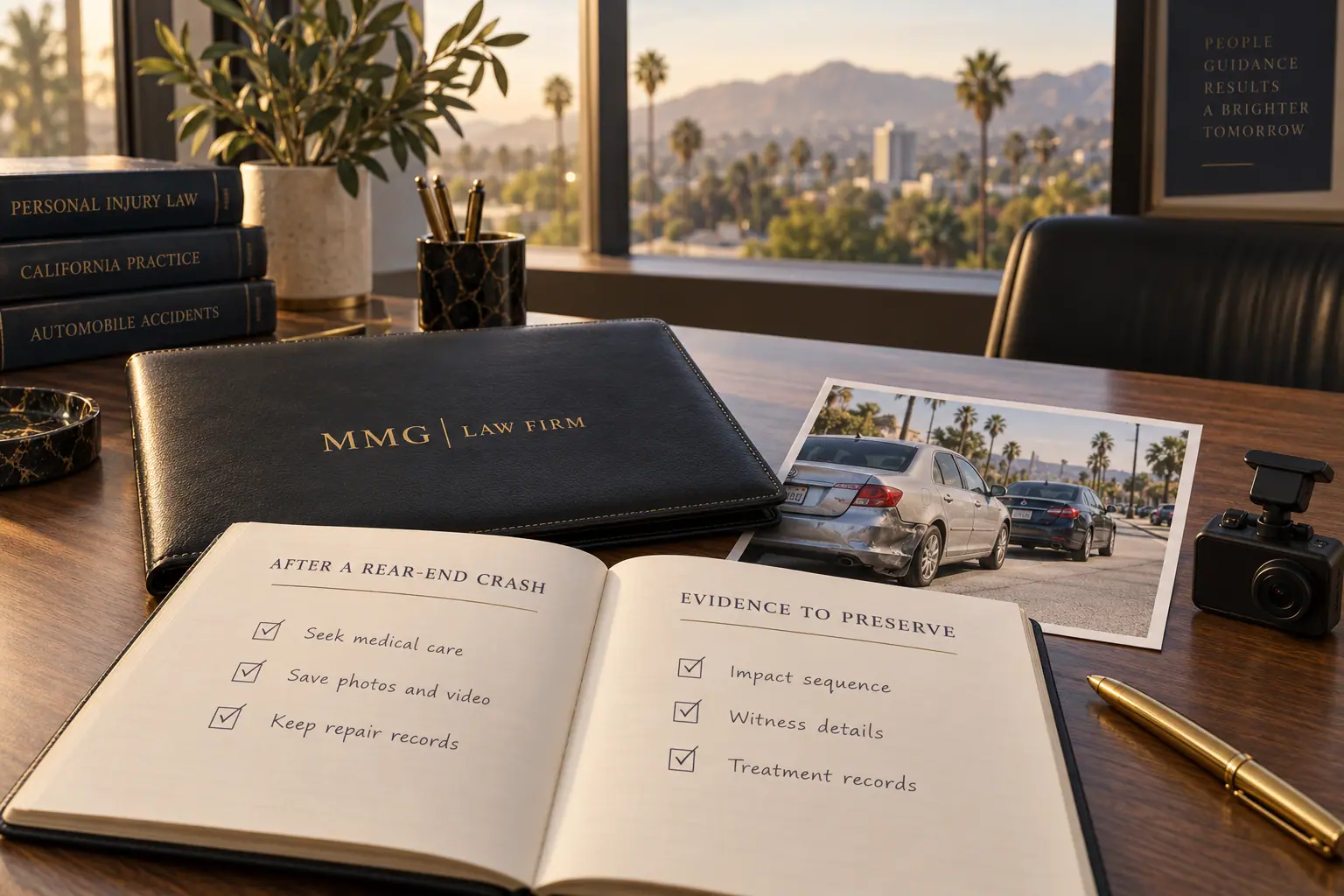

01
Understand fault
Look beyond assumptions to the real facts.

02
Preserve evidence
Keep the records that tell your story.

03
Document injuries
Show how the crash changed your life.
Being hit from behind does not answer every question.
The impact sequence, medical evidence, and available coverage all matter.


What evidence should you keep?
Save original video, photographs, repair records, and witness details.

How did the crash affect you?
Document treatment, work restrictions, and daily limitations.
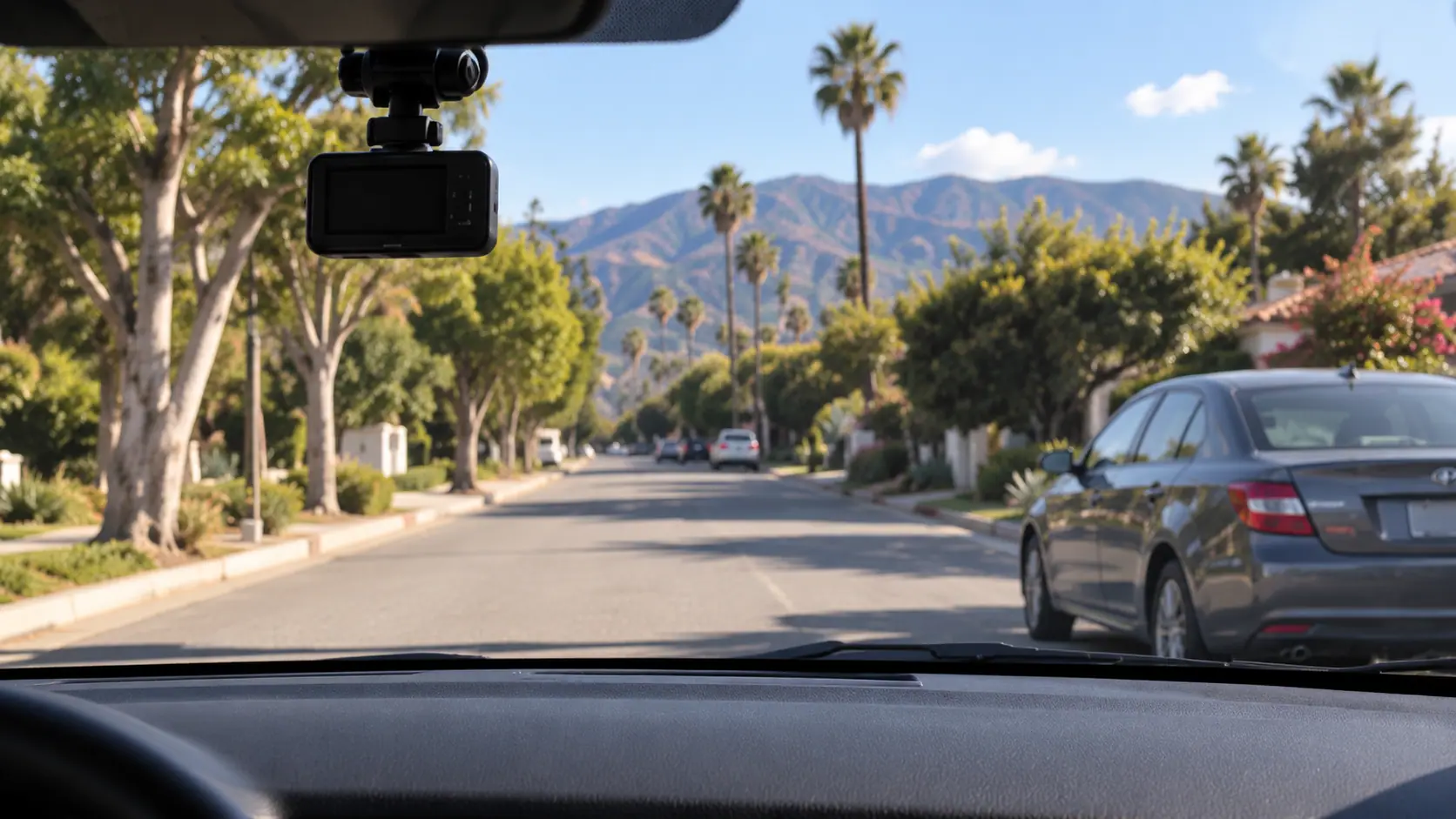
Preserve the crash record
Original video can be critical in disputed fault cases.

Your injuries matter. So does the evidence.
A rear-end collision can leave you dealing with pain, a damaged car, missed work, and competing accounts of what happened. Being struck from behind does not resolve every question about fault, insurance, or the extent of your losses.
MMG Law Firm helps people evaluate California accident claims from its Glendale office. Whether you were stopped in traffic, riding as a passenger, or pushed into another vehicle, start with the facts of your collision and the care you need.
Request a free case evaluation: call (818) 539-7969 or contact MMG. You can call before every record is ready. No recovery, no attorney fees or case expenses owed to MMG. Medical bills and other third-party obligations are separate.
What to do after a rear-end crash
Prioritize safety and medical care. Call 911 for an emergency. Do not enter moving traffic or put yourself at risk to photograph a vehicle. Follow emergency responders’ directions.
- Exchange driver, vehicle, and insurance information when it is safe to do so.
- Photograph vehicle positions, damage on every involved vehicle, road conditions, and nearby traffic controls if safely possible.
- Save original dashcam files promptly, including footage before and after the impact. Keep an unedited backup.
- Obtain witness contact details and the responding agency’s report number.
- Seek medical evaluation for symptoms and describe when they began, what changed, and any previous relevant condition.
- Notify your own insurer as required by your policy and retain correspondence, repair estimates, receipts, and claim numbers.
California DMV requires an SR-1 within 10 days when someone is injured or killed, or property damage exceeds $1,000. This is separate from a police or insurance report. Check the DMV’s SR-1 instructions. For a broader checklist, see what to do after a California accident.
Is the rear driver always at fault?
No. Following distance is important, but responsibility depends on how the collision happened. California Vehicle Code section 21703 requires a reasonable and prudent following distance in light of speed, traffic, and roadway conditions. It does not make every rear impact an automatic finding of complete liability. Read Vehicle Code section 21703.
Drivers must also use reasonable care, watch for hazards, and control their vehicles. The Judicial Council’s motor-vehicle standard-of-care instruction, CACI 700, provides the legal framework. Evidence may show that more than one person contributed to a crash.
Common disputed situations
- Stopped traffic: The investigation may examine following distance, attention, braking, and visibility. Stopping for traffic does not by itself establish fault by the front driver.
- A recent lane change: Video, lane markings, timing, and witness accounts can help determine whether a vehicle entered the lane unsafely or the following driver failed to respond reasonably.
- A chain-reaction collision: A middle vehicle may have been pushed forward, struck the vehicle ahead before the rear impact, or experienced multiple impacts. The sequence matters.
- Disputed braking or vehicle condition: Claims involving brake lights, mechanical problems, or sudden stopping require supporting evidence; an accusation is not proof.
A police report can provide useful observations and leads, but it does not alone decide every civil liability issue. An insurer’s initial assessment can also be disputed with evidence.
Evidence that can clarify your claim
The strongest record connects the crash sequence, your medical condition, and your actual losses. Different evidence answers different questions.
How the collision happened
Original video, photographs, witness accounts, scene measurements, vehicle inspections, and the collision report may help establish where vehicles were and the order of impacts. Vehicle data may be relevant when available and properly obtained; not every vehicle records the same information.
What changed medically
Treatment records, examination findings, recommended follow-up, and an accurate symptom history help clinicians evaluate your condition. Tell providers about prior injuries and distinguish earlier symptoms from changes after the collision. A preexisting condition does not answer every question about whether a crash caused additional harm.
How the injury affects daily life
Keep accurate notes about missed work, activity restrictions, assistance you need, appointments, and out-of-pocket expenses. Preserve wage records and medical recommendations supporting work limitations. Record facts without exaggeration or speculation.
Camera footage may be overwritten, and a vehicle may be repaired or disposed of. Raise preservation questions promptly. Coordinate any inspection with storage costs, transportation needs, and repair arrangements; do not leave a vehicle accumulating charges indefinitely without a plan.
Rear-end injuries need individual medical evaluation
Neck pain is one possible consequence, but a claim should follow the diagnosis and evidence rather than a label such as “minor impact.” MedlinePlus describes whiplash as a soft-tissue neck injury that can affect muscles and ligaments, with pain sometimes extending into surrounding areas. See its whiplash overview.
After a possible head injury, emergency warning signs such as a worsening headache, repeated vomiting, seizures, weakness, or difficulty waking require immediate medical attention. Call 911 or seek emergency care. The CDC’s concussion symptoms and danger signs also explain that symptoms may appear later.
Vehicle photographs document damage; they are not a substitute for a medical examination. Neither a small repair estimate nor a dramatic photograph, by itself, establishes the presence or severity of a particular injury. Medical and, when appropriate, qualified expert evidence must address the individual circumstances. For serious head-injury concerns, see traumatic brain injury after an accident.
RESEARCH WITH CONTEXT
Crash models are not a diagnosis.
The linked study models the trailing vehicle’s driver. Individual injuries need individual evaluation.
What collision research can—and cannot—tell you
A 2025 study by Liu and colleagues in Scientific Reports used computer crash models to examine how collision overlap and speed difference affected injury measures for the driver of the trailing vehicle. Overlap describes how much of the vehicles’ widths engage during impact. The modeled results varied with the collision conditions.
This was simulation research, not a clinical study of every person struck from behind. The authors identify limitations, including a lack of real-vehicle crash tests validating the study’s scenarios. Its findings should not be treated as a diagnosis, a universal safe-speed threshold, proof of fault, or a settlement calculator.
For a legal claim, the practical takeaway is to preserve crash-specific evidence and obtain individual medical evaluation. Read the rear-end collision study on PubMed Central or the publisher’s article.
What compensation may be available?
Depending on liability, proof, and available recovery sources, a claim may include medical expenses, reasonably supported future care, lost earnings, reduced earning capacity, pain and suffering, and appropriate property-damage losses. These categories are not automatic awards.
Case value depends on the injuries, their consequences, disputed fault, available coverage, and other facts. A settlement’s gross amount also differs from the amount remaining after fees, expenses, and valid repayment obligations. Explore compensation available after an accident and medical bills, liens, and treatment costs.
If the other driver has insufficient insurance, your own coverage may provide options, subject to policy terms and legal requirements. Review uninsured and underinsured motorist claims before assuming there is no possible recovery.
Before speaking with an adjuster or accepting an offer
Be accurate, keep copies, and avoid guessing about speed, distance, medical prognosis, or legal responsibility. Ask who is requesting a statement and why. Your duties to cooperate with your own insurer can differ from requests made by another driver’s insurer; obtain advice before refusing a policy-required request.
Before agreeing to settlement, review what losses the offer addresses and which claims the release would end. Ongoing treatment, future needs, medical repayment claims, and other insurance benefits deserve attention. Do not assume you can reopen a completed settlement if symptoms worsen. See insurance settlement offers and releases.
Deadlines and how MMG can help
California personal-injury lawsuits generally have a two-year deadline, but exceptions and shorter requirements can apply. Claims involving government entities often require an administrative claim within six months. Insurance negotiations do not automatically extend a filing deadline. Consult the California Courts personal-injury guide and California accident claim deadlines.
An MMG case evaluation can identify disputed issues, relevant records, insurance questions, and approaching deadlines. Depending on the representation agreed upon, work may include preserving evidence, evaluating medical and financial documentation, communicating with insurers, negotiating, and considering litigation when appropriate. No outcome is guaranteed.
MMG advances case expenses without an upfront payment. Contingency rates vary by case stage and are explained in the written agreement. No recovery means no attorney fees or case expenses owed to MMG; medical bills and other third-party obligations remain separate. Read attorney fees and case costs.
A missing report does not automatically resolve a claim against you. Photographs, witnesses, video, insurance records, and medical evidence may still be available. Reporting obligations are separate; seek advice promptly if a required report was missed.
Seek appropriate medical evaluation and accurately report when symptoms appeared. Later symptoms do not automatically prove or disprove a connection to the crash. Clinicians and relevant evidence must address that question.
Your position alone does not determine the outcome. A passenger may have claims involving one or more responsible drivers. For a middle vehicle, evidence about the order of impacts can be particularly important.
There is no reliable standard payout. Injury evidence, recovery needs, income losses, responsibility, coverage, and collectability all matter. An evaluation should explain uncertainty rather than promise a number.
CALIFORNIA
PEOPLE
GUIDANCE
RESULTS
A BRIGHTER TOMORROW
Talk with MMG about your next step
Call (818) 539-7969 or request a free case evaluation. Bring the accident date, insurer correspondence, photographs, and any treatment records you already have. Do not send sensitive medical information through a general website message; ask how to provide it securely.
Phone and video consultations are available. Office visits at 100 W Broadway, Suite 540, Glendale, are by appointment. Contacting the firm does not by itself establish an attorney-client relationship or extend a deadline.
This page provides general California legal information and does not replace individual legal or medical advice.
AFTER A REAR-END CRASH
Preserve the crash record.
Keep originals and ask about time-sensitive evidence.
Video and photographs
Save original files before footage is overwritten.
Impact sequence
Record what you remember about each impact.
Vehicle and repair records
Keep estimates, inspection records, and receipts.

Witness details
Save names and contact information.

Never enter moving traffic to gather evidence.
RESEARCH WITH CONTEXT
Crash models are not a diagnosis.
The linked study models the trailing vehicle’s driver. Individual injuries need individual evaluation.
What was studied
Computer models of the trailing vehicle’s driver.

Why it matters
Impact overlap and speed difference can affect modeled injury measures.
What it cannot establish
Your diagnosis, legal fault, or case value.
Liu and colleagues · Scientific Reports · 2025

After a rear-end crash
Use this checklist to protect your health, your evidence, and your rights.