
CALIFORNIA TRUCK ACCIDENT CLAIMS
California Truck Underride Accident Lawyer
Understand the collision. Protect the evidence.
Investigating serious injuries, vehicle condition, and the road ahead.
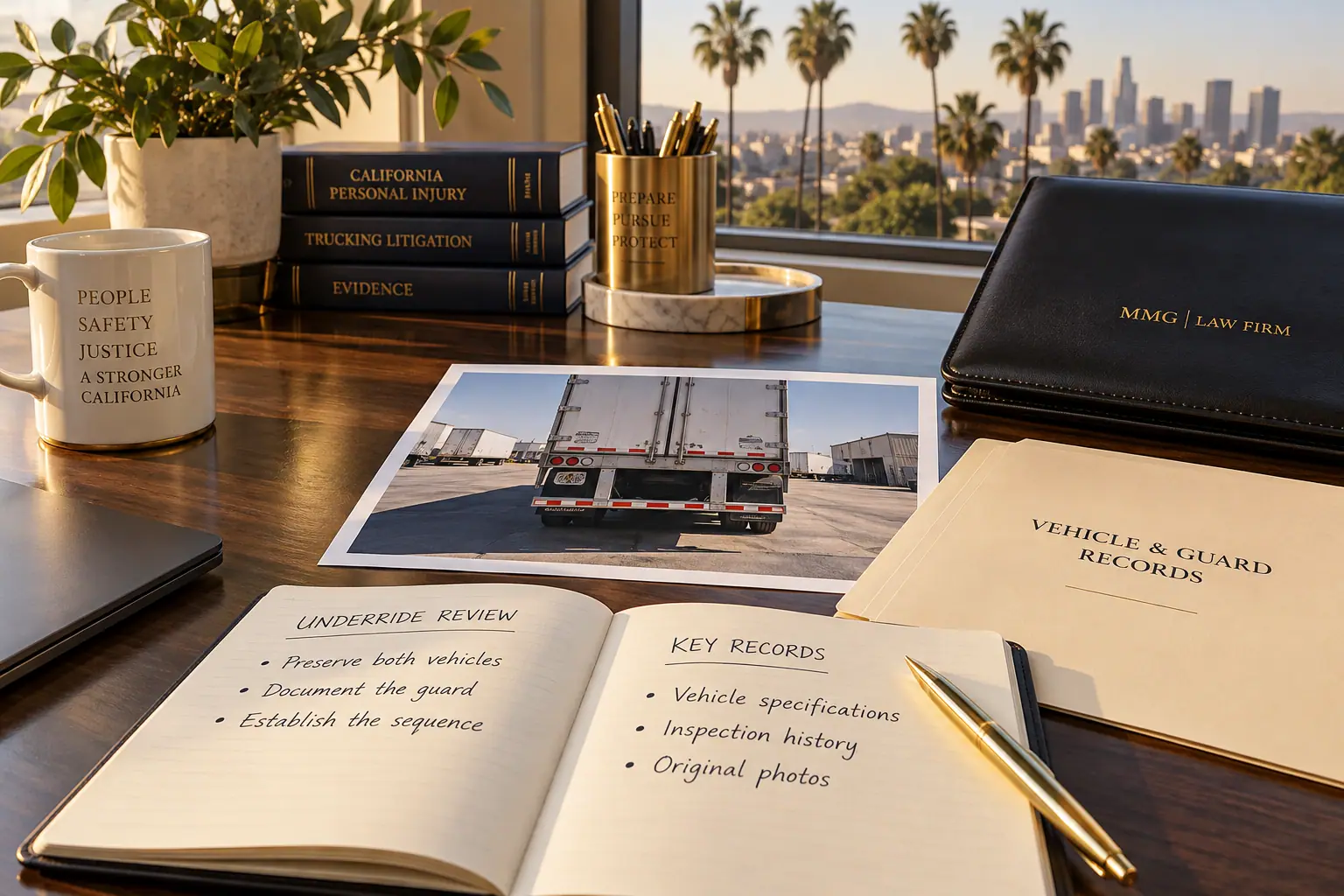
Preserve both vehicles
Secure the truck and any other involved vehicle.
Examine the guard
Inspect rear-impact and side-underride protection.
Document care needs
Track injuries, treatment, and long-term care.
Two questions. One careful investigation.

What caused the collision?
Review vehicle positions, visibility, and driver actions.

What contributed to the injuries?
Evaluate impact forces, equipment, and road conditions.

Rear underride
Review visibility, braking, and rear-impact protection.

Side underride
Review vehicle paths, timing, and trailer configuration.

Rear-impact standards and side-underride questions require separate review.
Understand what happened—and what your family needs next
An underride collision occurs when a smaller vehicle travels partly beneath a truck or trailer. The height difference can expose the passenger compartment to forces it was not designed to absorb in the same way as an ordinary vehicle-to-vehicle impact.
After a serious crash, families may need answers about the collision, the truck’s protective equipment, and the care an injured person will require. An investigation should examine both what caused the crash and whether the vehicle’s condition or protective equipment contributed to the severity of the injuries.
MMG Law Firm offers free case evaluations for California truck accident claims. Call (818) 539-7969 to discuss what happened and the information you already have. A family member can make the initial inquiry when an injured person cannot.
Preserve evidence before it changes.
Ask about vehicle storage, inspections, and original footage.
Explore evidence preservationRear and side underride involve different questions
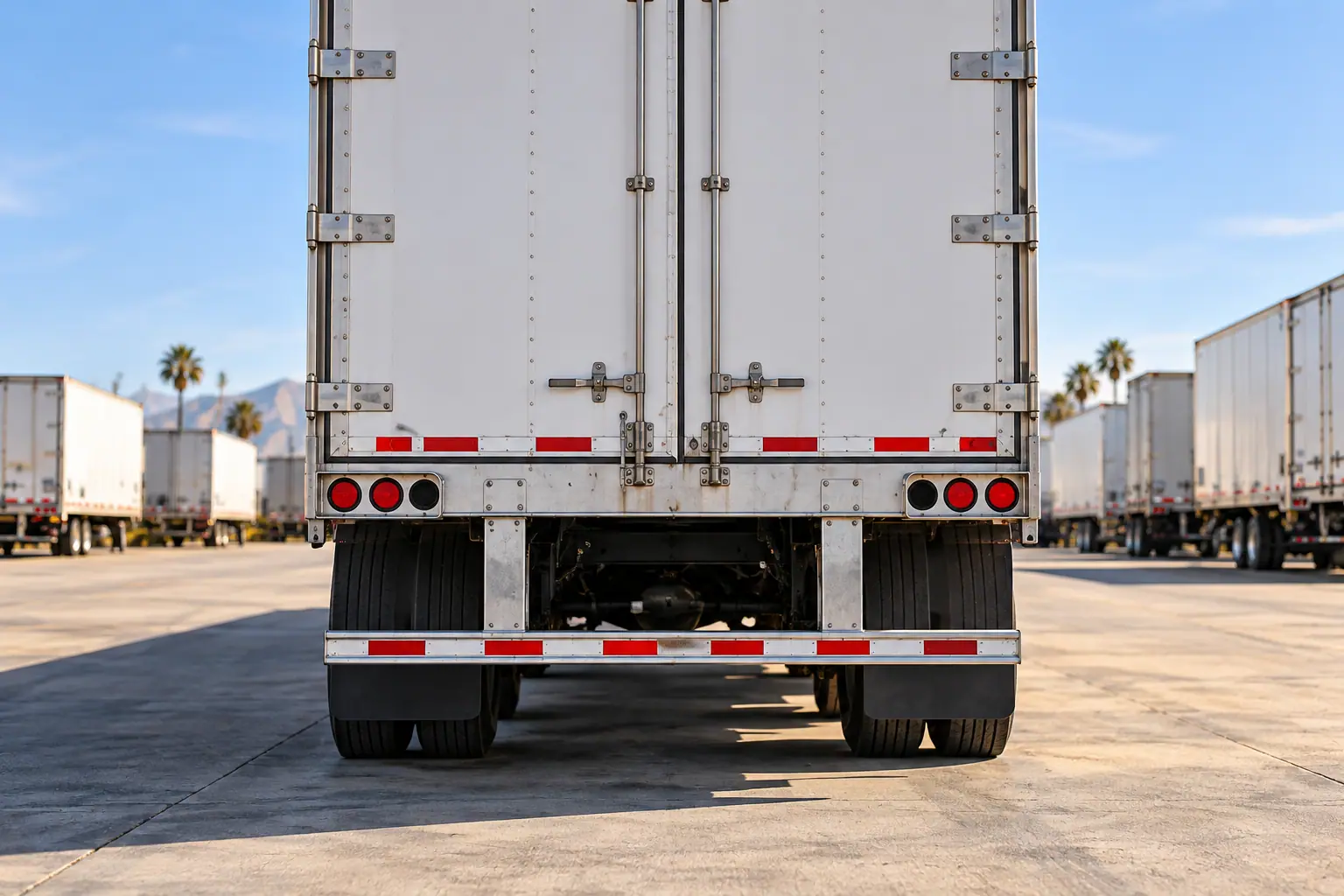
Rear underride
A smaller vehicle may travel under the rear of a truck or trailer. Investigators may examine the collision sequence, visibility, braking, and the presence, condition, installation, and performance of rear-impact protection.
The fact that a passenger vehicle struck the rear does not answer every question about responsibility or enhanced injuries. Equally, the occurrence of underride does not by itself prove that a guard violated a standard or that a particular business is liable.
Side underride
A smaller vehicle may travel beneath the side of a trailer, including during a crossing or turning movement. Important evidence can include the vehicles’ paths, lighting, visibility, timing, and the trailer’s configuration.
Rear-impact standards should not be treated as side-impact standards. NHTSA’s 2024 report to Congress on side underride protection discusses research and rulemaking activity; that report itself is not a final requirement that every trailer have a side guard. The rules and legal duties applicable to a particular vehicle and crash date need individual review.
Why these crashes require careful investigation
Underride can involve intrusion into the occupant space and devastating injuries. The U.S. Government Accountability Office’s underride report discusses the risks of serious injury and death, as well as limitations in crash reporting and the need for better information about these events.
That research provides context, not a conclusion about an individual crash. A report’s label, a photograph, or a general statistic cannot replace examination of the actual vehicles and sequence.
Two questions may require different evidence: what caused the vehicles to collide, and what caused particular injuries during the collision. Qualified reconstruction and engineering analysis may help evaluate these issues alongside medical evidence. Conclusions must account for the impact conditions and alternative explanations.
Which rear-impact guard rules may apply?
Federal rules distinguish requirements for certain trailers and semitrailers from those for other covered vehicles. Manufacturing date, vehicle configuration, and exceptions matter. A single rule or measurement should not be presented as applying to every truck.
- Motor-carrier requirements: 49 CFR 393.86 addresses rear-impact guards and rear-end protection, including different vehicle categories and exceptions.
- Guard performance: Federal Motor Vehicle Safety Standard 223 addresses rear-impact guard requirements and testing.
- Vehicle installation: Federal Motor Vehicle Safety Standard 224 addresses rear-impact protection on covered trailers and semitrailers, including configuration and installation requirements.
A guard’s presence does not alone establish compliance, adequate maintenance, or performance in the particular crash. Likewise, damage after impact does not alone establish a preexisting defect. The relevant standards and the condition of the equipment must be evaluated together.
Evidence to preserve promptly
Repairs, salvage, and disposal can change important evidence. An early investigation may identify the truck, trailer, passenger vehicle, guard, and related components that should be preserved through appropriate arrangements.
- Both vehicles: damage patterns and the relationship between the vehicles may help reconstruct the impact.
- Guard and attachments: photographs, measurements, mounting points, and available components may help assess installation, condition, and failure.
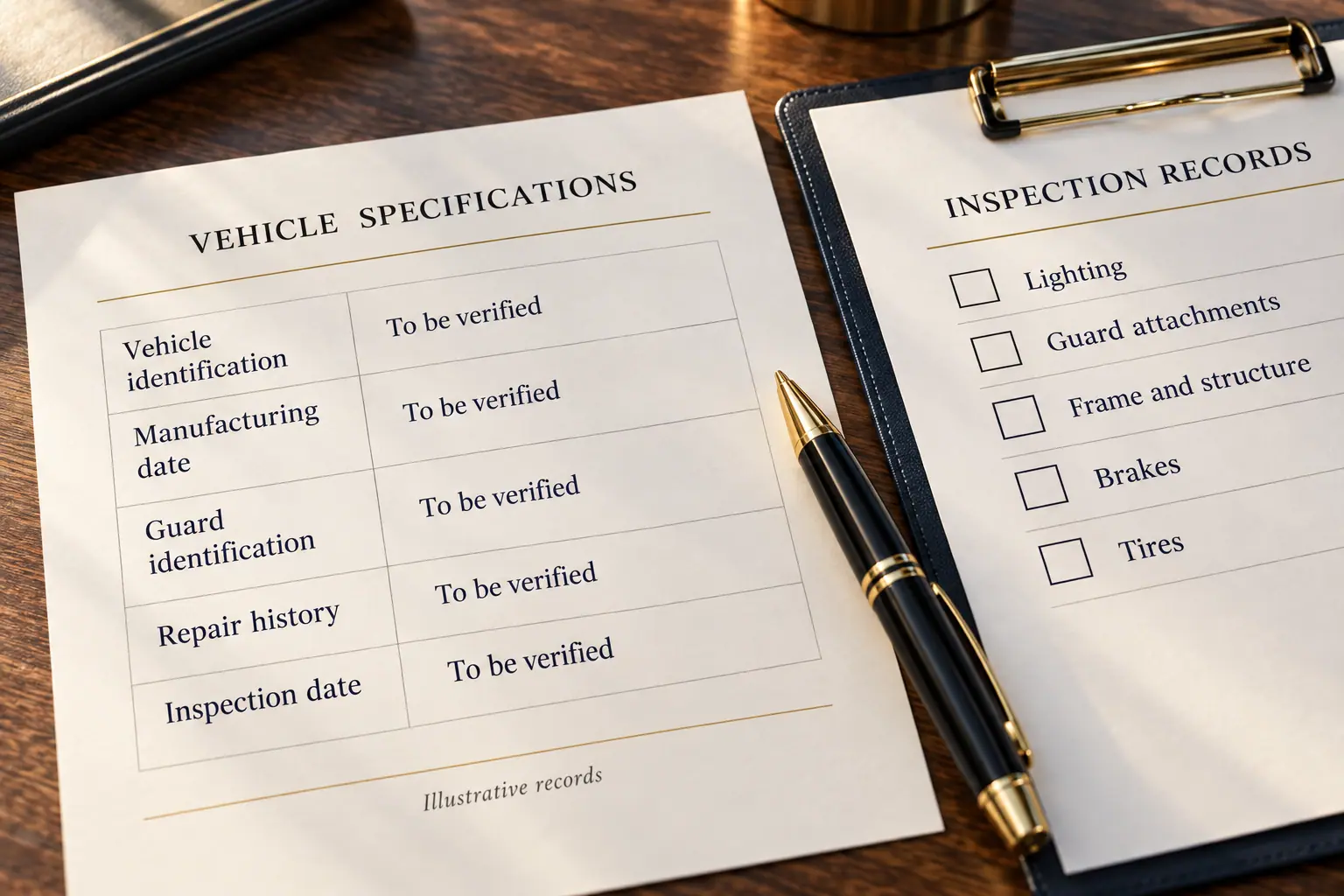
- Vehicle identification and specifications: VINs, manufacturing information, guard identification, and relevant design documents help establish what equipment and standards are involved.
- Inspection and repair history: records may reveal prior damage, repairs, alterations, or reported concerns.
- Video and scene information: original dash-camera footage, nearby video, witness accounts, road layout, and lighting may help establish timing and visibility.
- Trip and operational records: dispatch information and available vehicle data may provide context, depending on the systems actually used.
- Medical and care records: treatment information helps document injuries, limitations, and evolving needs.
A preservation request does not itself authorize access to private property or compel production. Vehicle inspection and any testing that changes evidence should be coordinated appropriately. Do not remove guard components or arrange unauthorized testing yourself. Read Truck Accident Evidence Preservation.
Who may need to be investigated?
The driver, motor carrier, trailer owner, maintenance provider, and equipment manufacturer may have different roles. Relevant questions include who operated the trip, who controlled the equipment, what work was performed, and whether a supported defect or negligent act contributed to the harm.
A product-related claim may involve design, manufacturing, or installation issues. A maintenance-related claim may involve prior damage or repair decisions. These possibilities require evidence and a legal basis; naming a business connected to the truck is not enough.
For related guidance, see Trucking Company Liability and Truck Brake Failure and Poor Maintenance.
Document serious injuries and long-term needs
The claim should reflect the injured person’s actual condition, not assumptions based on how the crash looks. Treating clinicians determine diagnosis and treatment. Legal evaluation may require documentation of hospitalization, rehabilitation, missed work, assistance at home, and medically supported future needs.
Keep discharge instructions, appointment information, receipts, and a simple record of help provided by family members. Avoid treating an early estimate as a final picture when recovery and future needs remain uncertain.
Related MMG guides address Catastrophic Injury, Traumatic Brain Injury, and Spinal Cord Injury and Paralysis. Families who have lost someone can review Wrongful Death After a Vehicle Accident for information about seeking representation.
What you can do now
Prioritize medical care. Save original photos and video, the report number, witness details, and insurer correspondence. If you know where either vehicle is stored or whether repairs or disposal are planned, share that information promptly with the attorney.
You do not need to revisit an unsafe scene or inspect a truck yourself. If you are helping an injured relative, explain your relationship when contacting the firm; the attorney can address who has authority to act or obtain records.
Filing deadlines and evidence preservation are separate concerns. An insurer’s ongoing investigation does not automatically extend a deadline. See California Accident Claim Deadlines.
No. The circumstances of the collision, each party’s conduct, and any equipment-related contribution to injury require review. The available claims and any allocation of fault depend on the facts and law. Read Partial Fault in a California Accident.
No. Rear-impact requirements cannot simply be applied to the side of a trailer. The equipment, relevant date, applicable requirements, and any other supported legal theory need separate analysis.
The inspection may be relevant, but investigators should examine what was inspected, when, and what happened afterward. A prior inspection does not alone establish the equipment’s condition during a later collision.
Tell the attorney what you know. Photographs, repair records, stored components, video, and other evidence may remain. Missing evidence does not automatically establish misconduct or mean that a claim cannot proceed.
Depending on the evidence and applicable law, a claim may address medical expenses, lost earnings, future care, and other recoverable losses. No amount can be promised from the collision type alone. See Compensation Available After an Accident.
The evaluation is free. MMG advances case expenses. Contingency rates vary by case stage and are explained in the written agreement. No recovery means no attorney fees or case expenses owed to MMG. Medical bills, liens, and other third-party obligations are separate. Read Attorney Fees and Case Costs.
Speak with MMG about your next step
Tell MMG where the crash happened, what you know about the vehicles, and the injured person’s immediate concerns.
PEOPLE.
SAFETY.
A STRONGER CALIFORNIA.
You can call before every document is ready. Tell MMG where the crash happened, what you know about the vehicles, and the injured person’s immediate concerns. A consultation can address possible claims, preservation, fees, and next steps.
Call (818) 539-7969 or request a free case evaluation. Phone and video consultations are available. Visits to 100 W Broadway, Suite 540, Glendale, are by appointment.
Explore Truck Accident Lawyer for the broader claim process. This page provides general information. Contacting the firm does not by itself establish an attorney-client relationship.
Preserve the evidence
Coordinate inspections before evidence changes.
Document long-term needs
Start with the records you already have.
Hospital and rehabilitation records
Medical records, therapy, and ongoing treatment.

Missed work and income
Time away from work and lost earning capacity.

Help needed at home
In-home care, equipment, and daily living support.

Medically supported future care
Planned treatment and long-term needs.
Treatment decisions belong with your clinicians.
Rear underride: what matters
Collision sequence
Review vehicle positions, braking, and visibility before impact.
Guard presence and condition
Examine installation, attachments, prior damage, and performance.
Applicable standards
Vehicle category, manufacturing date, and exceptions matter.
Vehicle paths and timing
Review vehicle movement, lane changes, and when the side impact occurred.

Lighting and visibility
Evaluate sight lines, lighting conditions, and driver perception.

Trailer configuration
Examine trailer type, side guard design, and component placement.
Side underride: what matters
Collision sequence
Review vehicle positions, braking, and visibility before impact.
Guard presence and condition
Examine installation, attachments, prior damage, and performance.
Applicable standards
Vehicle category, manufacturing date, and exceptions matter.
Vehicle paths and timing
Review vehicle movement, lane changes, and when the side impact occurred.
Lighting and visibility
Evaluate sight lines, lighting conditions, and driver perception.
Trailer configuration
Examine trailer type, side guard design, and component placement.