
passenger injury claim · car accidents
Car Accident Passenger Claim in California: Who Pays?
You weren't driving, so you're almost never at fault - but that doesn't make getting paid simple. Here's how passenger injury claims work in California.
Mihran M. Ghazaryan··7 min read
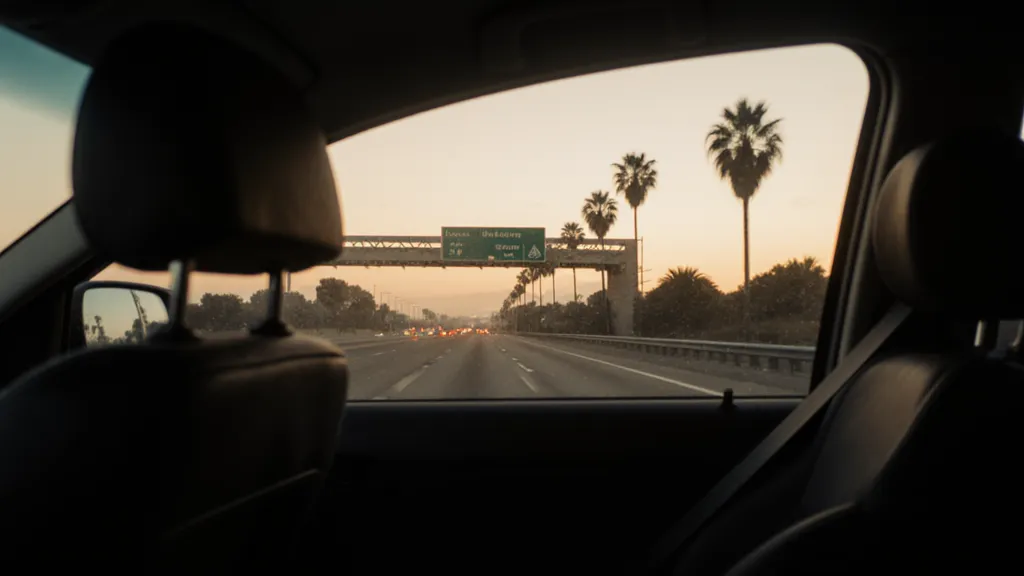
You were in the passenger seat. Someone else made the mistake, someone else's foot was on the brake — and you're the one with a fractured wrist and a stack of medical bills. Passengers have the strongest injury claims on California roads and, too often, the least information about how to pursue them.
This guide explains how a car accident passenger claim works in California: who pays, what happens when the driver was your own friend or spouse, and the deadlines that can quietly end your case.
As a Passenger, You Are Almost Never at Fault
California is an at-fault (tort) state. Whoever caused the crash — or their insurance company — is responsible for the harm. A passenger has no control over speed, following distance, or the decision to run a yellow light, so in the overwhelming majority of cases a passenger carries zero percent of the fault.
That matters for two reasons. First, you don't have to prove you did anything right; you only have to show that someone else was negligent. Second, you are not locked into blaming one driver. If two cars collided, you may have a claim against both drivers, and you don't have to decide up front which one was more responsible.
Who Actually Pays a Passenger's Injury Claim
The at-fault driver's liability coverage
The primary source of recovery is the bodily injury liability coverage carried by whichever driver caused the crash. Since January 1, 2025, California's minimum limits are $30,000 per injured person and $60,000 per accident (raised from the old 15/30 minimums by Senate Bill 1107), plus $15,000 in property damage. Many drivers carry only the minimum. You can confirm California's financial responsibility requirements through the California DMV.
Two practical consequences follow:
- The per-accident cap is shared. If four people were hurt and the at-fault driver has a $60,000 per-accident limit, that single pool is divided among all of the claimants — not $30,000 each.
- Serious injuries routinely exceed the policy. A single surgery and a short hospital stay can blow past $30,000, which is exactly why the next two sources matter.
When both drivers share the blame
If fault is disputed between the driver you were riding with and the other driver, that argument is largely their problem, not yours. A passenger can make a claim against both liability policies and recover from whichever carrier is responsible, in whatever proportion fault is eventually assigned. In a two-vehicle crash where each driver is partly negligent, that can mean two policies available instead of one — a meaningful difference when limits are low.
Your own coverage can step in
Even though you weren't driving, your own auto policy may still protect you:
- Uninsured/underinsured motorist (UM/UIM) coverage on your personal policy generally follows you, not just your car. If the at-fault driver has no insurance or not enough of it, your UIM coverage can pay the gap between their limits and yours. In California, UM/UIM must be offered but can be declined in writing — check your declarations page.
- Medical payments (MedPay) coverage on either your policy or the policy of the car you were riding in typically pays medical bills up to its limit regardless of who was at fault.
- Health insurance will usually cover treatment in the meantime, though your plan may assert a lien or right of reimbursement out of your settlement. How those bills get paid and repaid is its own subject — we cover it in who pays medical bills after a car accident.
If the at-fault driver turns out to be uninsured or takes off entirely, the analysis shifts to your uninsured motorist claim.
What If the Driver Was Your Friend or Family Member?
This is the single most common reason injured passengers never make a claim — and it usually rests on a misunderstanding. You are not suing your friend personally. You are making a claim against an insurance policy that your friend bought, and that the insurer was paid premiums to honor. The driver typically pays nothing out of pocket, and the carrier handles the defense.
One real caveat: many policies contain household or named-insured exclusions that limit coverage when the injured passenger lives in the same home as the driver, or is a named insured on the same policy. A spouse hurt in a car driven by their husband or wife may find the liability coverage unavailable and need to look to UM/UIM or other policies instead. Read the policy language before assuming either way.
Rideshare, Bus, and Work-Vehicle Passengers
Different vehicles bring different — and often much larger — insurance layers into play.
- Uber and Lyft passengers. Once you've been matched with a driver and while you're in the vehicle, the rideshare company's commercial policy generally provides $1 million in third-party liability coverage. That coverage exists specifically to protect passengers. See our rideshare accident practice area.
- Taxi, shuttle, and bus passengers. Common carriers owe passengers a heightened duty of care under California law, and commercial policies are typically substantial.
- Public transit and government vehicles. A city bus, a school district van, or a government employee's vehicle triggers a much shorter deadline — see below.
- Riding for work. If you were a passenger in the course of your employment, workers' compensation may cover your medical care while you simultaneously pursue a third-party claim against the at-fault driver.
The Few Ways a Passenger's Recovery Can Be Reduced
California uses pure comparative negligence, meaning any share of fault assigned to you reduces your recovery proportionally rather than barring it. Insurers occasionally try to pin some responsibility on a passenger by arguing that you:
- Weren't wearing a seatbelt (California courts permit evidence of seatbelt non-use to reduce damages)
- Knowingly got into a car with a driver who was obviously intoxicated
- Distracted the driver, grabbed the wheel, or otherwise interfered
These arguments are frequently overstated, and the burden of proving them sits with the insurance company. Our explainer on comparative negligence in California walks through how fault percentages actually get applied.
Deadlines That Can End Your Claim
- Two years from the date of injury to file a lawsuit for personal injury (Code of Civil Procedure § 335.1).
- Six months to file a written government claim if a public entity is involved — a city bus, a county vehicle, a public employee driving on the job (Government Code § 911.2). Missing this is usually fatal to the claim.
- Minors generally have the two-year clock paused until their 18th birthday, but a parent's related claims and any government-claim deadlines may not be.
Deadlines have exceptions in both directions, and the rules that apply to your specific facts may differ. Confirm your dates early rather than assuming. The California Courts self-help center offers general guidance on filing.
Frequently Asked Questions
Can a passenger in a car accident file a lawsuit against both drivers?
Yes. A passenger may pursue claims against every driver whose negligence contributed to the crash. You are not required to choose one, and the drivers and their insurers sort out the fault percentages between themselves.
How much can a passenger get in a car accident claim?
It depends entirely on the severity of your injuries, your medical costs, lost income, and the insurance available. A soft-tissue injury that resolves in a few weeks and a spinal fracture requiring surgery sit in very different ranges. Beware of anyone promising a specific number before your treatment is complete — no honest lawyer can give you one.
Will making a claim raise my friend's insurance rates?
Possibly, depending on the carrier and the circumstances — but that is the function insurance serves. Your friend paid premiums precisely so that an injured passenger would be compensated without them paying personally.
What if I was a passenger and the driver was uninsured?
Your own uninsured motorist coverage, the UM coverage on the vehicle you occupied, or a claim against another at-fault driver may all be available. This is one of the situations where reviewing every applicable policy matters most.
Do I have to give a recorded statement to the insurance company?
You are not obligated to give a recorded statement to the other driver's insurer. Adjusters often request one early, and answers given before you know the full extent of your injuries can be used to minimize your claim. It's reasonable to decline until you've spoken with a lawyer.
Talk to a California Car Accident Lawyer
If you were hurt riding in someone else's vehicle, you likely have a stronger claim than you realize — and more than one insurance policy may apply. MMG Law Firm offers a free, no-obligation consultation to review your crash, identify every source of coverage, and handle the adjusters for you. We represent injured passengers across California on a contingency fee basis: no fee unless we win. Learn more about our car accident practice, or contact us today.