
CALIFORNIA MOTORCYCLE ACCIDENT RESOURCES
California Motorcycle Accident Case Results
Understand the rider's story—and the evidence behind it.
PEOPLEANSWERSA SAFER TOMORROW

No outcomes currently approved for publication.
No settlements, verdicts, or rider case examples are listed at this time.
Look beyond the result. Understand the rider’s case.
A meaningful case example explains the disputed facts, evidence, injuries, and the firm’s role.
01
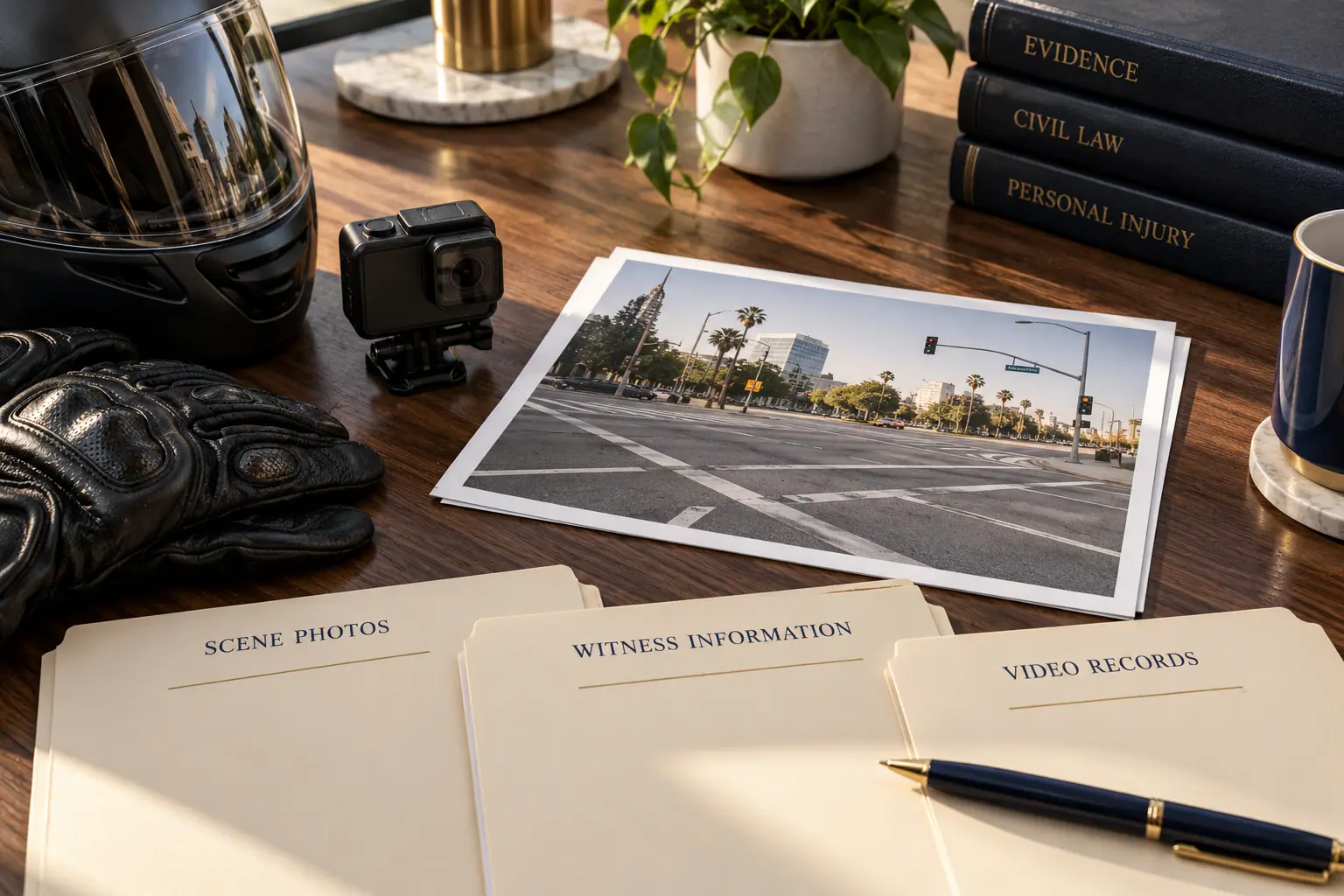
Resolve questions with evidence.
Objective records help clarify what happened and how the collision occurred.
- Visibility and vehicle movements
- Lane-splitting circumstances
- Video, scene photos, and witnesses
02
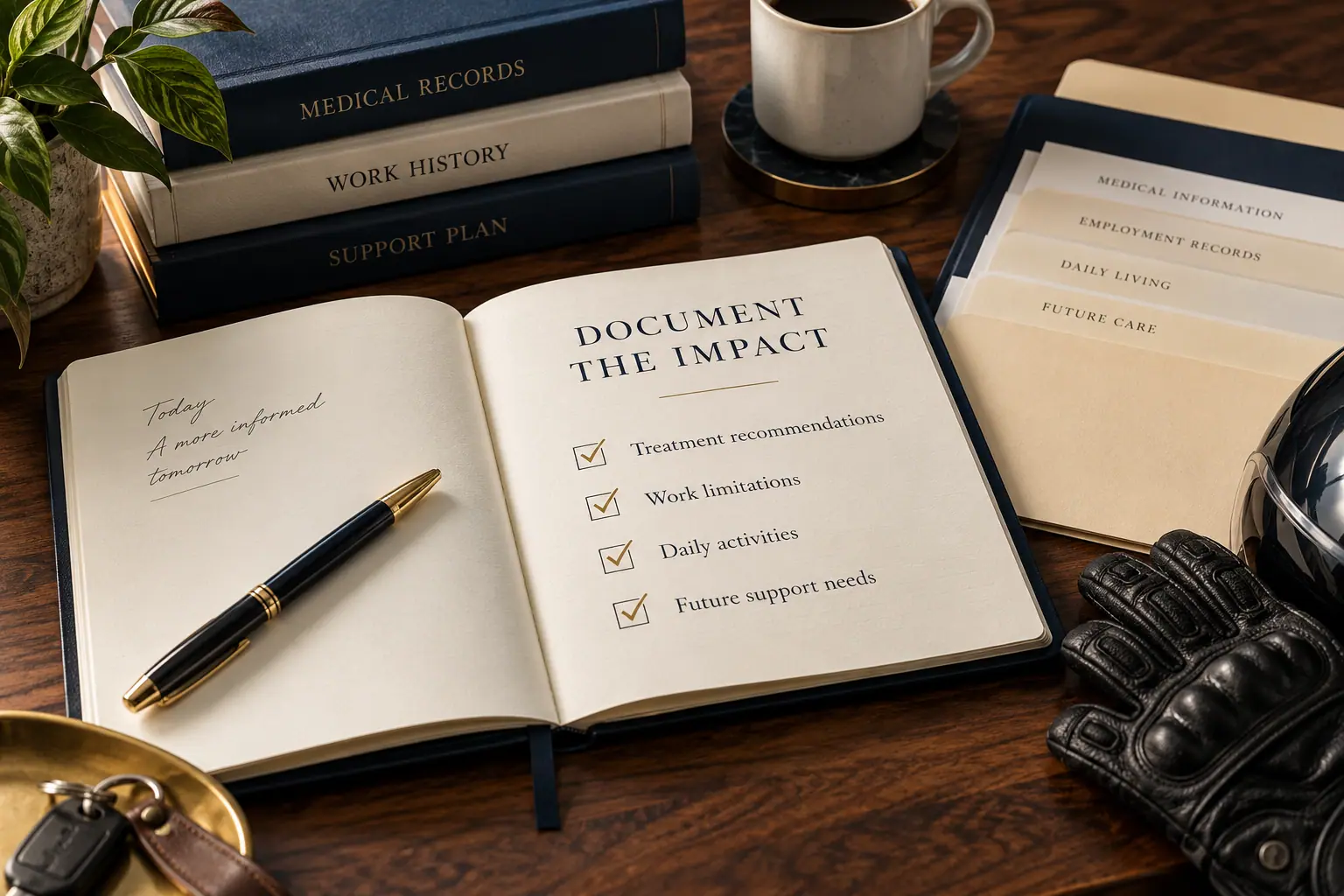
Document the injury’s effect on daily life.
Medical evidence and personal records show how the crash affected your health, work, and daily activities.
- Treatment recommendations
- Work limitations
- Daily activities
- Supported future needs
Understand how outcomes are evaluated.
An outcome is more meaningful when you understand what it represents.
Settlement
Agreement resolving the dispute.
Verdict
Trial decision; collection may differ.
Net recovery
After applicable fees, expenses, and obligations.
Understand the rider's story—and the evidence behind it
A motorcycle accident result means more when you understand the disputed facts: where the rider and other vehicles were, what each person could see, what movements preceded the collision, and how the injuries affected the rider's life.
MMG does not currently have motorcycle accident outcomes approved for publication on this page. No rider case histories, settlement amounts, or verdicts are listed at this time. This guide explains what a useful motorcycle case example should disclose and what to ask about relevant representation.
Request a free case evaluation or call (818) 539-7969. You can discuss your accident before every record is ready.
Every case depends on its facts and applicable law. Past results do not guarantee, predict, or establish the value of another claim.
Published motorcycle accident outcomes
There are currently no approved outcomes to display. Verified motorcycle results will link to detailed case examples when the resolution, MMG's specific role, and permitted public facts are confirmed.
No invented case can demonstrate MMG's experience resolving rider-specific disputes. Ask directly about comparable matters and the attorney's role. Confidentiality may limit what can be discussed.
What a meaningful rider case example should explain
- The collision circumstances: relevant vehicle movements, road conditions, and the rider's position.
- The disputed issues: visibility, right of way, lane changes, speed allegations, lane splitting, or another fact actually at issue.
- The evidence: photographs, recordings, witness information, scene measurements, vehicle damage, and relevant records—not assumptions about motorcyclists.
- The injuries and losses: supported treatment, work restrictions, lasting limitations, and future needs.
- MMG's specific role: the representation, investigation, negotiation, litigation, or trial work actually performed.
- The outcome: settlement or verdict, date, gross/net context, and qualifications affecting the amount reported.
A useful example explains how evidence addressed a dispute. It does not describe a rider as blameless or a driver as liable simply because of the type of vehicle involved.
Lane splitting: separate legality from collision-specific fault
CHP states that motorcycle lane splitting is legal in California. That does not decide responsibility for every collision involving lane splitting. Vehicle movements, conditions, and the conduct of the people involved still need to be examined.
CHP's safety guidance warns that risk increases as overall speed and speed differences increase. Those safety tips should not be presented as fixed legal speed limits or as an automatic determination of negligence. A case discussion should identify the evidence and applicable law rather than assume lane splitting alone proves or defeats a claim.
Visibility, right of way, and rider-fault allegations
Statements such as “I didn't see the motorcycle” leave important questions unanswered. Where were the vehicles? What blocked the view? When did a driver turn or change lanes? What do photographs, video, witnesses, and physical evidence show?
California DMV advises drivers to check for motorcycles when turning or changing lanes and to allow motorcycles appropriate space. Its guidance helps explain road-safety concerns; it does not determine fault in a particular collision. Read the DMV's guidance on sharing the road with motorcycles
Allegations about speed, position, or attention should be evaluated against evidence. A rider's own conduct may affect the legal analysis and recovery, but an allegation is not the same as a supported finding. Ask how responsibility was resolved in any published case example and what facts supported that resolution.
Preserve evidence that can answer the rider-specific questions
Keep original photographs and recordings when available, including helmet-camera or dash-camera footage. Avoid editing the only copy. Save witness contact information, report details, insurance correspondence, and photographs of the motorcycle, protective equipment, and scene.
Relevant evidence may include lane markings, sightlines, damage patterns, roadway conditions, and the timing of vehicle movements. Video may be overwritten or become unavailable. Discuss preservation promptly; do not attempt to access another person's account or device yourself.
Keep damaged equipment safely when practical and discuss inspection before disposal or repair. Medical safety comes first: damaged protective equipment should not be reused as a substitute for safe equipment. Do not delay needed care to collect claim evidence.
Injury disputes: connect medical needs to the collision
An injury label alone does not explain a rider's losses. A useful case example describes the supported effects on treatment, work, mobility, household tasks, and daily life without exposing unnecessary private medical details.
Medical records, prior history, treatment recommendations, work records, and other evidence can help evaluate injury causation and loss. A prior condition does not answer every question about what changed after a collision; the individual medical and legal issues need review.
Helmet or protective-equipment allegations also require careful analysis. An equipment issue should not be treated as automatic proof that a rider caused the crash or that all injuries are unrelated. The alleged conduct, applicable rules, causation, and evidence must be assessed. This page does not determine eligibility or fault for an individual rider.
California Courts' personal injury guide explains the need to establish responsibility and damages through evidence. Read the official personal injury guide
Serious injuries and future losses need support
Future care, changes in earning ability, assistance needs, and lasting limitations should be evaluated using appropriate evidence. They cannot be calculated reliably from another rider's settlement amount.
Keep medical recommendations, restrictions, missed-work records, and accurate notes about changes in everyday activities. Ask what future needs are supported, what remains uncertain, and how those uncertainties affect a proposed resolution. Treatment decisions belong with qualified healthcare professionals.
Read a settlement or verdict with amount context
A settlement resolves a dispute through an agreement. Its release and payment terms matter, and it is not necessarily an admission of fault. A verdict is a trial decision and may differ from the amount ultimately collected after later proceedings or collection issues.
A reported amount should distinguish the gross resolution from client net proceeds. Attorney fees, case expenses, and applicable medical reimbursement claims or other obligations may affect the final distribution. Ask whether a total includes multiple people, claims, or defendants.
MMG's contingency rates vary by case stage and are explained in the written agreement. MMG advances case expenses without an upfront payment. If there is no recovery, no attorney fees or case expenses are owed to MMG. Medical bills and other third-party obligations are separate.
Questions to ask about motorcycle representation
- Have you handled a similar rider-specific dispute, and what was your role?
- What evidence could help evaluate visibility, vehicle movements, and responsibility?
- What records or equipment may need early preservation?
- How would disputed medical causation and supported future losses be evaluated?
- What could affect available recovery and net proceeds?
- Who would handle my case, and how would I receive updates?
- What fees and expenses apply at each case stage?
Motorcycle results: common questions
No. Its legality does not resolve every question about conduct, conditions, causation, or responsibility in an individual crash.
It cannot establish your case's value. Injuries, proof, coverage, disputed issues, and applicable law differ even when the collision descriptions sound similar.
Not necessarily. Ask whether it was changed or collected, whether later proceedings affected it, and whether the figure is stated before fees, expenses, and other obligations.
MMG currently has no motorcycle outcomes approved for publication on this page. You can ask about relevant experience directly. Another firm's result or a fictional example would not substantiate MMG's representation.
No outcome can be guaranteed. The State Bar warns that even truthful achievements can mislead when presented without the context necessary to avoid unjustified expectations. Read State Bar Rule 7.1 and its comments
Discuss your motorcycle accident with MMG
Explore MMG's motorcycle accident services, meet Mihran M. Ghazaryan, or request a free consultation.
MMG Law Firm · Mihran M. Ghazaryan · California Bar #311455
100 W Broadway, Suite 540, Glendale, CA 91210. Visits by appointment. Phone and video consultations available. Call (818) 539-7969, Monday–Friday, 9am–6pm Pacific.
General information, not individual legal advice. An inquiry does not establish an attorney-client relationship or pause a deadline. Website legal disclosures · Privacy policy.
Keep the evidence you already have
Keep original files. Discuss inspection and preservation before repair or disposal.