
CALIFORNIA ACCIDENT REPRESENTATION
California Delivery Truck and Commercial Van Accident Lawyer
Understand the delivery. Identify your options.
Company relationships, route records, and coverage can shape your claim.
PEOPLEBUSINESSESCOMMUNITIESA STRONGER CALIFORNIA
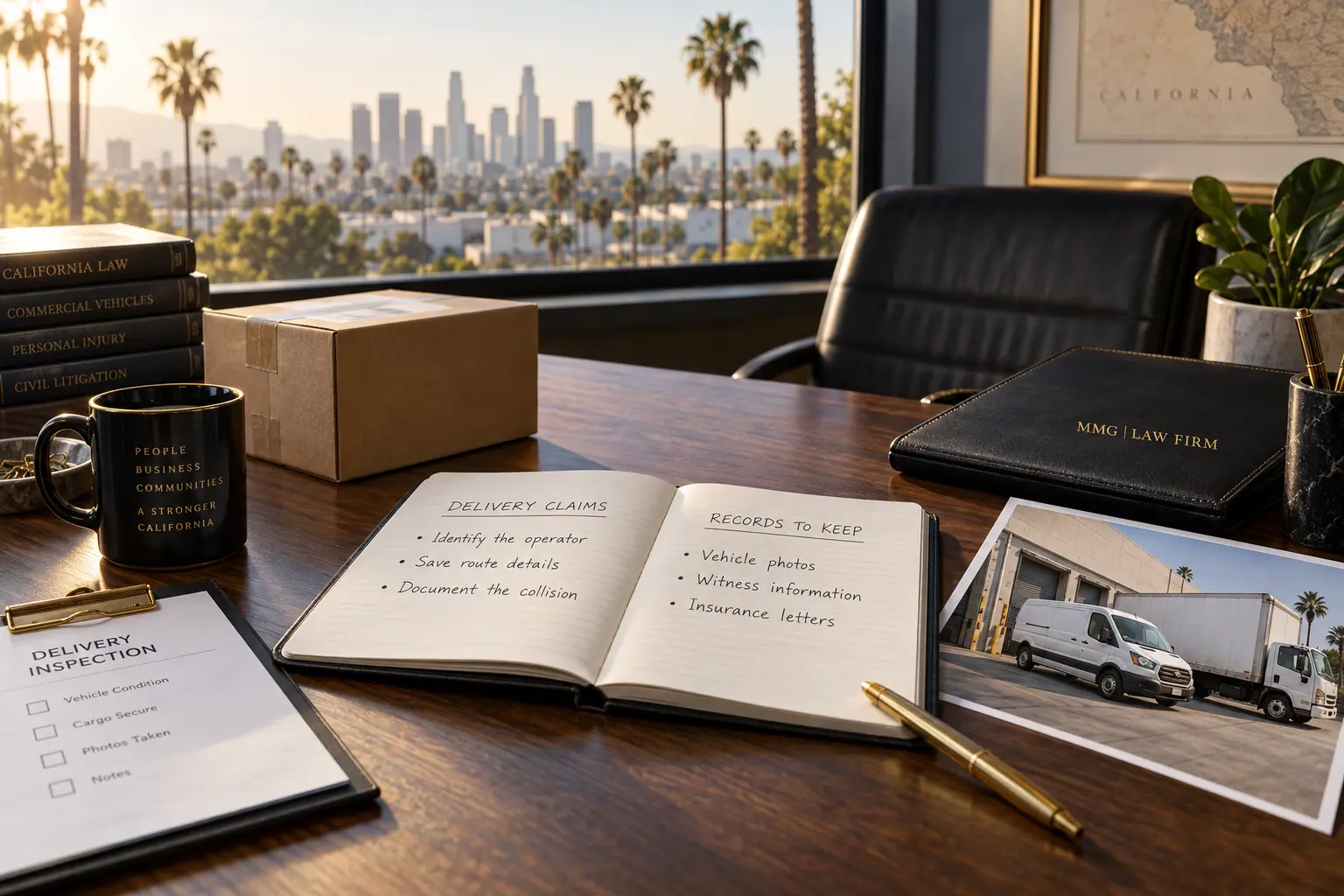
One delivery. Three essential questions.

A company logo alone does not establish responsibility.
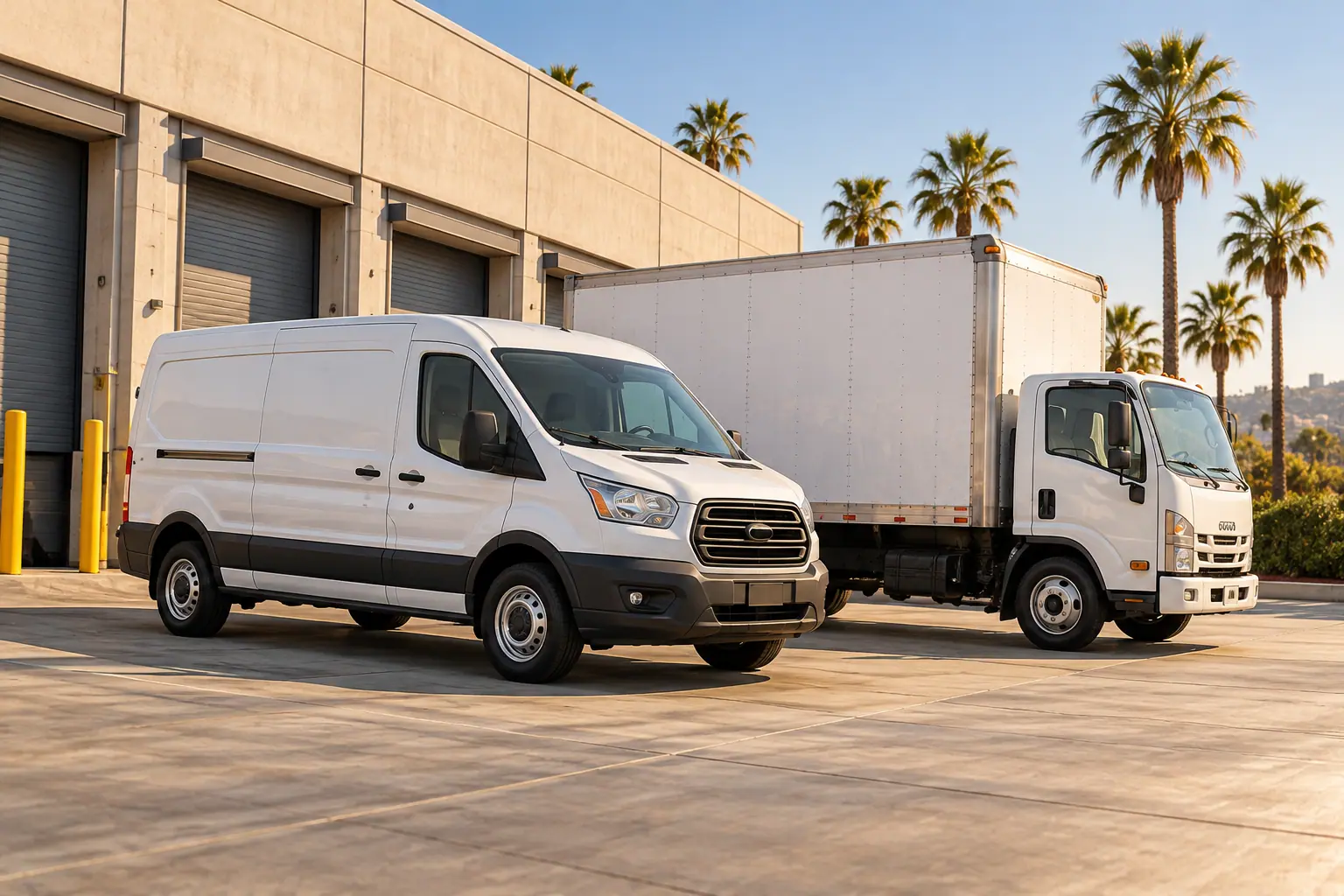
A delivery crash can involve more than one business
After a collision with a delivery truck or commercial van, you may have the driver’s information but still not know which company operated the vehicle or which insurer should handle your claim. A familiar logo does not always identify the driver’s employer, the vehicle owner, or the business responsible for the trip.
The investigation should answer three questions: What caused the crash? Who may be legally responsible? What coverage may apply? Delivery records, employment relationships, and the driver’s activity at the time can help answer them.
MMG Law Firm offers free case evaluations for California accident claims. Call (818) 539-7969 to discuss your injuries, the vehicle involved, and the information you already have. You do not need to identify every business before calling.
What makes a delivery accident different?
Delivery operations can involve repeated stops, unfamiliar addresses, reversing into loading areas, turning across traffic, and pulling away from the curb. An investigation may examine visibility, parking position, speed, attention, vehicle condition, and instructions given to the driver.
A route schedule or delivery scanner may provide useful context, but a demanding route does not automatically prove negligence. The evidence must connect a particular action or failure to the collision and resulting harm.
These issues can arise with parcel vans, step vans, box trucks, grocery delivery vehicles, and vehicles used by local businesses. People injured may include other drivers, passengers, pedestrians, bicyclists, or workers near a delivery area.
Who may be responsible for the crash?
The driver and the driver’s employer
A driver may be responsible for negligent driving that causes injury. An employer may also be responsible when an employee causes harm while acting within the scope of employment. The assigned route, delivery timing, dispatch communications, and actual activity at the time can help establish that relationship. California civil jury instruction 3701 explains employer and principal responsibility.
A business’s own unsafe conduct
An investigation may separately examine hiring, supervision, vehicle maintenance, or delivery instructions. For example, relevant records might show that a business knew of an unsafe vehicle condition but did not address it.
Negligent hiring or retention requires more than the fact that a driver had an accident. Knowledge of unfitness or incompetence, a resulting particular risk, and a causal connection to the harm are among the issues that must be established. California civil jury instruction 426 describes the requirements.
Other businesses involved in the operation
A vehicle owner, maintenance provider, loading business, or other entity may warrant review when its conduct and legal duties are relevant. The retailer receiving or selling the goods is not automatically responsible simply because its products were being delivered.
For more detail about responsibility beyond the driver, read Trucking Company Liability.
What if the driver works for a contractor or delivery app?
A delivery can involve a national brand, a local delivery contractor, and a driver working under a separate agreement. A driver may also use a personally owned vehicle for deliveries arranged through an app.
The investigation should identify the legal businesses involved, who assigned the work, and the actual relationship between the parties. Contracts, dispatch records, payment arrangements, and evidence of control may matter. A contractor label alone does not resolve every liability issue; neither does wearing a branded uniform.
For app-based deliveries, preserve information about the specific order and timing when available. Whether the driver had accepted a delivery, was traveling to collect it, or had completed it may matter under the applicable policy. Do not assume passenger rideshare insurance rules apply to package or food delivery. The service, policy language, and circumstances require separate review.
Commercial use does not answer every coverage question.
The specific policy and delivery activity matter.
CALIFORNIA TODAY.
STRONGER TOMORROW.
Which insurance may apply?
Liability and insurance coverage are related but separate questions. A business can dispute responsibility, an insurer can dispute coverage, or both can happen in the same claim.
Business-owned trucks and vans
A commercial auto policy may cover a business-owned vehicle, subject to the policy’s insured parties, covered vehicles, terms, exclusions, and limits. Additional policies may need review, but a commercial vehicle does not guarantee a particular recovery or insurance limit.
Rented vehicles and employee-owned vehicles
When a business rents a van or a worker uses a personal vehicle, the investigation may need to examine rental agreements, personal coverage, and any business coverage for hired or non-owned vehicles. Coverage protecting the business does not necessarily protect every driver in the same way.
Personal vehicles used for deliveries
Personal auto coverage may restrict or exclude some delivery or business uses. Delivery-specific coverage or a platform policy may also exist. Obtain the applicable policy information and any written coverage explanation rather than relying only on an insurance card or verbal assurance.
The California Department of Insurance commercial insurance guide explains why commercial auto exposures can require specialized coverage. Its auto insurance guide also explains basic coverage types and policy limits.
If available coverage is insufficient, your own insurance may need review. See Uninsured and Underinsured Motorist Claims. Eligibility depends on the applicable policy and law.
Does every delivery van follow federal trucking rules?
No. Business use alone does not establish that every federal motor-carrier rule applies. Vehicle weight, the type of transportation, cargo, and applicable exceptions can affect the analysis. California requirements may apply separately.
The federal commercial motor vehicle definition illustrates why a vehicle’s classification requires more than looking at its logo or shape. Likewise, federal financial-responsibility requirements distinguish among covered operations and cargo. Those requirements should not be presented as a universal insurance amount for every delivery van.
Do not assume a smaller van has an electronic driving log or that every vehicle records usable crash data. Investigators should identify the equipment and systems actually used.
Evidence that may help explain the delivery
Different records answer different questions:
- Vehicle and operator identity: photographs of plates, company names, identifying numbers, and the truck or van help identify the operation.
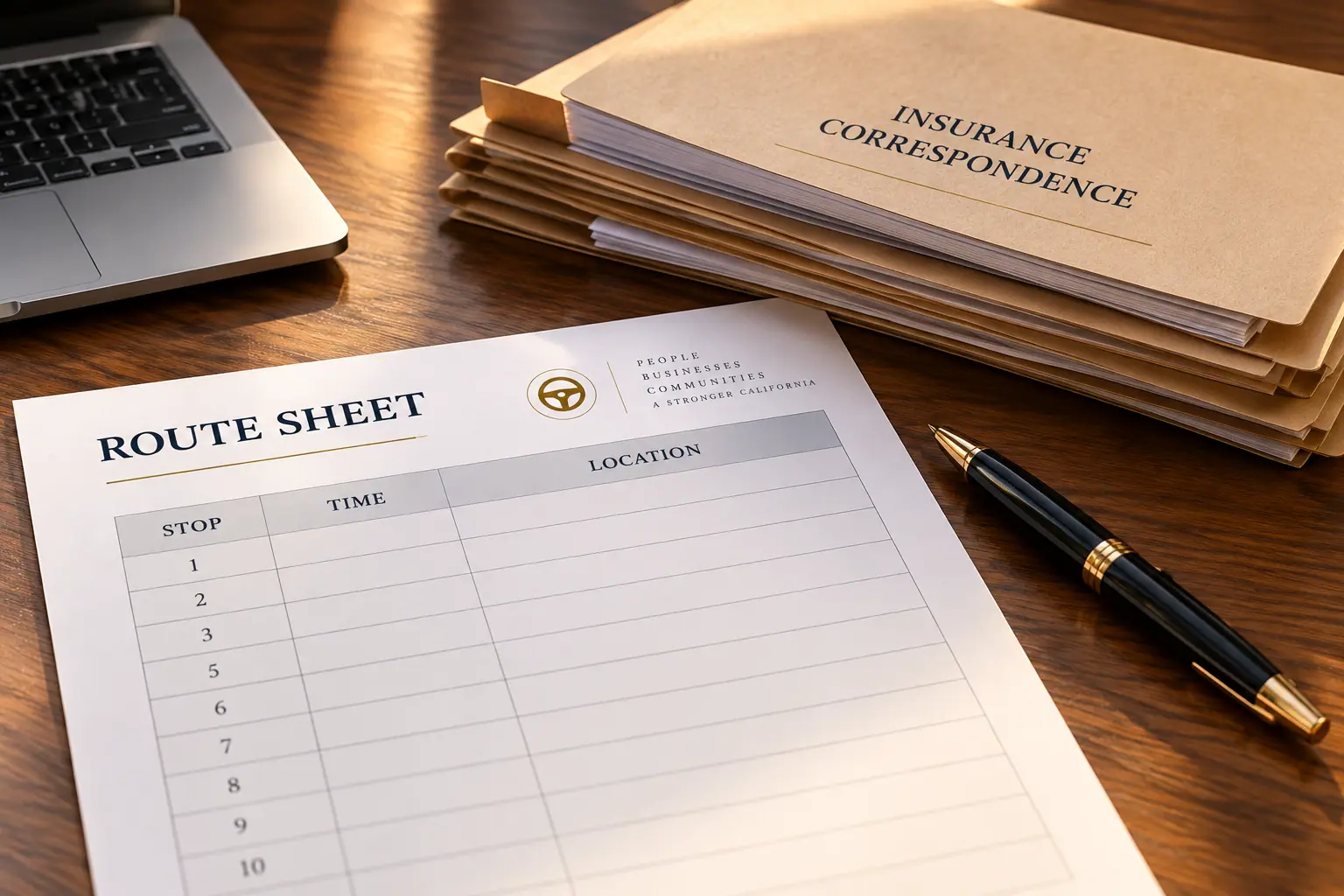
- Work assignment: route sheets, dispatch messages, delivery timestamps, and relevant order records may show the purpose of the trip.
- Crash sequence: dash-camera footage, nearby business video, witness accounts, and scene photographs may help establish what happened.
- Vehicle condition: inspection and repair records may matter if a mechanical problem contributed.
- Relationships and coverage: driver agreements, rental documents, policies, and insurer correspondence may help identify responsible parties and coverage.
- Injuries and losses: medical records, missed-work information, and documentation of daily limitations help explain the crash’s effects.
Save originals of files you already have. Video and operational data can be overwritten, so timely preservation matters. A preservation request does not itself grant access to a company’s systems or compel production of documents.
See Truck Accident Evidence Preservation for the distinction between saving records and obtaining them through appropriate legal procedures.
What should I do after a delivery vehicle accident?
- Move to safety when possible and call emergency services if needed. Seek appropriate medical attention.
- Exchange driver, vehicle, and insurance information when it is safe to do so.
- Photograph the vehicle, company markings, damage, and surrounding area without entering traffic or private property.
- Save witness details, the crash report number, and relevant messages or order information.
- Notify your own insurer as required by your policy and keep copies of claim communications.
- Get advice before signing a release, particularly if the full extent of your injuries is not yet understood.
California DMV requires an SR-1 report within 10 days when a crash causes injury, death, or more than $1,000 in property damage. This is a separate requirement from a police or insurance report. Use the DMV’s accident-reporting guidance.
Do not wait for a company to finish its internal investigation before checking your legal deadlines. Different rules may apply to government vehicles or public entities. Read California Accident Claim Deadlines and obtain advice about your specific circumstances.
Potentially. The license plate, driver information, delivery records, and other evidence may identify the owner and operator. Lack of branding does not determine whether a valid claim exists.
The actual activity and work relationship need review. Dispatch messages and delivery timing may help test that account. An employer’s description of the trip is not the only evidence, but a personal trip can raise different issues from an assigned delivery.
Keep the denial letter and ask for the stated policy basis. Coverage and fault are different issues; a coverage denial does not by itself decide who caused the crash. Other applicable policies or responsible parties may need investigation.
Your situation may involve workers’ compensation, a claim against another responsible party, or other coverage, depending on your status and the facts. Tell the attorney that you were working so the appropriate options and deadlines can be evaluated.
Depending on the evidence and law, a claim may address medical expenses, lost income, future losses, and the effects of injury on daily life. A company logo does not determine case value. Read Compensation Available After an Accident.
The case evaluation is free. MMG advances case expenses. Contingency rates vary by case stage and are explained in the written agreement. No recovery means no attorney fees or case expenses owed to MMG. Medical bills, liens, and other third-party obligations are separate. See Attorney Fees and Case Costs.
Start with the information you have
Tell MMG where the collision happened, what you know about the delivery vehicle, and how you were injured.
CALIFORNIA TODAY.
STRONGER TOMORROW.
Tell MMG where the collision happened, what you know about the delivery vehicle, and how you were injured. A consultation can address possible claims, records to preserve, coverage questions, and next steps.
Call (818) 539-7969 or request a free case evaluation. Phone and video consultations are available. Visits to 100 W Broadway, Suite 540, Glendale, are by appointment.
This page provides general information. Contacting MMG does not by itself establish an attorney-client relationship.
Evidence to preserve
Bring what you already have.

Preserve originals. Do not access company systems.
Which coverage may apply?
The vehicle, delivery activity, and policy terms matter.
 Company vehicleReview commercial auto coverage.
 Rented or personal vehicleReview vehicle and business policies.
 App-based deliveryConfirm the service and activity at the time.
Passenger rideshare rules do not automatically apply.
Who operated the delivery?

Delivery business

Contractor

Driver
Review who assigned the work, the actual relationship, and the activity at the time.
USEFUL INFORMATION
- Agreements and vehicle records
- Dispatch and route information
- Delivery timestamps
A logo or contractor label alone does not decide liability.