
CALIFORNIA MOTORCYCLE CLAIMS
Motorcycle Damage, Riding Gear, and Property Claims in California
Document the loss. Understand your next step.
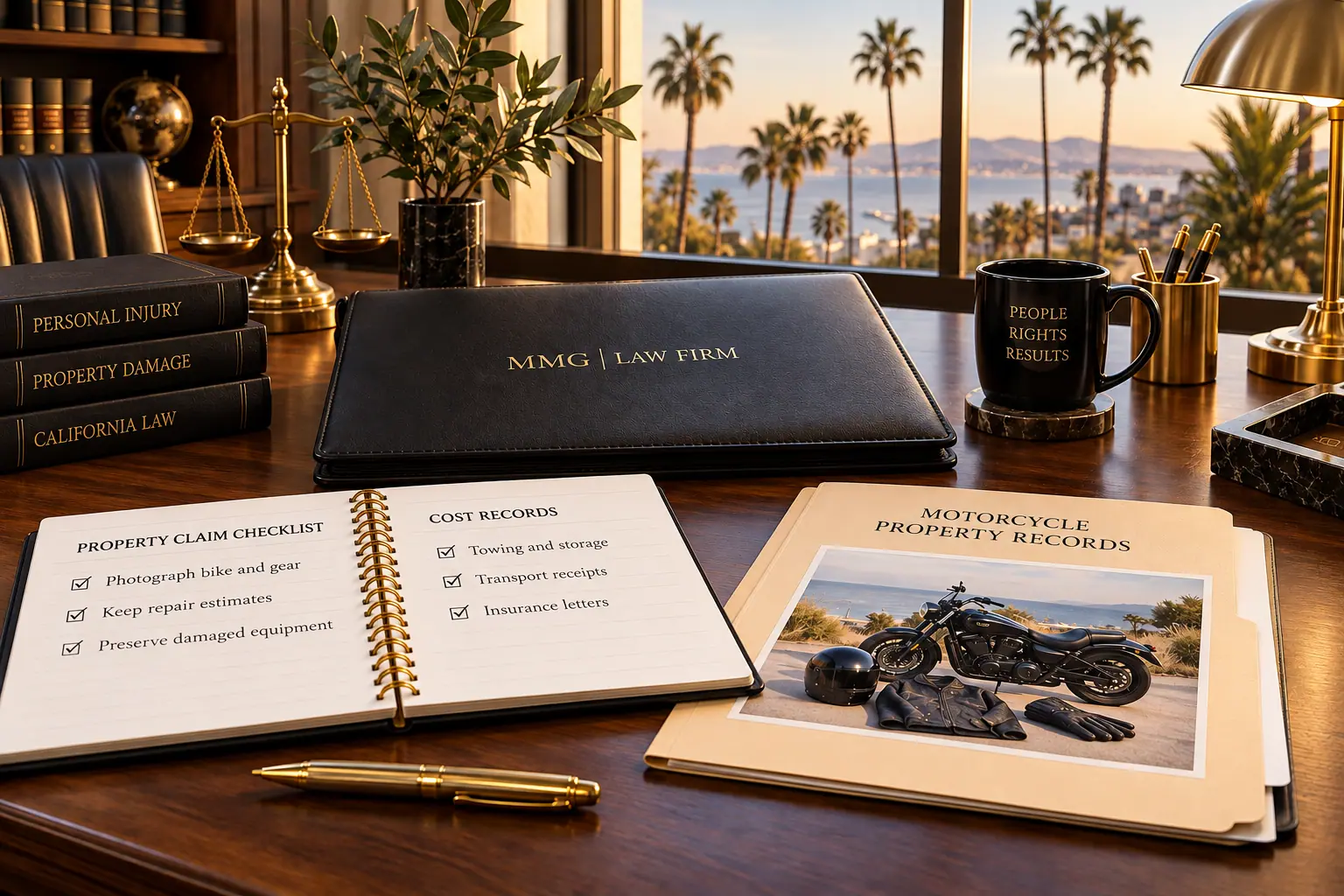


Your bike is only part of the loss.
Document damaged equipment, keep cost records, and review the proposed settlement carefully.
Is the motorcycle in storage?
Confirm daily charges, inspection plans, and release requirements.
What needs to be documented?
Photograph the bike, riding gear, and personal belongings.
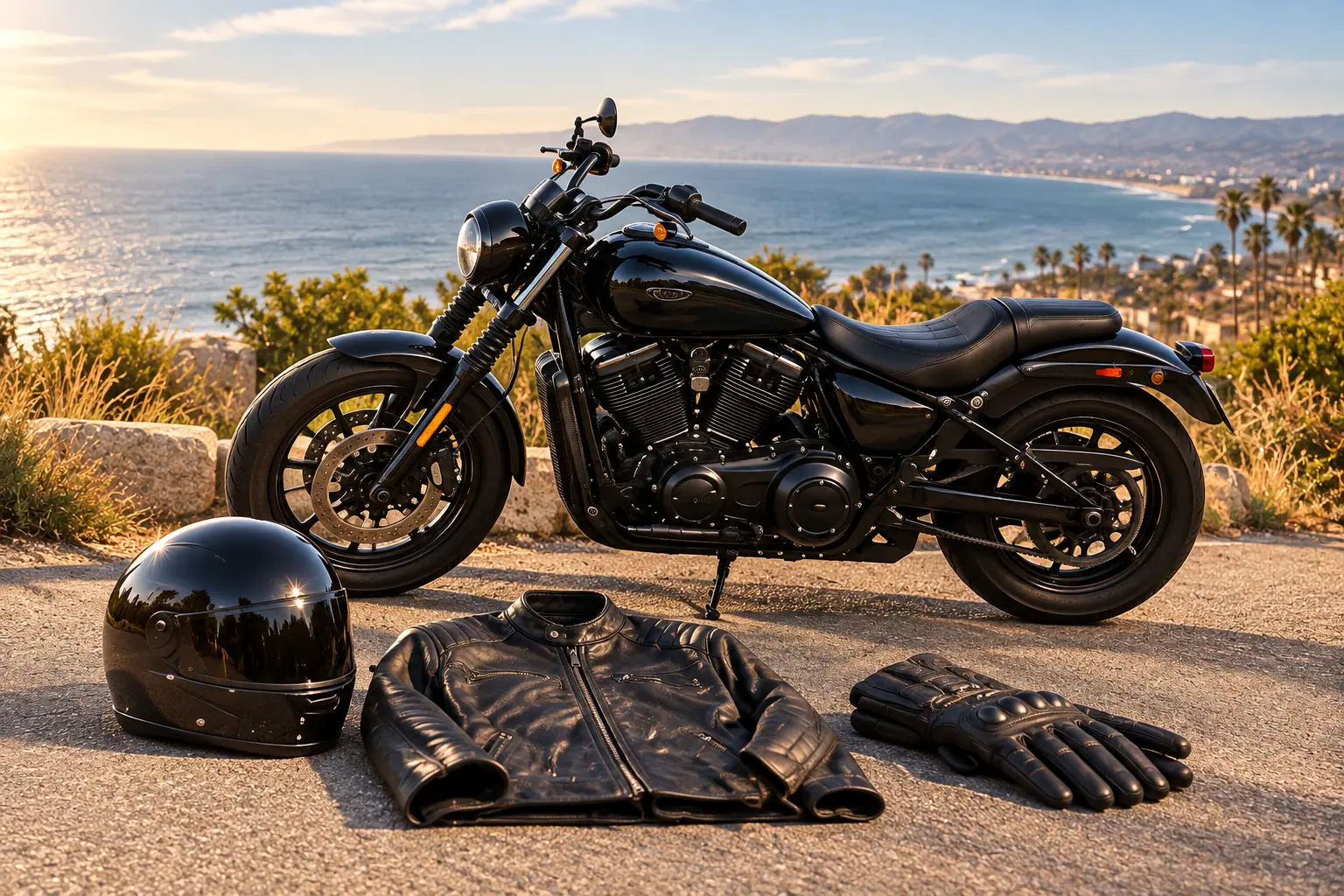
Your bike is only part of the loss
A motorcycle crash can damage the bike, helmet, protective clothing, luggage, and personal belongings. Towing and daily storage charges can arrive before an insurer decides fault. Start by documenting each loss and confirming where the motorcycle is being held.
If you were also injured, MMG can discuss how property issues fit alongside your injury claim. Call (818) 539-7969 or request a free case evaluation. Ask what assistance is available for your circumstances; standalone property-damage representation and its scope are not automatic.
Keep the evidence. Track the costs.
Preserve photos, estimates, receipts, and insurance letters.
Start here if the motorcycle is in storage
- Find the motorcycle’s exact location and the contact person who can authorize access or release.
- Request an itemized bill, daily storage rate, current balance, release requirements, and any approaching lien-sale or disposal notice.
- Notify the insurer promptly. Ask when inspection will occur, what charges it accepts, and whether moving the bike to a lower-cost location is appropriate.
- Coordinate any necessary evidence inspection before repair, dismantling, or salvage transfer where possible. Keep written confirmation of arrangements.
- Save every invoice and message. Record the date, person contacted, and response when a transfer or inspection is delayed.
Storage charges can continue during a dispute. Do not assume the insurer will pay every day indefinitely or that preserving evidence requires leaving the bike in an expensive yard. Discuss a reasonable plan that addresses both evidence and accumulating costs. If injuries prevent you from managing this, ask a trusted person to help with communications and confirm what authorization is required.
Build an inventory of the damaged property
Motorcycle and installed accessories
Record the year, make, model, VIN, mileage, pre-crash condition, and known prior damage. Photograph the entire bike and individual damage areas. List installed accessories separately, with receipts and installation records when available. Purchase price does not necessarily equal current value, and accessory spending may not increase a settlement dollar for dollar.
Helmet, jacket, boots, gloves, and protective equipment
Identify each item by brand, model, approximate purchase date, price, and pre-crash condition. Photograph damage, labels, and identifying information. Keep damaged gear available for inspection rather than discarding it immediately.
Preservation is not permission to reuse damaged safety equipment. Follow manufacturer guidance for a helmet involved in an impact; do not assume it is safe because the shell looks intact. For replacement selection, NHTSA’s motorcycle helmet guide explains fit and compliance labeling. A DOT marking reflects manufacturer certification, not individual NHTSA approval.
Luggage and personal items
Include damaged bags, communications equipment, phones, eyewear, and other belongings, explaining where they were and how the crash damaged them. Save receipts, account purchase histories, earlier photographs, and repair estimates. A missing receipt does not mean there is no other evidence of ownership or value.
Do not assume the motorcycle policy treats riding gear, permanently installed accessories, and personal belongings the same way. Ask which coverage and valuation method the insurer is applying to each item.
Repair estimate or total-loss offer?
The California Department of Insurance accident guide discusses vehicle damage estimates, actual cash value, and total-loss settlements. Request the insurer’s written estimate or valuation and its explanation of deductions. A loan balance is not the same as the motorcycle’s pre-loss value.
If repairs are proposed
Obtain an itemized estimate from a qualified motorcycle repairer. Ask what inspections support it, whether hidden damage may require a supplement, and what parts and labor are included. Clarify diagnostic, teardown, reassembly, and storage charges before authorizing work. An insurance estimate and your authorization to the shop are different documents.
The Bureau of Automotive Repair’s consumer guide explains written estimates, repair authorization, and invoices. Keep copies of the work approved and any later changes. A motorcycle should not be returned to service merely because cosmetic damage has been repaired; address safety concerns with the repair professional.
If the motorcycle is declared a total loss
Review whether the report identifies the correct model, mileage, equipment, condition, and relevant comparable motorcycles. Point out specific errors and provide dated supporting records. Ask for an explanation of applicable taxes and fees, deductions, and any salvage-retention amount.
Before retaining a totaled bike, clarify the payment adjustment, lender requirements, title and registration consequences, repair feasibility, and future insurability. Keeping the motorcycle does not establish that it is safe or legal to ride. If financing exceeds the settlement, check whether a separate gap agreement applies; it is not automatic protection.
Which insurance may help?
Your own collision coverage, if applicable, may address crash damage subject to a deductible and policy terms. A claim against a responsible party’s insurer depends on liability, covered damages, and available limits. Gear or accessory coverage may have separate terms. The California Department of Insurance coverage guide explains why the declarations and policy wording matter.
Ask which claim is being processed, whether a deductible applies, and how any later recovery from another party will be handled. Do not assume deductible reimbursement is guaranteed or immediate. Bodily-injury coverage and property-damage coverage are separate; identifying one does not establish the other.
Towing, transportation, and loss of use
Keep itemized towing, recovery, storage, and transport receipts. Reasonableness, necessity, causation, policy terms, and the type of claim can affect what is payable. Request written clarification rather than relying on a general statement that expenses are “covered.”
Rental reimbursement under your own policy is different from a potential loss-of-use claim against a responsible party. Ask about applicable limits and the period being considered before spending money you cannot afford to carry. Keep records of substitute transportation, dates the bike was unavailable, and repair or replacement delays. Do not assume that a rental motorcycle, every rideshare trip, or unlimited replacement time will be reimbursed.
Protect the injury claim when resolving property damage
A property settlement may be addressed before an injury claim is ready, but the actual release language matters. Confirm whether the document resolves only identified property losses or also releases bodily-injury claims, other parties, or unknown claims. Do not rely solely on a file label or an adjuster’s verbal description.
The bike and damaged gear may also be evidence of how the crash occurred. Coordinate preservation before signing salvage paperwork or authorizing disposal. Related guidance: motorcycle accident representation, compensation available after an accident, and insurance settlement offers and releases.
Where to seek assistance
For an insurer dispute, first request the decision and supporting explanation in writing. The California Department of Insurance provides consumer assistance for claim-handling concerns. A complaint does not guarantee payment or replace a lawsuit deadline.
For a repair transaction you cannot resolve with the shop, BAR’s complaint process may help evaluate or mediate an issue within its authority. Keep estimates, authorizations, invoices, and correspondence. This is assistance with qualifying repair disputes, not a promise of free repairs or cash reimbursement.
For a property-only dispute, the California Courts property-damage guide explains civil claims and potential small-claims options. Property-damage lawsuits generally have a three-year deadline, while injury lawsuits generally have a different, shorter period. Public-entity claims and other circumstances can require earlier action. Read MMG’s claim deadlines guide and obtain advice about your actual dates.
Bring the records you already have
For a consultation, useful starting materials include the crash date, motorcycle location, storage bill, claim number, photographs, repair estimate or total-loss offer, damaged-item list, and any proposed release. Tell MMG immediately if a storage deadline or salvage transfer is approaching.
MMG can discuss available assistance and the scope of any proposed representation. For accepted contingency injury matters, rates vary by case stage and are explained in the written agreement. MMG advances case expenses; no recovery means no attorney fees or case expenses owed to MMG. Medical bills, towing or storage obligations, and other third-party charges are separate. Do not assume a property-only matter is accepted or handled without a fee. See attorney fees and case costs.
Call (818) 539-7969 or request a free case evaluation. Office visits at 100 W Broadway, Suite 540, Glendale are by appointment; phone and video consultations are available.
General information, not individual legal advice. Contact alone does not create an attorney-client relationship. Images are illustrative, not actual client evidence.
STORAGE GUIDE
Is the motorcycle in storage?
Confirm the location and daily rate.
Request an itemized bill.
Coordinate inspection and release.
Keep written records.

Charges may continue during a dispute. Do not assume every day will be reimbursed.
PROPERTY CHECKLIST
Document each loss.
Keep originals. Make a backup.
Preserve damaged equipment. Do not reuse unsafe gear.