
CALIFORNIA ACCIDENT CLAIMS
California Distracted-Driving Accident Lawyer
Understand the evidence. Protect your next step.
You do not need to prove distraction before asking for help.
Explore the guide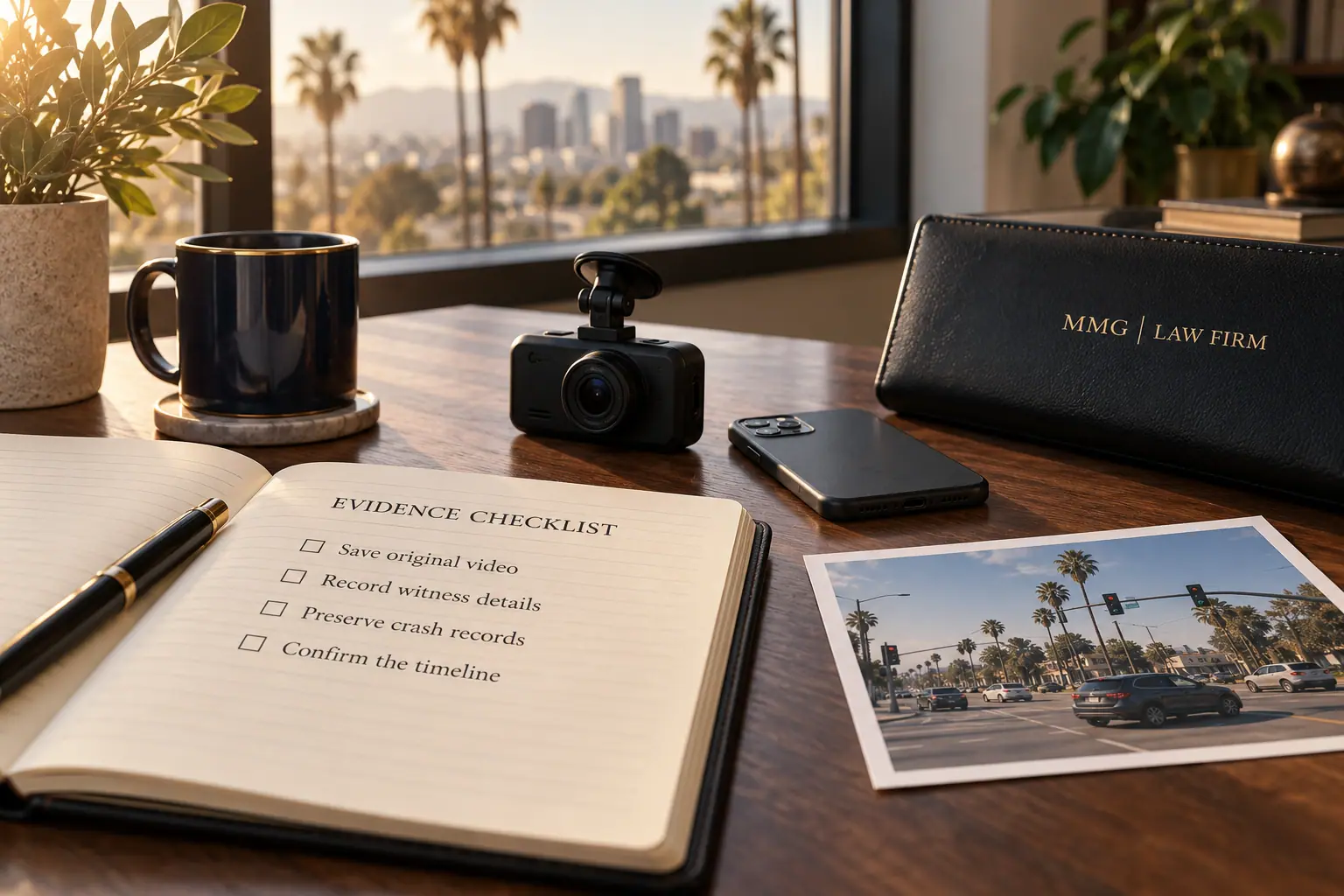

01
Preserve original records
Keep photos, video, phone records, and witness details.

02
Check the timeline
Look at what happened before, during, and after the crash.

03
Connect the evidence
Bring together records to show the full picture.
What was happening before the crash?
Multiple types of evidence can help show what a driver was doing and when.

Video and witnesses
Traffic cameras, dash cams, and witness statements can show driver behavior before the crash.
View evidence
Phone and device records
Call logs, text messages, and app activity can help establish timing and phone use.

Vehicle and work records
Vehicle data, fleet records, and employment records may show distraction and work-related activity.
View evidence Preserve the originalVideo, photos, and other records can make a difference.
 Look beyond one recordConsider the full context, not just a single data point.
A moment of distraction can leave lasting consequences
You may have seen the other driver looking down. A witness may have noticed a phone. Or the crash may have happened without any obvious explanation. You do not need to prove distraction before asking for help.
MMG Law Firm can review what happened, identify evidence worth preserving, and explain your options after a California car, truck, or motorcycle collision. The important question is whether a driver’s failure to pay attention contributed to the crash and your injuries.
Request a free case evaluation or call (818) 539-7969. No recovery, no attorney fees or case expenses owed to MMG. Medical bills and other third-party obligations are separate.
What counts as distracted driving?
Distraction can take a driver’s eyes off the road, hands away from driving, or attention away from traffic. Examples include reading messages, handling a phone, adjusting navigation, reaching for an object, eating, or focusing on passengers. Texting can combine all three kinds of distraction. NHTSA explains these different forms of distraction.
A phone is not required for a distracted-driving claim. Equally, a phone in the vehicle does not establish that its driver was distracted. The investigation must connect the driver’s conduct to the collision.
What the research tells us
148
California deaths in crashes involving distracted drivers.
2022 · OTS
71.4%
Named texting-related distraction a top concern.
2025 OTS survey
Why distraction can be missed
Cornell discusses the challenge of identifying distraction after a crash.
Historical data and survey findings do not establish fault in an individual case.
What California data and research tell us
The California Office of Traffic Safety reports that 148 people died in California crashes involving a distracted driver in 2022, down 5.1% from 2021. Separately, its 2025 public-opinion survey found that 71.4% of Californians identified texting-related distraction as one of their top traffic-safety concerns. The first figure is a historical fatality count; the second measures public concern, not the percentage of crashes caused by texting. Read the OTS distracted-driving overview.
Cornell University’s Evidence Based Living article discusses research on distraction and explains why it can be difficult to identify during crash investigations. Its discussion of national fatalities refers to 2021 data, not a current-year total. It also describes how distraction can affect a driver’s eyes, hands, or attention.
These sources provide safety context. They do not establish that a particular driver was distracted, determine legal responsibility, or predict a settlement. Your claim depends on evidence about your collision and injuries.
How can distraction be investigated and proven?
Different records answer different questions. A useful investigation compares independent sources and checks whether their timing, viewpoint, and meaning support the same account.
Witnesses and statements
A passenger, nearby driver, or pedestrian may have seen someone looking down, holding a device, or failing to react. The witness’s location, lighting, viewing time, and exact observations matter. Seeing a lowered head does not necessarily establish texting. Preserve contact details and the words you remember without asking anyone to guess.
Dash cameras and nearby video
Footage may show lane movement, traffic signals, braking, or visible driver behavior. It may also contradict an initial impression. Identify nearby businesses, residences, buses, and vehicles that could have recorded the scene. Availability and retention vary; do not assume every traffic camera records or stores footage.
Phone and device records
Relevant call or message records may help establish a timeline. They may not show message content, every app interaction, who was using the device, or whether the driver was looking at the screen. Background activity and differences between device clocks require careful interpretation.
NHTSA’s investigation guide explains that some app messages do not appear in carrier text records and that precise timing matters. It is a guide for criminal investigators and prosecutors; it does not give a civil attorney the same investigative powers. Read the NHTSA investigation guide.
Vehicle data and crash reconstruction
An event data recorder may provide a short record of speed, braking, or other vehicle information, depending on the vehicle and event. It generally does not establish what a driver was reading or thinking. A qualified specialist may compare available data with photographs, damage, roadway conditions, and video. NHTSA explains event data recorders.
Work-related records
For a driver working at the time, relevant dispatch messages, delivery activity, fleet video, or employer records may deserve review. Their availability depends on the facts and lawful access. A work-related trip can raise additional responsibility questions; it does not automatically make every employer or platform liable.
Can a lawyer obtain the other driver’s phone records?
Sometimes relevant records can be obtained, but access is not automatic. In a lawsuit, an attorney may use document requests, subpoenas, or other appropriate procedures. The source of the records, privacy rights, legal restrictions, objections, and court orders can limit disclosure. A subpoena does not guarantee access to message contents or an entire phone.
The California Courts discovery guide distinguishes requests to parties from subpoenas to third parties. A focused request should seek evidence relevant to the crash, rather than unrelated personal information.
Preserving evidence and obtaining it are separate steps. A preservation request may help protect available material while access is addressed, but cannot restore data that no longer exists. Do not access another person’s accounts or devices yourself.
What should I preserve now?
- Care and safety first: Get appropriate medical care. Call 911 for an emergency or immediate danger.
- Original recordings: Save original dashcam files and photographs, including surrounding footage where available. Keep an unedited copy.
- Witness information: Record names, contact details, locations, and what each person actually observed.
- Crash details: Note the date, approximate time, location, vehicles, police agency, and report number.
- Potential video sources: Write down nearby camera locations so preservation can be considered promptly.
- Your own records: Keep relevant messages, receipts, medical paperwork, and work-loss records. Do not delete potentially relevant material because it seems unfavorable.
Tell the reviewing attorney if a vehicle is about to be repaired or disposed of, or if a device or recording may be lost. Avoid delaying necessary treatment or safety measures to collect evidence. See what to do after a California accident.
California phone rules and civil responsibility
California generally restricts holding and operating a phone while driving. Hands-free operation and limited interaction with a properly mounted device are subject to specific requirements. Drivers under 18 face stricter restrictions. Emergency exceptions and the circumstances of use may matter. The California Highway Patrol explains hands-free driving rules.
Complying with a phone rule does not excuse otherwise careless driving. A hands-free conversation or an unrelated distraction can still be relevant if it interfered with safe driving. The CHP distracted-driving program discusses both phone and non-phone distractions.
In a typical negligence claim, the evidence must establish negligent conduct, harm, and the required causal connection. California’s civil jury instructions address driver care, causation, and comparative fault in CACI 700, 430, and 405. Explore the Judicial Council’s civil jury instructions.
A traffic citation can be relevant, but does not automatically prove a civil claim. The absence of a citation does not automatically defeat one. Rear-end damage, lack of visible braking, or an unanswered message alone does not conclusively establish distraction.
What if the insurer disputes fault or my injuries?
The insurer may question who caused the crash, whether a record shows driver activity, or whether the collision caused the claimed injuries. A careful response connects the crash evidence with medical findings, treatment history, and the practical effects on your life.
If you were also negligent and that negligence contributed to your harm, California comparative-fault rules may reduce your recovery by your assigned share. Partial responsibility does not necessarily prevent recovery. Read partial fault in a California accident.
Depending on the evidence, damages may include medical expenses, future care, lost income, reduced earning capacity, and pain and suffering. A distraction allegation does not produce an automatic settlement amount or automatic punitive damages. See compensation available after an accident and medical bills, liens, and treatment costs.
How long do I have to take action?
California personal-injury lawsuits generally have a two-year filing deadline, but important exceptions apply. Claims involving a public entity commonly require an earlier government claim, generally within six months for personal injury. Separate lawsuit deadlines can follow. The correct deadline depends on the parties and facts.
The California Courts personal-injury guide explains the general time limit. Evidence may disappear much sooner than a filing deadline. Insurance discussions do not necessarily extend the time to sue. Review California accident claim deadlines promptly.
Describe what you observed and what remains uncertain. Other evidence may support a claim based on unsafe driving even if the specific distraction cannot be established.
No. Some app activity may not appear in carrier records, and many distractions do not involve a phone. An empty log also does not prove that records were deleted.
A denial is one part of the evidence. Witness accounts, available recordings, driving behavior, and properly obtained records can be considered together. There is no guarantee that electronic evidence will be available.
Yes. Bring the information you already have. A consultation can identify missing records and issues requiring prompt attention.
Yes. MMG advances case expenses without an upfront payment. Contingency percentages vary by case stage and are explained in the written agreement. If there is no recovery, you owe MMG no attorney fees or case expenses. Medical bills, liens, and other third-party obligations remain separate. Read attorney fees and case costs.
CALIFORNIA
PEOPLE
JUSTICE
STRONGER TOMORROW
Talk with MMG about what happened
Start with the crash location, when it happened, and what concerns you most. You do not need a complete evidence file to request a consultation.
Request your free case evaluation or call (818) 539-7969. Phone and video consultations are available. Office visits at 100 W Broadway, Suite 540, Glendale, are by appointment.
This page provides general information, not advice about a specific case. Contacting the firm does not by itself establish an attorney-client relationship. Every claim depends on its facts and applicable law.
What can phone records show?
Records may help establish a timeline.
Possible clues
Call timing and available device records.

Important limits
App activity may be missing. Records alone do not prove who used the phone.

Lawful access
Relevant records require appropriate procedures. Access is not guaranteed.
Do not access another person’s accounts or devices yourself.
California data, in context
148
California deaths in crashes involving distracted drivers.
2022 · OTS
71.4%
Named texting-related distraction a top concern.
2025 OTS survey
Why distraction can be difficult to identify
Cornell discusses why distraction can be difficult to identify. Its national fatality discussion uses 2021 data.
These figures do not establish fault in your case.
Your evidence checklist
Gather and preserve what may help show what happened.
Do not delete relevant files. Do not access another person’s phone or accounts.