
CALIFORNIA TRUCK ACCIDENT CLAIMS
California Jackknife Truck Accident Lawyer
Understand the sequence. Preserve the evidence.
The truck’s final position is only part of the story.
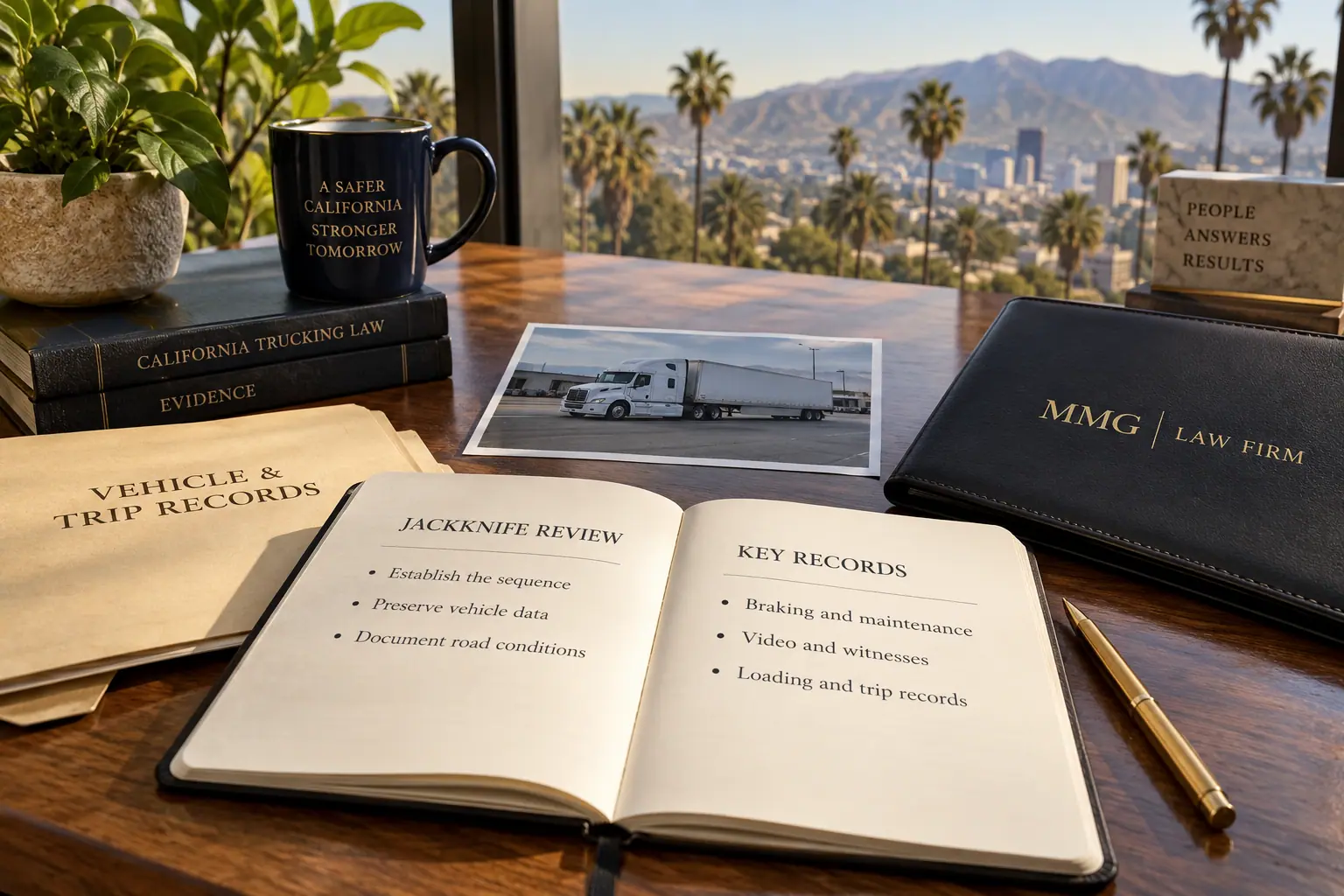
Establish the sequence
Reconstruct what happened before the jackknife.
Preserve the records
Secure vehicle, driver, and loading data.
Document your losses
Track injuries, treatment, and long-term impact.
Look at what happened before the fold.

Braking & vehicle condition
Review maintenance, tires, and available data.

Road & traffic conditions
Examine visibility, traction, and vehicle movements.

Load & crash sequence
Connect loading records, video, and impact timing.

A jackknife alone does not establish fault.
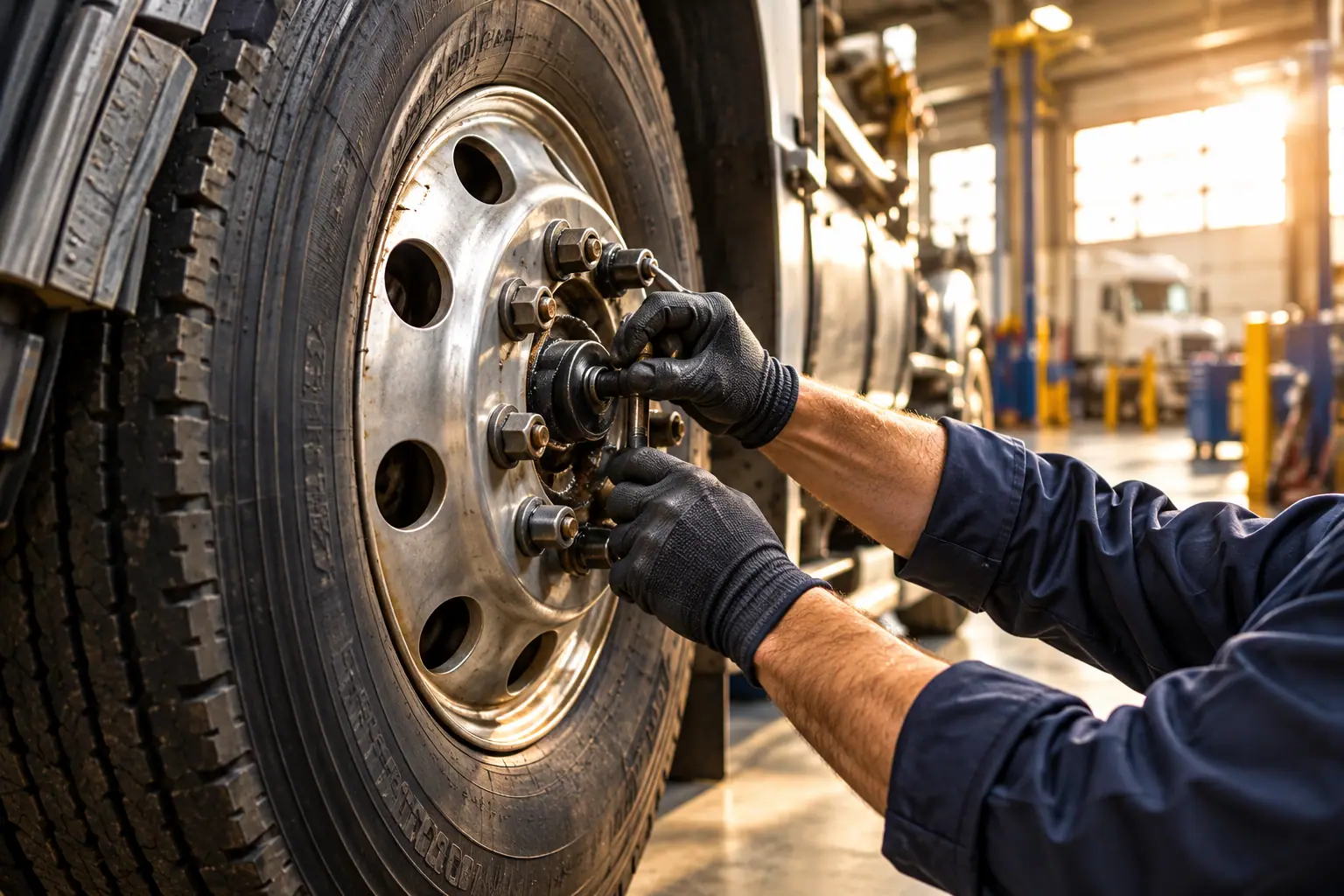
Understand the sequence—not just the final position
A jackknife occurs when a tractor and its attached trailer fold toward each other as the combination loses its normal alignment. The truck or trailer may swing across lanes, strike nearby vehicles, or leave other drivers facing a sudden obstruction.
The truck’s final position does not, by itself, explain why the crash happened or who was responsible. An investigation should establish what happened before the loss of control, how the vehicles moved, and when each impact occurred.
MMG Law Firm offers free case evaluations for people injured in California truck crashes. Call (818) 539-7969. You can contact the firm before you have every document, and a family member can make an initial inquiry for someone who cannot.
Preserve the evidence before it changes.
Video, vehicle records, and witness accounts may matter.
Explore evidence preservationHow a jackknife can develop
Tractor-trailers pivot at their coupling during normal turns. A jackknife involves an uncontrolled change in that relationship. Investigators may consider a loss of tire traction, braking behavior, steering inputs, road conditions, or contact with another vehicle. More than one factor may be involved.
The California DMV’s truck-driver guidance explains how braking problems and wheel lockups can affect control and contribute to jackknifing. This is useful safety context, but it does not establish the cause of a particular crash.
A trailer swinging outward, a tractor rotating, and a truck rolling over are not interchangeable descriptions. A crash can involve several movements. Video, physical evidence, and qualified reconstruction may help distinguish them and establish their order.
What investigators may need to examine
Speed, following distance, and braking
The important questions include the truck’s speed before the event, the space available to respond, and whether braking began before or after another impact. A damaged brake component may require examination to distinguish an earlier problem from crash damage. Investigators should not assume that every jackknife resulted from excessive speed or failed brakes.
Weather, pavement, and visibility
Rain, ice, debris, curves, grades, and reduced visibility may affect the analysis. Evidence should reflect conditions at the place and time of the crash, rather than a general weather report alone.
For covered commercial operations, 49 CFR 392.14 requires extreme caution when hazardous conditions affect traction or visibility, reduced speed, and discontinuing operation when conditions become sufficiently dangerous, subject to the rule’s limited exception. Bad weather therefore does not automatically resolve questions about the driver’s conduct. Applicability and the actual circumstances require review.
Equipment and maintenance
Brake systems, tires, steering, and relevant stability-control equipment may warrant inspection. 49 CFR 396.3 addresses systematic inspection, repair, and maintenance for covered vehicles. The investigation should connect any identified condition to the loss of control, rather than assume a maintenance violation caused the crash.
Read Truck Brake Failure and Poor Maintenance for related evidence questions.
Cargo and other vehicles
Loading records and the condition of the load may help assess whether weight distribution or cargo movement played a role. Federal cargo securement requirements address preventing cargo from escaping and preventing shifting that adversely affects stability or maneuverability. Displaced cargo found after an impact does not alone establish that it caused the jackknife.
Another vehicle’s lane change, collision, or sudden movement may also be relevant. A complete reconstruction should test competing explanations. See Overloaded Trucks and Unsecured Cargo.
Evidence that can clarify the crash sequence
- Original video: dash cameras, nearby businesses, and other vehicles may show movement before the truck reached its final position. Save original files, not only edited clips.
- Scene photographs and measurements: tire marks, debris, vehicle positions, road geometry, and damage can help connect separate events.
- Electronic vehicle data: available engine, braking, stability-control, or telematics records may provide useful information. The systems installed, recorded events, and data retention vary.
- Driver and trip records: duty-status logs, dispatch communications, route information, and available delivery records may help establish the timeline.
- Inspection and repair records: service history, reported concerns, replacement parts, and post-crash examinations may help distinguish old conditions from impact damage.
- Loading documents: shipping records, weight information, and loading instructions may identify relevant cargo questions.
- Witness accounts: where a witness was located and what they actually saw matter as much as the conclusion they reached.
An electronic logging device is not automatically a detailed crash recorder. Duty-status records and event data from other vehicle systems serve different purposes. An attorney or qualified expert can identify which records may exist and how to obtain them appropriately.
FMCSA’s ELD guidance states that motor carriers must retain ELD duty-status and backup data for six months. That does not mean every vehicle-data system or video source retains information for that long, or that waiting is advisable.
Repairs, salvage, and routine overwriting may affect evidence. A preservation request can identify relevant material, but it does not itself compel disclosure or authorize access to someone else’s vehicle. Inspections and testing should be coordinated appropriately. See Truck Accident Evidence Preservation.
Who may be responsible?
Depending on the facts, investigation may involve the driver, motor carrier, equipment owner, maintenance provider, loading business, manufacturer, or another motorist. Each potential claim needs a supported legal basis and a connection to the harm.
Company records may help establish who controlled the trip and equipment. A business name on a trailer does not answer every ownership, employment, or insurance question. Learn more about Trucking Company Liability.
In a chain-reaction collision, the sequence matters: a vehicle may strike the truck, be struck by it, or collide with a separate obstruction afterward. Multiple insurers may reach different conclusions. Keep their correspondence and avoid assuming one adjuster’s explanation resolves all claims. See Multi-Vehicle Accident Lawyer.
Document injuries and the effect on daily life
Seek appropriate medical care and follow the treating clinician’s instructions. Keep treatment records, receipts, missed-work information, and a simple record of assistance needed at home. Serious injuries may require documentation of rehabilitation, reduced earning capacity, and medically supported future care.
The claim should reflect the person’s actual condition and prognosis. Neither the label “jackknife” nor dramatic vehicle damage establishes a settlement amount. Related guides explain Catastrophic Injuries and Compensation Available After an Accident.
Practical next steps
- Prioritize safety and medical care. Do not enter traffic or approach unstable equipment to gather evidence.
- Save your original photos, videos, report number, witness details, and insurer letters.
- Tell the attorney where the vehicles are stored and whether repairs, salvage, or disposal are planned, if you know.
- Describe what you observed separately from what someone later told you.
- Have filing deadlines reviewed promptly. Evidence retention periods and legal filing deadlines are different.
Read California Accident Claim Deadlines. An ongoing insurance investigation does not automatically extend the time to bring a claim.
No. The investigation must address the circumstances, applicable duties, and causation. Driver conduct, equipment, road conditions, and other vehicles may need review together.
Possibly. Evidence may connect a truck’s movement to a collision involving evasive action or another vehicle. Lack of contact can create proof and coverage questions, so preserve witnesses and video and have the facts reviewed.
An accusation does not settle the issue. California’s comparative-fault rules may allow recovery reduced by an injured person’s share of responsibility, depending on the claim and applicable law. See Partial Fault in a California Accident.
The report is one source of evidence. Witnesses, video, vehicle inspections, and other records may add information. Identify specific discrepancies rather than assuming the report is complete or entirely wrong.
The case evaluation is free. MMG advances case expenses. Contingency rates vary by case stage and are explained in the written agreement. No recovery means no attorney fees or case expenses owed to MMG. Medical bills, liens, and other third-party obligations are separate. Read Attorney Fees and Case Costs.
Talk with MMG about your next step
Tell the firm where the crash happened, what you know about the vehicles, and your main concerns.
PEOPLE.
ANSWERS.
RESULTS.
Call (818) 539-7969 or request a free case evaluation. Tell the firm where the crash happened, what you know about the vehicles, and your main concerns. Phone and video consultations are available. Visits to 100 W Broadway, Suite 540, Glendale, are by appointment.
Explore Truck Accident Lawyer for the broader claim process. This page provides general information. Contacting MMG does not by itself establish an attorney-client relationship.
Preserve the evidence
Start with what you already have.

Coordinate inspections before repairs or disposal.
Braking & vehicle condition
What happened first?
Compare braking, vehicle movements, and impact timing.
What condition was the equipment in?
Review brakes, tires, and maintenance history.
What can the evidence establish?
Distinguish prior defects from crash damage.
A jackknife alone does not establish fault.
Road & traffic conditions
What were the conditions?
Rain, ice, debris, curves, grades, and visibility at the time.
How did the driver respond?
Speed, caution, and whether operation should have slowed or stopped.
What did other vehicles do?
Lane changes, collisions, or sudden movements nearby.
Bad weather does not automatically resolve questions about driver conduct.
Load & crash sequence
How was the load distributed?
Loading records, weight information, and securement.
Did cargo move before the fold?
Shifting that affected stability or maneuverability.
When did each impact occur?
Video, scene evidence, and witness accounts help set the order.
Displaced cargo after impact does not alone establish cause.
Different records. Different answers.

Duty-status logs
Help establish driving and work time.

Vehicle event data
May record speed or braking, depending on the system.

Video and dispatch records
May help connect the timeline.
An ELD is not automatically a detailed crash recorder.