
California Hit-and-Run Accident Lawyer
The driver left. You still need answers.
PEOPLEGUIDANCERESULTS THROUGH ADVOCACY
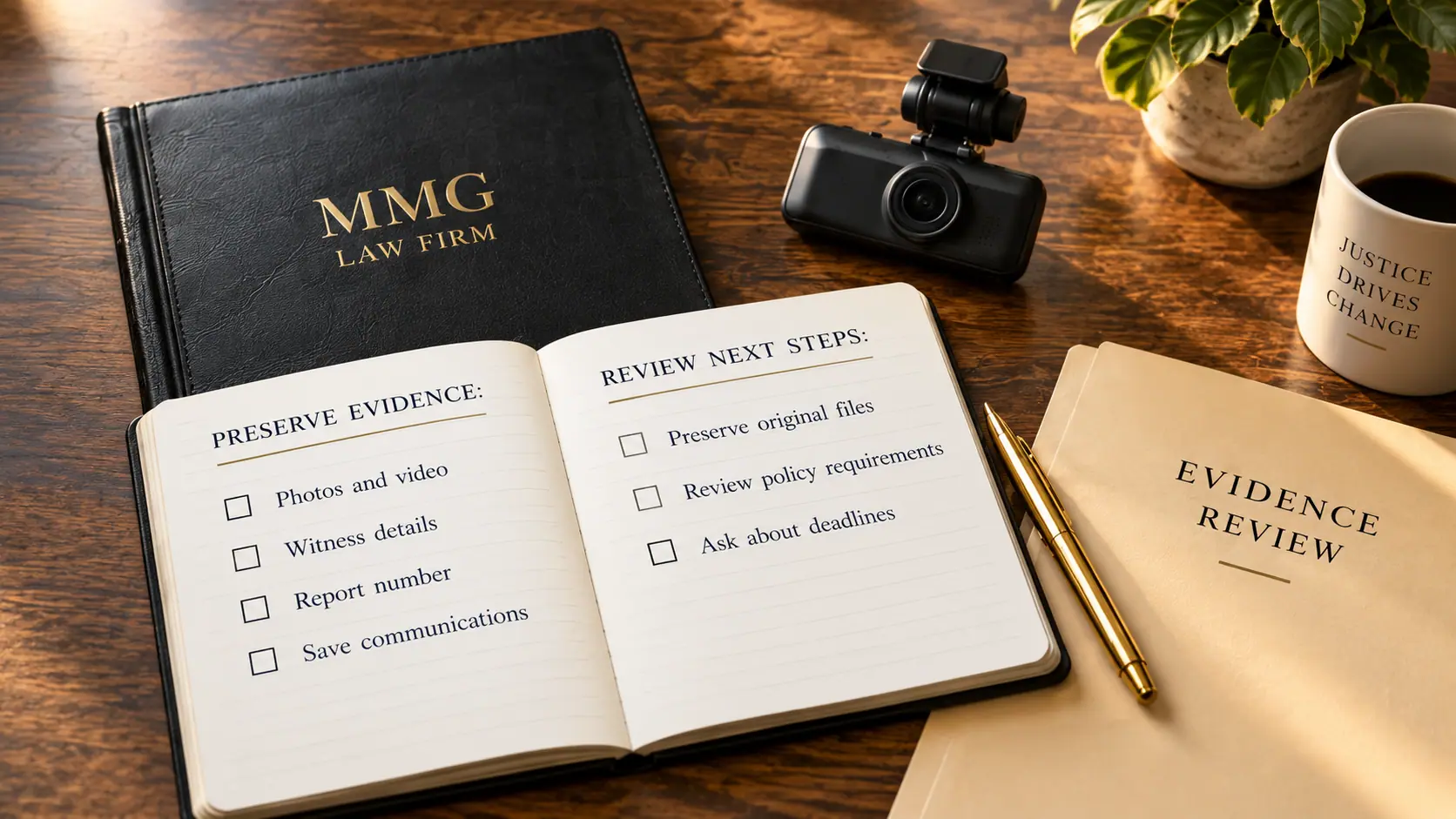
Preserve what you know. Review what may apply.
A partial plate, witness, or recording may help. Driver identification and insurance coverage require separate review.
 Original videoDashcam, home security, or business cameras may capture useful details such as a partial plate, vehicle type, or direction of travel.Witness detailsWitnesses may help confirm what happened and provide additional information about the other vehicle.Policy documentsYour auto policy may include uninsured motorist (UM) coverage or other applicable benefits. Coverage depends on your specific policy.
The driver left. You still need answers.
A driver leaving the scene can make an already difficult accident more confusing. You may have only a partial license plate, a witness, or damage photographs. Those details can still be worth preserving. Identifying the driver and evaluating insurance are related investigations, but neither guarantees compensation.
MMG Law Firm can discuss potential representation after a California car, truck, motorcycle, pedestrian, or bicycle collision. Bring what you have and ask about urgent reporting and insurance requirements before waiting for the investigation to finish.
Request a free case evaluation or call (818) 539-7969. You do not need every record ready to call.
First steps: safety, reporting, and medical care
- Call 911 for an emergency and seek appropriate medical care.
- Move to a safe place if possible. Do not chase or confront the fleeing driver.
- Report the incident to law enforcement and keep the report or incident number.
- Notify your insurer promptly. Ask about required written notices and keep proof of delivery.
- Preserve available photographs, video, and witness details without putting yourself at risk.
Report what you actually observed. Distinguish a complete plate number from a partial or uncertain one. A mistaken identification can complicate an investigation and harm someone uninvolved.
Preserve evidence before it disappears
Write down the time, location, travel direction, vehicle description, and anything remembered about the collision. Record witness contact information and where cameras may be located. Keep original dashcam files and copies; some devices overwrite recordings quickly.
Photograph vehicle damage, the scene, road markings, debris, and visible injuries when safe. Arrange necessary care and repairs, but preserve photographs and relevant records first when practicable. Do not handle potentially dangerous debris.
Nearby businesses, residences, buses, or parking facilities may have video. Ask about preservation promptly; footage can be overwritten. A preservation request does not guarantee access. Obtain records through consent or appropriate legal procedures rather than accessing private systems yourself.
How a civil investigation may help
An investigation can compare witness accounts, damage patterns, lawful video evidence, police information, and available vehicle identifiers. It may help identify a driver, vehicle owner, employer, or other potentially responsible party. Each possibility requires evidence of legal responsibility; ownership or an employment relationship alone does not resolve liability.
Law enforcement determines its own investigative priorities. A civil claim seeks compensation and is separate from a criminal prosecution. An arrest or conviction is not a prerequisite to every civil or insurance claim, and criminal proceedings do not automatically preserve civil deadlines.
MMG cannot promise to locate the driver or obtain every recording. A consultation can identify which evidence and coverage questions deserve attention first.
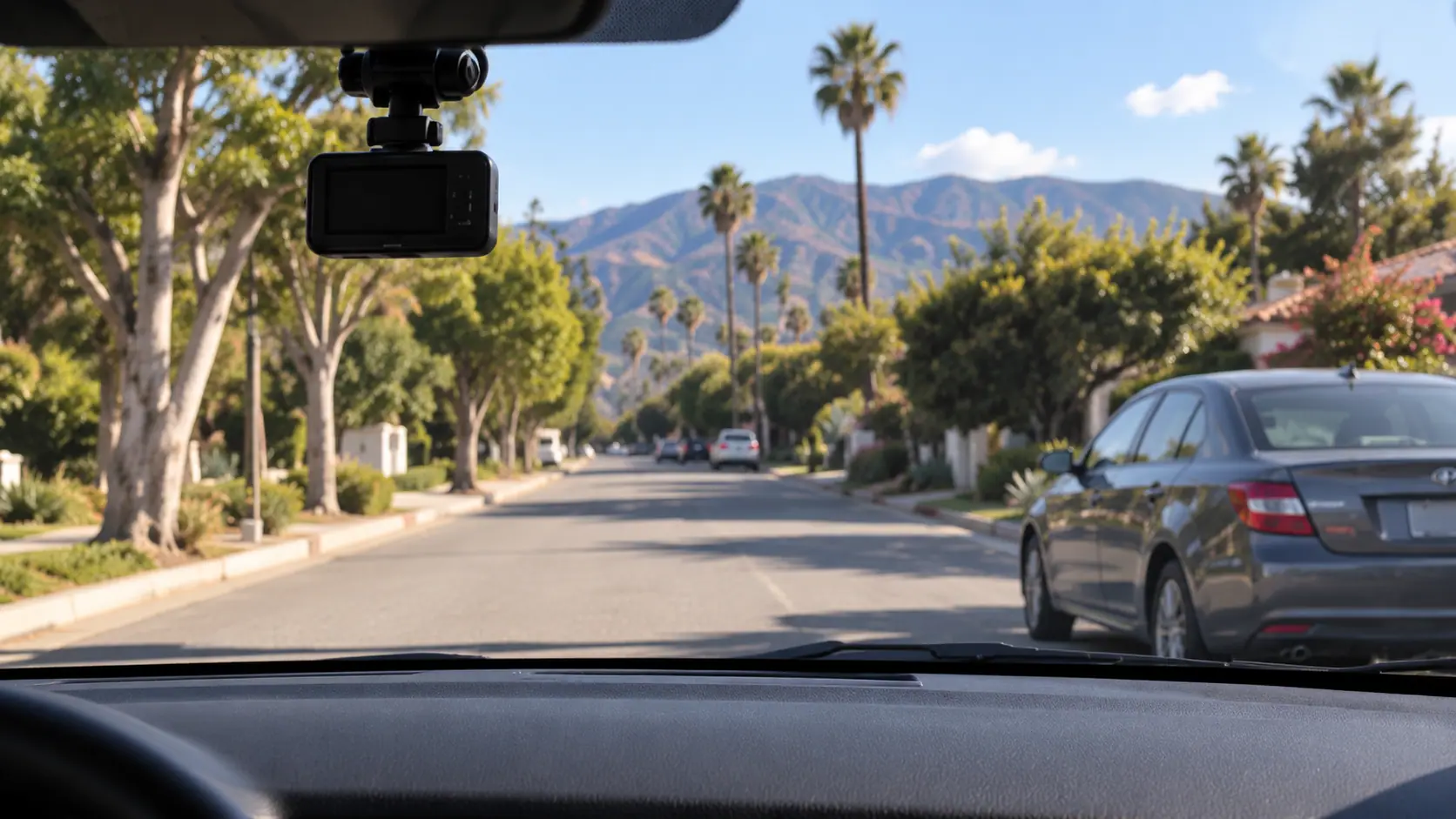
An unknown driver does not end every inquiry.
Review applicable injury coverage and the evidence available.
“DIFFICULT MOMENTS CAN STILL LEAD TO A BRIGHTER TOMORROW.”
 Do not wait for the investigation to finish before checking deadlines.DIFFERENT REQUIREMENTS APPLY. GET INDIVIDUAL ADVICE PROMPTLY.
Reporting overview
A hit-and-run may involve multiple reporting requirements. The information below highlights key areas to consider.

Police and insurer reporting
Report the accident to law enforcement and your insurance company as soon as possible.
DMV SR-1
DMV requires an SR-1 within 10 days when someone is injured or killed, or property damage exceeds $1,000.

Claim preservation
Timely notice may be required under your policy. Delays can affect available coverage.
If the driver remains unknown: review UM bodily injury coverage
An applicable uninsured motorist bodily injury policy may provide a recovery source even when the driver is not identified. The insured person, vehicle use, exclusions, accident facts, and statutory conditions require review.
For the unknown-driver situation described in California Insurance Code section 11580.2(b), the statute includes physical contact, reporting to law enforcement within 24 hours, and a sworn statement to the insurer within 30 days thereafter. An ordinary claim number does not necessarily satisfy these requirements. A crash caused by a vehicle that never makes contact can present different coverage issues.
Ask for immediate review of the official Insurance Code provision. If a deadline has passed or contact is disputed, obtain individual advice about the evidence and any applicable exception rather than deciding on your own that coverage is unavailable.
If the driver is identified: check liability and UIM options
Identifying the driver may allow investigation of liability insurance and other responsible parties. A driver who fled is not necessarily uninsured. Preserve coverage letters, settlement offers, and payment records.
If relevant liability limits are below your applicable underinsured motorist limits, UIM may warrant review. California UIM generally involves exhaustion of relevant liability limits and credits for liability payments; it does not ordinarily add your full UIM limit to the driver's payment. UM and UIM settlement and timing requirements differ.
Read MMG's uninsured and underinsured motorist claims guide for a coverage comparison and a labeled hypothetical example. The California Supreme Court discusses the distinctions in Quintano v. Mercury Casualty Co., hosted by Stanford Law.
Vehicle damage and medical bills involve separate coverage
Collision coverage may address vehicle damage, subject to the policy and deductible. Uninsured motorist property damage is different: the California Department of Insurance explains that it requires identification of the uninsured driver. Do not assume bodily injury UM pays for repairs to your car.
Medical payments coverage and health insurance may address treatment expenses under their own terms. Reimbursement obligations or liens may still need review. Keep bills and benefit explanations; receiving treatment coverage does not establish the value of a civil claim.
See the California Department of Insurance automobile guide for coverage categories. A policy review should distinguish injury, vehicle-damage, and treatment-payment options.
Keep reporting and claim deadlines separate
DMV reporting: California DMV requires an SR-1 within 10 days when someone is injured, however slightly, killed, or property damage exceeds $1,000. This reporting requirement is separate from a police report or an insurance claim. Confirm who will submit it and keep a copy. Use DMV's official accident-reporting instructions
UM preservation: Section 11580.2(i) contains a two-year requirement involving specified claim-preserving actions, subject to applicable rules and exceptions. Do not assume simply opening a claim protects your rights or that UM timing can be applied unchanged to UIM.
Other claims: Civil claims against responsible parties and government claims have separate deadlines. Negotiations or an ongoing police investigation should not be treated as an extension. Read California Courts' personal injury guidance and government-claim guidance, then obtain advice for the particular claim.
Document how the collision affected you
Coverage alone does not establish damages. Keep medical records, treatment recommendations, wage information, time missed from work, and a dated record of practical limitations. Explain uncertainty rather than filling gaps with guesses.
Future care or changes in earning ability require support. Avoid treating an insurance limit as the amount you will receive. Responsibility, covered losses, policy terms, available limits, and relevant credits can affect recovery. Fees, expenses, and third-party obligations affect net proceeds.
Frequently asked questions
Yes. A partial plate, vehicle description, witness, or recording may be useful. The firm can discuss the information available and potential next steps; identification is not guaranteed.
Not in every case. Civil and insurance claims involve their own requirements. Review liability, evidence, coverage, and deadlines separately from any prosecution.
Applicable UM bodily injury coverage may still warrant review. Unknown-driver claims have specific conditions; vehicle-damage coverage follows different rules.
Review the proposed release, potentially applicable policies, payment requirements, supported losses, and deductions before deciding. A final release may affect rights you still need to evaluate.
MMG's contingency rates vary by case stage and are explained in the written agreement. MMG advances case expenses without an upfront payment. No recovery means no attorney fees or case expenses owed to MMG. Medical bills, liens, reimbursement claims, and other third-party obligations are separate.
Let’s talk about your next steps.
Get clear answers about your options from a California hit-and-run accident lawyer at MMG Law Firm.
Talk with MMG about your next step
Request a free case evaluation or call (818) 539-7969. Share the accident date, general location, what is known about the vehicle, and whether an offer, denial, or deadline is pending. Avoid sensitive medical details in a general website inquiry.
MMG's office is at 100 W Broadway, Suite 540, Glendale. Visits are by appointment; phone and video consultations are available. Learn about Mihran M. Ghazaryan and MMG's car, truck, and motorcycle accident services.
This is general California information, not advice for an individual claim. An inquiry does not create an attorney-client relationship. Outcomes and coverage are not guaranteed. See the firm's legal disclosures and privacy policy.
Review potential coverage.
 UM bodily injuryUnknown-driver claims have specific conditions.Vehicle damageReview collision coverage and applicable deductibles.Driver identifiedReview liability insurance and possible UIM coverage.
Coverage depends on the policy and accident facts.
Prepare for a conversation.
Accident details
Basic information about the crash.

Available evidence
Items that can help support your claim.
Insurance records
Your policy and any communications.
This checklist does not preserve legal deadlines.