
pedestrian accidents · personal injury
Pedestrian Accident Lawyer California: Your Rights
Struck by a car while walking in California? Right-of-way rules, comparative fault, and insurance layers decide what your claim is really worth.
Mihran M. Ghazaryan··7 min read
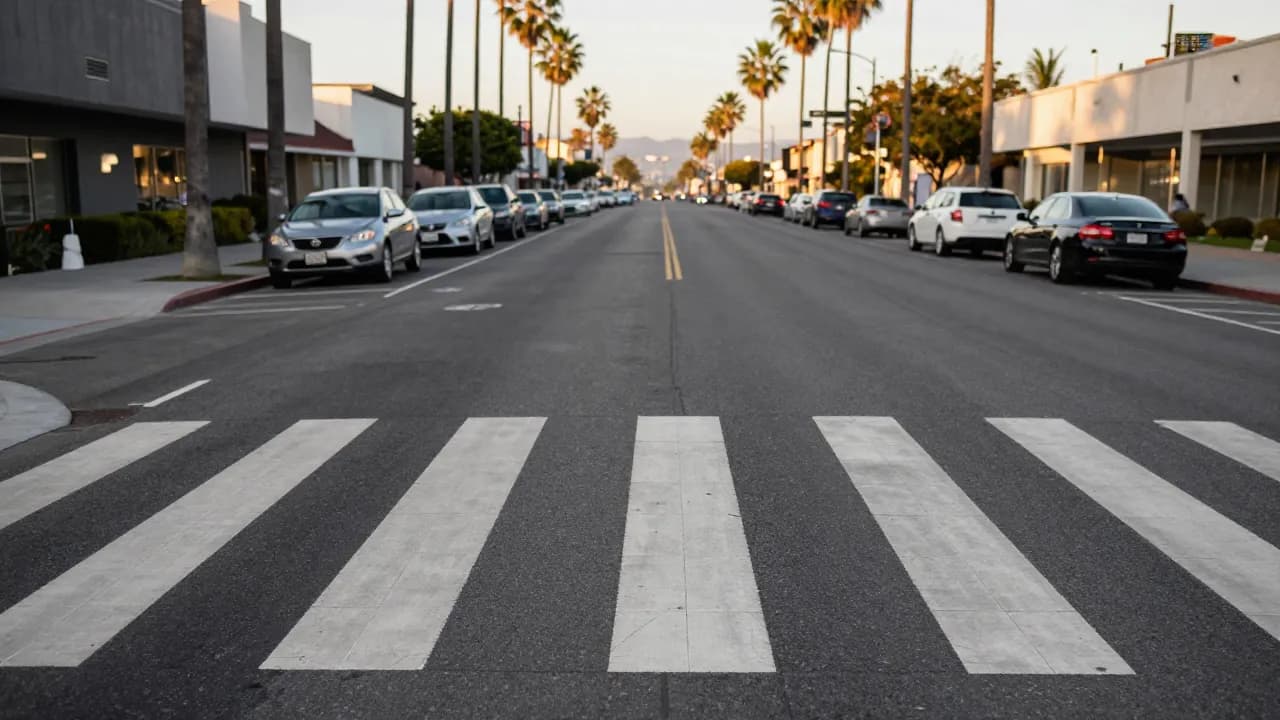
A crosswalk offers no protection at all — just paint. When a driver rolls a right turn or looks down at a phone, the person on foot absorbs the entire force of the collision, and the injuries are rarely minor.
If you or someone you love was struck while walking in California, the law is on your side more often than drivers and insurance adjusters like to admit. Here is how fault actually works, what your claim is worth, and the deadlines that can quietly end a case before it starts.
What California Law Says About Right of Way
Most pedestrian claims turn on one question: who had the right of way? California answers it in the Vehicle Code.
Under Vehicle Code section 21950, a driver must yield the right of way to a pedestrian crossing in a crosswalk — and that includes unmarked crosswalks, which exist at most intersections whether or not anyone painted lines there. That single point surprises people constantly. If you were crossing at a corner with no stripes on the pavement, you were very likely still in a legal crosswalk.
The same statute requires drivers to exercise all due care, reduce speed, and take whatever action is needed to keep a pedestrian safe. A driver who technically had a green light can still be negligent if they failed to see someone plainly in front of them.
Crossing outside a crosswalk
Vehicle Code section 21954 says a pedestrian crossing outside a crosswalk must yield to vehicles — but the statute then adds that this does not relieve the driver of the duty to exercise due care. Crossing mid-block does not make a collision your fault automatically.
California also changed the enforcement picture with the Freedom to Walk Act, now Vehicle Code section 21955.5. Officers generally may not stop a pedestrian for jaywalking unless a reasonably careful person would see an immediate danger of collision. The law does not erase your duty of care, but it undercuts the old adjuster reflex of pointing to a jaywalking ticket to shut a claim down.
How Fault Is Divided When Both Sides Made Mistakes
California uses pure comparative negligence. If the insurance company convinces a jury you were 30% responsible — you stepped out fast, you were looking at your phone, you wore dark clothes at night — your award is reduced by 30%, not eliminated. Even a pedestrian found mostly at fault can still recover the remaining share.
This is why insurers push fault onto injured pedestrians so aggressively: every percentage point they shift is money they keep. Our overview of comparative negligence in California explains how that math plays out in practice.
Evidence that tends to move the fault number:
- Intersection and business surveillance video, which is often overwritten within days or weeks
- Vehicle event data recorder ("black box") downloads showing speed and braking
- Signal timing records from the city or county
- The traffic collision report, though its opinion on fault is not binding
- Independent witnesses — usually the most persuasive evidence there is
- Scene measurements showing sight lines, lighting, and point of impact
Video is the single most perishable item on that list. Sending preservation letters early is one of the most valuable things a lawyer does in the first week.
Who Pays for a Pedestrian's Injuries
There is often more than one source of recovery, and people frequently stop after the first one.
- The driver's bodily injury liability coverage. California's minimum limits are low relative to serious injuries, so this is often just the starting layer.
- Your own uninsured/underinsured motorist (UM/UIM) coverage. This is the piece most pedestrians never think to check. UM coverage on your auto policy generally follows you, not just your car — so it can apply even though you were on foot, including in many hit-and-run cases.
- Medical payments (MedPay) coverage on your own policy, which pays early treatment bills regardless of fault.
- Health insurance, which typically pays now and asserts a lien or subrogation claim against your settlement later.
- A government entity, if a dangerous condition contributed — a broken streetlight, an obscured crosswalk, a signal that gave far too little crossing time, or a known hazardous intersection.
- An employer, if the driver was working at the time, which brings a commercial policy into play.
Notice a government entity on that list, because it changes your deadline dramatically.
Deadlines You Cannot Afford to Miss
- Two years from the date of injury is the general personal injury statute of limitations in California.
- Six months to file a written government claim if a city, county, transit agency, or the state may share responsibility. Miss it and the claim is usually barred, no matter how strong. Our guide to the California Tort Claims Act walks through the process.
- Shorter contractual notice provisions may apply to your own UM/UIM claim, so read your policy or have someone read it for you now rather than later.
Deadlines have exceptions — for minors, for injuries discovered late, and in other situations — and they can be shorter than you expect. Confirm yours with a lawyer rather than assuming. The California Courts self-help center has general background on filing deadlines and court procedures.
What Pedestrian Accident Compensation Includes
Pedestrian collisions produce disproportionately severe injuries: traumatic brain injuries, fractured pelvises and legs, spinal injuries, and internal trauma. A fair valuation accounts for the full arc of the injury, not just the emergency room bill.
Recoverable damages generally include past and future medical treatment, lost income and lost earning capacity, out-of-pocket costs, and non-economic harm — pain, suffering, disfigurement, and loss of enjoyment of life. Where a spouse's relationship is affected, a loss of consortium claim may be available. In a fatal collision, surviving family members may bring a wrongful death claim, and the estate may pursue a survival action.
No honest lawyer can quote you a number from a phone call. Value depends on the severity and permanence of your injuries, the treatment record, available insurance limits, and how fault gets apportioned. Be skeptical of any firm that promises a figure up front.
Steps That Protect Your Claim
- Get medical care immediately, and describe every symptom. Gaps in treatment are the first thing an adjuster looks for.
- Report the collision and make sure a police report exists.
- Photograph everything — the scene, the crosswalk, signals, lighting, the vehicle, and your injuries as they change.
- Collect witness names and numbers before people scatter.
- Do not give a recorded statement to the driver's insurer, and do not sign a medical authorization for them.
- Keep a short daily journal of pain, limitations, and missed work.
- Talk to a lawyer before accepting anything. Early offers usually arrive before the true cost of the injury is known.
Frequently Asked Questions
Can a pedestrian be at fault for an accident in California?
Yes — and often both parties share fault. Under pure comparative negligence, being partly responsible reduces your recovery by your percentage of fault rather than barring it. Even if you crossed outside a crosswalk, the driver still had a duty to exercise due care.
What should I do right after a pedestrian accident?
Get medical attention, make sure the collision is reported, photograph the scene and your injuries, and gather witness contact information. Then contact a lawyer before speaking with the driver's insurance company — early recorded statements are frequently used to shift blame.
How long do I have to file a pedestrian accident claim in California?
Generally two years from the date of injury. If a government entity may be responsible for a dangerous roadway condition, you typically must file a written claim within six months. Other exceptions exist, so verify your specific deadline promptly.
What if the driver fled or had no insurance?
Your own uninsured motorist coverage may apply even though you were walking, and it can cover many hit-and-run situations. Report the incident to police right away, since documentation is important to these claims, and have your policy reviewed.
How long does a pedestrian accident case take to settle?
It varies widely. Straightforward claims can resolve in a few months, while cases involving serious injuries usually wait until treatment stabilizes so future costs can be measured — often a year or more, and longer if a lawsuit is filed. Settling too early is the more common mistake.
Talk to a California Pedestrian Accident Lawyer
If a driver hit you while you were walking, you should not have to fight an insurance company while you are still healing. MMG Law Firm offers a free, no-obligation consultation, and injury cases are handled on contingency — no fee unless we win. We represent injured pedestrians across California. Learn more about our pedestrian accident practice and related car accident claims, or contact us to talk through your options.
This article is general information, not legal advice. Deadlines and rules vary with the facts of each case — speak with an attorney about your specific situation.