
Comparative Negligence · Personal Injury
Comparative Negligence in California: Partly at Fault?
California uses a pure comparative negligence rule, so sharing the blame reduces your damages instead of ending your claim. Here is exactly how it works.
Mihran M. Ghazaryan··6 min read
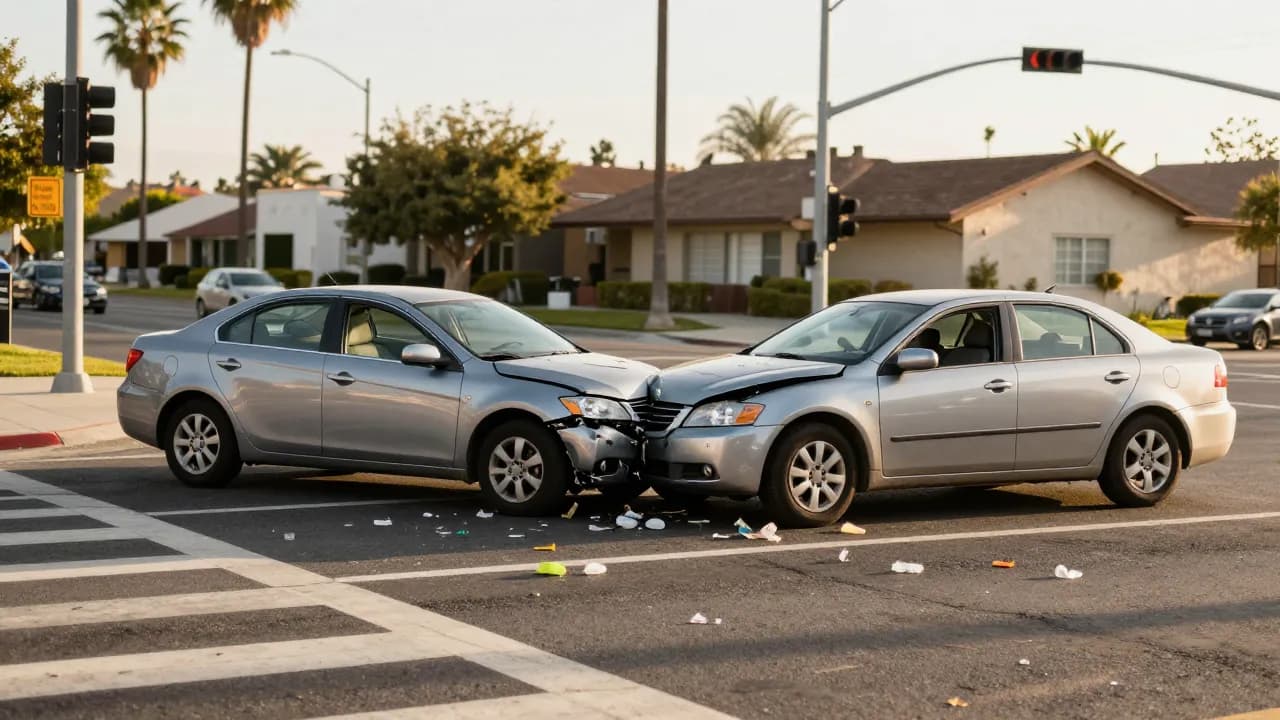
The adjuster's first move is rarely "here's your check." It's a phone call suggesting that you were following too closely, that you stepped off the curb too soon, or that you should have seen the spill on the floor. That is not small talk — it is the opening of a comparative negligence argument, and in California it can cut your recovery dramatically without ever ending your case.
Is California a Comparative Negligence State?
Yes. California follows pure comparative negligence, a rule the California Supreme Court adopted in Li v. Yellow Cab Co. (1975). Before that decision, California used contributory negligence: if you were even 1% responsible for your own injury, you recovered nothing. That harsh rule is gone.
Under the current rule, your share of the blame reduces your damages instead of wiping them out.
Pure vs. modified comparative fault
- Pure comparative negligence (California): there is no cutoff. A plaintiff found 80% at fault still recovers 20% of their damages.
- Modified comparative negligence (many other states): recovery is barred entirely once the plaintiff crosses 50% or 51% fault.
- Contributory negligence (a handful of states): any fault at all bars recovery.
This is one of the most plaintiff-friendly fault rules in the country, and it is a big reason an insurer's "you were partly to blame, so we're denying it" letter is often wrong on the law.
How Fault Percentages Reduce What You Recover
The math is straightforward, but the order of operations matters:
- The jury (or the negotiation) first establishes your total damages — medical bills, lost earnings, future care, pain and suffering.
- The jury assigns a percentage of fault to each person involved, including you.
- Your total damages are reduced by your own percentage.
If your damages come to $100,000 and you are found 30% at fault, you recover $70,000. At 60% at fault, you still recover $40,000. Because the reduction applies to the whole award, a 15-point swing in your fault percentage is often worth more than all the arguing over medical bills — which is why insurers push on it early.
Who Actually Decides Your Percentage of Fault
Three different actors, and only one of them is binding:
- The insurance adjuster. They will float a number in the first weeks. It is a negotiating position, not a finding.
- The police officer. A traffic collision report may note a "primary collision factor" or issue a citation. That is evidence to argue about, and in California the report itself is generally not admissible at trial as proof of who was at fault.
- The jury. If the case is tried, jurors are instructed on comparative fault and fill in percentages on a verdict form. That number controls.
Most cases settle, but settlement values are built on what a jury would likely do — so your fault evidence drives the number even if you never see a courtroom.
When More Than One Party Is Responsible
California splits the treatment of damages when multiple defendants share the blame, under Civil Code section 1431.2 (Proposition 51):
- Economic damages — medical bills, lost wages, out-of-pocket costs — are joint and several. Any liable defendant can be pursued for the full economic loss.
- Non-economic damages — pain, suffering, loss of enjoyment of life — are several only. Each defendant pays only its own percentage share.
The practical takeaway: identifying every responsible party matters. In a truck crash that might include the driver, the motor carrier, a maintenance contractor, and a shipper. Leaving a defendant out does not move their share onto someone else — it can simply vanish from your non-economic recovery.
Evidence That Pushes Your Fault Percentage Down
Fault percentages are argued, not assumed. What moves them:
- Scene photographs taken before vehicles are moved, including skid marks, debris fields, and sight lines
- Video — dashcams, doorbell cameras, business surveillance, transit and rideshare footage. Much of it is overwritten within days or weeks, so it has to be requested fast.
- Independent witnesses who have no stake in the outcome
- Vehicle event data recorder ("black box") downloads showing speed, braking, and throttle in the seconds before impact
- Cell phone records suggesting the other driver was distracted
- Consistent medical treatment starting promptly, so the insurer cannot argue your injuries came from something else
For background on how fault is handled generally, our post on whether California is a no-fault state covers the basics, and our car accident practice page explains how these claims are built.
How Insurers Try to Shift Blame Onto You
Recognize these before you respond to them:
- The recorded statement. You are not required to give one to the other driver's insurer, and casual phrasing ("I guess I didn't see him") gets quoted back for years.
- Minor speed or spacing. Being a few miles over the limit does not make a left-turn crash your fault, but it is used to manufacture a percentage.
- The seat belt defense. California law allows evidence that an occupant was not belted to be weighed on comparative negligence, reducing damages even where the crash was entirely the other driver's fault.
- Treatment gaps and social media. A three-week delay before seeing a doctor becomes "you weren't really hurt," and one hiking photo becomes proof you recovered.
One separate trap worth knowing: under Civil Code section 3333.4 (Proposition 213), a driver who was uninsured at the time of the crash generally cannot recover non-economic damages at all — a rule distinct from comparative fault but often just as costly.
Deadlines Do Not Pause While Fault Is Disputed
Arguing over percentages does not extend your time to file:
- Two years from the date of injury for most California personal injury claims (Code of Civil Procedure section 335.1).
- Six months to present an administrative claim if a government entity is involved — a city, county, transit agency, or public employee — with a short additional window to sue after a written rejection.
- Three years for property damage claims.
Exceptions exist, including for minors and for injuries that were not immediately discoverable, so confirm the deadline that applies to your specific facts rather than assuming. The California Courts self-help center offers general guidance, and the statutes themselves are published at California Legislative Information. Our overview of the California personal injury statute of limitations goes deeper.
Frequently Asked Questions
Is California a comparative negligence state?
Yes. California is a pure comparative negligence state. Your damages are reduced by your percentage of fault, but there is no threshold that bars recovery entirely.
What is pure comparative negligence in California personal injury law?
It means every party pays according to their share of responsibility. A plaintiff who is 90% at fault can still recover 10% of their proven damages — something that would be impossible in a modified comparative fault state.
How do you calculate comparative negligence?
Multiply your total damages by the percentage of fault assigned to the other parties. $200,000 in damages with 25% fault assigned to you yields a $150,000 recovery.
Can I still recover if the accident was mostly my fault?
Yes, though the recovery is proportionally smaller. Because insurers know most people assume "mostly my fault" means "no case," these claims are frequently abandoned when they still had real value. It is worth having the facts reviewed before you walk away.
Does comparative fault apply to slip-and-fall and dog bite cases?
It applies broadly across negligence claims, including premises liability. Even California's strict liability dog bite statute does not eliminate the possibility that a victim's own conduct — provoking the animal, ignoring a locked gate — reduces recovery. It generally does not apply the same way to intentional wrongdoing.
Talk to a California Injury Lawyer Before You Accept a Fault Percentage
An adjuster's number is an opening offer, not a verdict. MMG Law Firm offers a free, no-obligation consultation to review what happened, what evidence still exists, and what your claim is realistically worth. We handle injury cases on a contingency fee — no fee unless we win — and we serve clients across California. Contact us to get a straight answer about your case.
This article is general information, not legal advice. Every case turns on its own facts; consult an attorney about your situation.