
Personal Injury · Government Claims Act
California Tort Claims Act: Suing a Government Entity
If a city, county, school district, or state agency caused your injury, you may have just six months to file a claim — not the usual two years.
Mihran M. Ghazaryan··6 min read
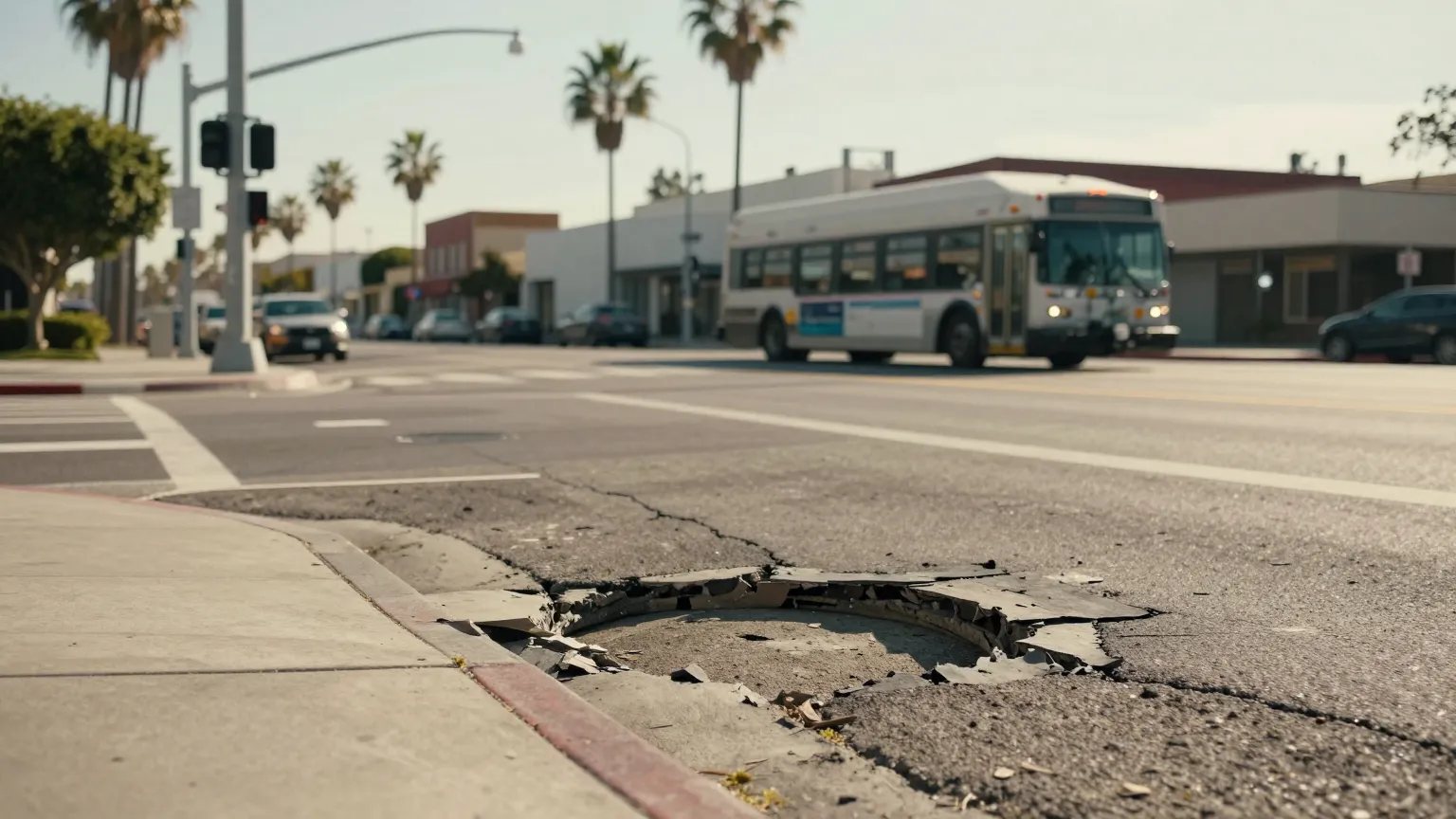
A cracked sidewalk owned by the city. A county road with a pothole deep enough to throw a motorcycle. A transit bus that runs a red light. When the party that hurt you is a government agency rather than a private driver or business, California gives you far less time to act — and a paperwork step most people never hear about until it is too late.
That step comes from the California Government Claims Act (Government Code § 810 and following), still widely called the California Tort Claims Act. Miss it, and an otherwise strong injury case can be dismissed before a judge ever looks at the facts.
Why Claims Against Public Agencies Follow Different Rules
In an ordinary injury case, you generally have two years from the date of injury to file a lawsuit. Claims against public entities work differently in three important ways:
- A claim must be presented first. Under Government Code § 945.4, you generally cannot sue a public entity until you have presented a written claim to that entity and it has been acted on or rejected.
- The deadline is six months, not two years. For death, personal injury, or damage to personal property, the claim must be presented no later than six months after the cause of action accrues (Gov. Code § 911.2). Most other claims get one year.
- Liability must come from a statute. Government Code § 815 says a public entity is not liable for an injury except as provided by statute. There is no general "the government was careless" theory — your case has to fit a specific statutory hook.
Punitive damages are also off the table against a public entity (Gov. Code § 818), though your compensatory damages — medical bills, lost income, pain and suffering — are not capped by the Act.
The Six-Month Deadline That Quietly Ends Cases
Six months runs fast when you are still in physical therapy. The clock generally starts when the cause of action accrues — usually the date of injury, though it can be later if the injury or its cause was not reasonably discoverable right away. Three traps come up repeatedly:
- Filing with the wrong agency does not stop the clock. A state highway claim goes to the state's Government Claims Program; a city street claim goes to that city; a school injury goes to the district.
- Talking to a claims adjuster is not "presenting a claim." Only a proper written claim, delivered or mailed to the right office, counts.
- Minors get no extra time on the claim itself. The six-month presentation deadline applies to children too, even though the lawsuit deadline may later be extended.
Which Organizations Count as "Public Entities"
The Act reaches far beyond the state capitol: the State of California and agencies such as Caltrans, counties and cities, school and community college districts, public transit and municipal bus systems, special districts (water, sanitation, hospital, park), and public universities and hospitals. Private contractors working for a government agency usually are not public entities — one reason identifying every responsible party early matters so much.
When a Government Agency Can Actually Be Held Liable
Dangerous condition of public property
The most common theory in these cases is Government Code § 835. To recover, you generally must show the property was in a dangerous condition at the time of injury, that the condition created a reasonably foreseeable risk of the kind of injury you suffered, and that either a public employee negligently created the condition or the entity had actual or constructive notice of it long enough to have fixed or guarded against it.
Typical examples include unrepaired potholes, missing guardrails, broken sidewalks, obscured stop signs, unlit walkways, and poorly designed intersections. Agencies frequently raise design immunity under Government Code § 830.6, arguing an approved design shields them — a defense that can sometimes be overcome with evidence of changed conditions.
Negligent government employees
Under Government Code § 815.2, a public entity is generally liable for injuries caused by its employees acting within the scope of employment. That covers a city truck that rear-ends you, a public bus driver's unsafe turn, or a maintenance crew that leaves a hazard unmarked. Public transit operators are also common carriers under Civil Code § 2100 and owe passengers the utmost care and diligence — a standard higher than ordinary negligence. If you were struck while walking, our page on pedestrian accidents explains how right-of-way rules interact with these claims.
What a Government Claim Must Contain
Government Code § 910 sets out the required contents. A complete claim states:
- Your name and the address where notices should be sent
- The date, place, and circumstances of the incident
- A general description of the injury, damage, or loss
- The names of the public employees who caused it, if known
- The dollar amount claimed if it is under $10,000; if it exceeds $10,000, you state whether the case would be a limited civil case instead of naming a figure
Most agencies publish their own claim form, and using it is the safest route. Keep a copy of everything and send it by a method that creates proof of delivery. The California Courts self-help center offers general guidance, and the statutes are available at California Legislative Information.
What Happens After You File
The agency's board has 45 days to act on your claim (Gov. Code § 912.4). If it does nothing, the claim is deemed rejected by operation of law. Rejection is normal — it is a procedural gate, not a verdict on your case.
The deadline that follows is where many people stumble:
- If the agency mails or delivers a written rejection notice, you generally have six months from that notice to file your lawsuit (Gov. Code § 945.6).
- If the agency never sends proper written notice, you generally have two years from accrual of the cause of action.
Because these windows are short and unforgiving, it is worth having the file reviewed well before the claim is even rejected.
Frequently Asked Questions
What if I already missed the six-month deadline?
You may still be able to file an application for leave to present a late claim under Government Code § 911.4, generally within a reasonable time not to exceed one year after the cause of action accrued. Grounds include mistake, inadvertence, surprise, or excusable neglect, as well as claimants who were minors or incapacitated. If the agency denies the application, a court petition is the next step. Deadlines here are strict, so act immediately.
Can I sue a city for a pothole or broken sidewalk?
Often, yes — if you can show the condition was dangerous and the agency created it or knew about it and had time to fix it. Prior complaints, repair records, and 311 reports are frequently the strongest evidence, which is why preserving photos and reporting history early matters.
Does comparative fault apply to government claims?
Yes. California's pure comparative fault rules apply, so your recovery is reduced by your share of responsibility rather than eliminated. Our article on comparative negligence in California walks through how that math works.
Is the six-month rule different from the regular injury deadline?
It is an additional requirement, not a replacement. The standard two-year personal injury statute of limitations still frames the case, but the claim-presentation step comes first and much sooner. You can read more in our guide to the California personal injury statute of limitations.
Do I need a lawyer to file a government claim?
You are allowed to file one yourself. The risk is that a defective or misdirected claim can waive the case entirely, and agencies are not obligated to warn you about mistakes — particularly in serious cases involving catastrophic injuries, where the stakes of a technical error are highest.
Talk to a California Injury Lawyer Before the Clock Runs Out
Every case turns on its own facts, and the deadlines above can shift depending on when your claim accrued and which agency is involved — so verify your specific situation with an attorney rather than relying on a general timeline. MMG Law Firm offers a free, no-obligation consultation, and injury cases are handled on a contingency fee: no fee unless we win. We serve clients across California. Contact us today, especially if your injury happened within the last six months.