
Product Liability · Personal Injury
Product Liability Lawyer California: Defective Products
California holds manufacturers strictly liable for defective products — you don't have to prove the company was careless, only that the product was defective.
Mihran M. Ghazaryan··6 min read
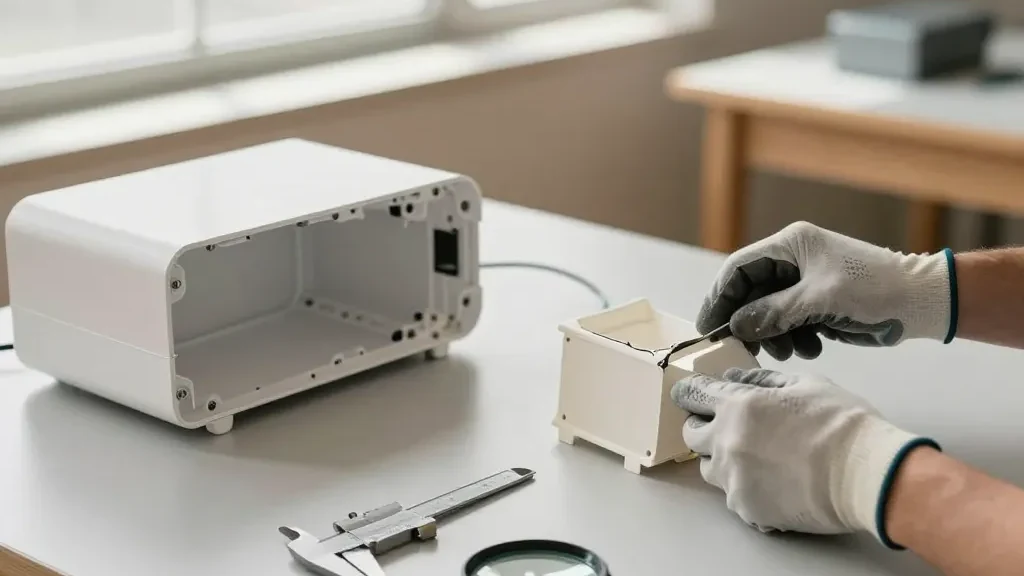
A space heater that catches fire overnight. A ladder rung that snaps under normal weight. An airbag that deploys with too much force in a minor collision. When a product that was supposed to be safe injures you instead, California law does something unusual — it does not require you to prove the company was careless. You only have to prove the product was defective.
That distinction is the heart of every product liability case, and it is why these claims are often stronger than injured people expect.
What Product Liability Means Under California Law
Most injury claims turn on negligence: did someone fail to act with reasonable care? Product liability claims are different. Since the California Supreme Court's decision in Greenman v. Yuba Power Products (1963), California has applied strict liability to defective products.
Under strict liability, you generally must show three things:
- The defendant manufactured, distributed, or sold the product
- The product contained a defect when it left the defendant's hands
- The defect was a substantial factor in causing your injury
You do not have to show the company knew about the defect or cut corners. A well-run manufacturer that made an honest mistake can still be liable — a meaningful advantage, because proving what a corporation knew internally is exactly the kind of fight that drags cases out for years.
The Three Types of Product Defects
Nearly every product liability claim in California falls into one of three categories, and identifying the right one shapes the entire case.
Manufacturing Defect
A manufacturing defect exists when a product comes off the line different from its own design — one bad unit in a batch that was otherwise fine. A bike frame with a flawed weld, a bottle of medication contaminated during packaging, a tire built with a weak belt. These are often the most straightforward defects to prove, because the company's own specifications become the yardstick.
Design Defect
A design defect means the product was dangerous as intended — every unit shares the flaw. California courts apply two alternative tests here:
- Consumer expectations test — did the product fail to perform as safely as an ordinary consumer would reasonably expect?
- Risk-benefit test — do the risks of the design outweigh its benefits, considering whether a safer alternative design was feasible?
Because a plaintiff can win under either test, design defect claims give injured consumers real flexibility.
Failure to Warn
Even a well-made product can be defective if it lacks adequate warnings or instructions about a non-obvious danger the maker knew or should have known about. Missing drug interaction warnings, inadequate chemical handling instructions, and unclear weight limits all fall here.
Who Can Be Held Responsible
Strict liability in California reaches the entire chain of distribution — not just the factory. Depending on the facts, that can include the manufacturer, a component part maker, the distributor or wholesaler, and the retail store that sold it.
This matters practically. If the manufacturer is overseas, dissolved, or judgment-proof, a California retailer or distributor in the chain may still be accountable. California appellate courts have also held that online marketplaces can be strictly liable for defective goods sold through their platforms — see Bolger v. Amazon.com, LLC (2020) — which closed a gap that once left online shoppers without a remedy.
Deadlines You Cannot Afford to Miss
California's deadlines are strict, and missing one usually ends a claim regardless of its merit.
- Personal injury: generally 2 years from the date of injury (Code of Civil Procedure § 335.1)
- Wrongful death: generally 2 years from the date of death
- Property damage: generally 3 years
- Claims involving a government entity: a government claim is generally required within 6 months — a dramatically shorter window
A delayed discovery rule can sometimes extend the clock when an injury or its cause could not reasonably have been discovered right away — common with medications and medical devices. That exception is fact-specific and frequently disputed, so never assume it applies to you; have a lawyer confirm your actual deadline early. General court timelines are explained at the California Courts Self-Help Center.
What a Defective Product Claim May Be Worth
No honest lawyer can quote you a number from a description of your case. Value depends on the severity and permanence of the injury, your medical costs, your work capacity, and the strength of the evidence. What a claim can include is more concrete:
- Economic damages — medical bills, future medical care, lost wages, lost earning capacity, property damage
- Non-economic damages — pain, suffering, disfigurement, and loss of enjoyment of life
- Punitive damages — available only where there is clear and convincing evidence of malice, oppression, or fraud under Civil Code § 3294, such as a company that hid a known hazard
If you were partly at fault — using the product in an unusual way, for instance — that does not automatically bar recovery. California follows pure comparative negligence, which reduces compensation by your percentage of fault rather than eliminating it.
What to Do After a Defective Product Injury
The single most important step is one many people get wrong in the first 48 hours.
- Get medical care immediately and describe how the injury happened.
- Preserve the product exactly as it is. Do not repair it, return it to the store, or send it back to the manufacturer for a refund or replacement. The product itself is usually the most important evidence in the case, and losing it can end an otherwise strong claim.
- Keep the packaging, manual, receipt, and any model or lot numbers.
- Photograph the product, the scene, and your injuries.
- Check for recalls through the U.S. Consumer Product Safety Commission — a recall does not prove your case by itself, but it is useful evidence.
- Do not give a recorded statement to the manufacturer's insurer before speaking with an attorney.
Frequently Asked Questions
Do I need to prove the company was negligent?
Usually not. California applies strict liability to defective products, so the focus is on whether the product was defective and caused your injury — not on whether the company behaved carelessly. Some claims are still pleaded in negligence as well, which a defective product attorney will evaluate based on the facts.
What if the product was recalled?
A recall can be strong supporting evidence that a defect existed, but it does not automatically win your case. You still must show the defect caused your specific injury. Conversely, the absence of a recall does not mean the product was safe.
Can I sue if I was not the person who bought the product?
Generally yes. California strict liability is not limited to the purchaser. Family members, guests, and bystanders injured by a defective product can typically bring a claim.
What if I lost or discarded the product?
Your claim becomes harder, but not always impossible. Other evidence — photographs, medical records, recall data, similar incident reports, and expert analysis of an identical unit — can sometimes carry a case. Talk to a lawyer before assuming it is over.
How much does a product liability lawyer cost?
Plaintiff-side injury firms, including ours, work on a contingency fee — you pay no attorney's fee unless we recover compensation for you. The initial consultation is free.
Talk to a California Product Liability Lawyer
These cases are fought against well-funded manufacturers with experienced defense teams and usually require engineering and medical experts. That is not a reason to walk away from a legitimate claim — it is a reason to get help early, while the evidence is still intact.
MMG Law Firm represents injured people across California on a contingency fee basis: no fee unless we win. The consultation is free and there is no obligation. Contact us to have your situation reviewed, or learn more about our personal injury practice areas — including catastrophic injury claims.
This article is general information about California law, not legal advice about your situation. Deadlines and outcomes depend on specific facts — consult an attorney about your own case.