
car accident settlement · california personal injury
Car Accident Settlement California: How It Works
Insurers use their own math to value your crash claim. Here is how California car accident settlements are actually calculated.
Mihran M. Ghazaryan··6 min read
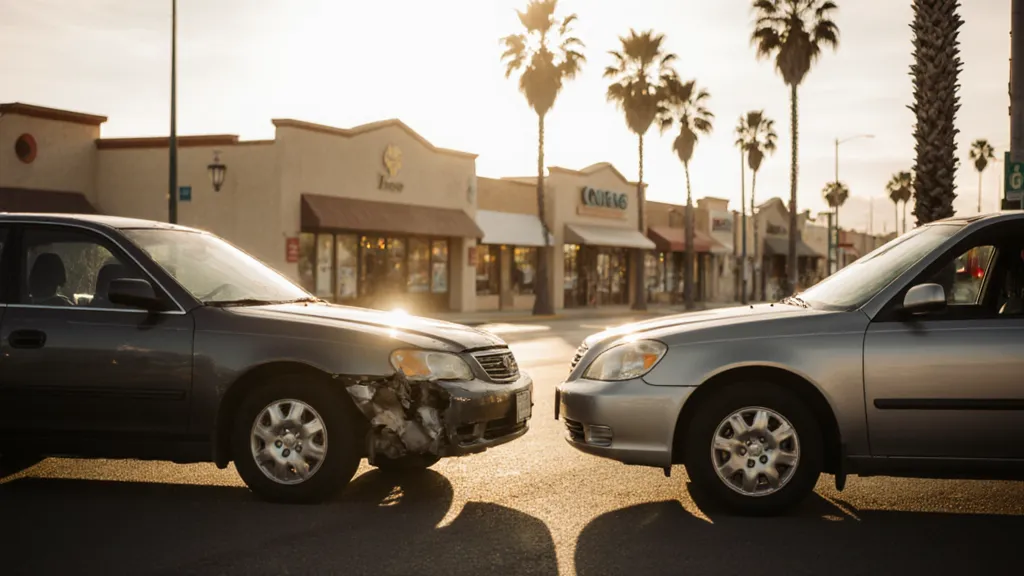
Nobody hands you a price list after a crash. The insurance adjuster runs your file through their own math, sends a number, and hopes you take it — so it helps to understand how a car accident settlement in California is actually built before you respond.
What a California Car Accident Settlement Actually Covers
Settlements are assembled from categories of loss, not pulled from a chart. California law divides them into two buckets.
Economic damages are the losses with receipts and records behind them:
- Emergency care, surgery, imaging, physical therapy, and future treatment your doctors expect you'll need
- Wages you lost while recovering, plus reduced earning capacity if you can't return to the same work
- Vehicle repair or actual cash value if the car was totaled
- Out-of-pocket costs — rental cars, prescriptions, mileage to appointments, in-home help
Non-economic damages cover what the injury did to your life: physical pain, anxiety and sleep loss, scarring, and the activities you can no longer do. There is no cap on non-economic damages in an ordinary California auto case. (The MICRA cap people sometimes cite applies to medical malpractice claims, not car crashes.)
How Insurers Put a Number on Your Claim
Adjusters typically start with your documented medical bills and lost income, then assign a value to pain and suffering based on injury type, treatment length, permanence, and how well your records tell the story. Most large carriers use claims software that scores your diagnosis codes, treatment gaps, and provider types.
You'll see "multiplier" formulas online — bills times 1.5 to 5. Be skeptical. That shorthand is a rough negotiating reference, not California law, and it badly undervalues serious injuries while overvaluing minor ones. What genuinely moves the number is objective evidence: imaging that shows a herniation, a surgical recommendation, a physician's report tying your limits to the collision, and consistent treatment without long unexplained gaps.
How Fault Cuts Into What You Recover
California follows pure comparative negligence. Your recovery drops by your share of fault, but it never disappears entirely. If a jury values your case at $100,000 and finds you 20% responsible for the collision, you recover $80,000. Even a driver found 70% at fault can recover 30%.
This is why adjusters press hard on fault. Statements like "I didn't see them" or "I was only going a little fast" get written down and used to shift percentage points — and every point costs money. A police report's opinion on fault is influential but not binding; it can be countered with witness statements, scene photos, dashcam footage, and vehicle damage analysis.
Two California Rules That Can Quietly Cap Your Case
Policy limits. California's minimum liability coverage rose on January 1, 2025 to $30,000 per person / $60,000 per accident for injuries and $15,000 for property damage. Many drivers carry only that. If your damages exceed the at-fault driver's policy, the practical next step is your own uninsured/underinsured motorist (UM/UIM) coverage — worth checking your declarations page for today, not after a settlement is signed.
Proposition 213. Under Civil Code section 3333.4, a driver who was uninsured at the time of the crash generally cannot recover non-economic damages, even when the other driver caused it. Economic losses remain recoverable. There are exceptions, and this rule surprises people constantly.
Also remember that medical liens, health plan reimbursement rights, and Medi-Cal or Medicare claims come out of the gross settlement. A larger headline number does not always mean more money in your pocket — negotiating those liens down is part of the work.
Deadlines That Can End Your Claim
- Two years from the injury date to file a personal injury lawsuit (Code of Civil Procedure section 335.1)
- Three years for property damage claims
- Six months to file a government claim if a public entity is involved — a city bus, a county vehicle, a dangerous roadway condition. Miss it and the claim is usually gone.
- Ten days to file an SR-1 report with the California DMV if anyone was injured or killed, or property damage exceeded $1,000
Deadlines shift depending on who the defendant is and whether the injured person is a minor. Verify yours against your specific facts rather than assuming — the California Courts self-help center is a useful starting point, and a lawyer can confirm quickly.
What You Can Do to Protect the Value
- Get evaluated early and follow through. Gaps in treatment are the single most common reason adjusters discount a claim.
- Don't give a recorded statement to the other driver's insurer before you understand your injuries.
- Photograph everything — vehicles, the scene, visible injuries as they change over the weeks.
- Keep a short symptom journal. Contemporaneous notes about pain and missed activities carry real weight on non-economic damages.
- Wait for a clear medical picture before settling. Once you sign a release, you cannot reopen the claim if the injury turns out to be worse.
If your crash involved a rear-end impact, our guide on who's at fault in California rear-end collisions covers that scenario in detail, and our car accident practice page explains how we handle these cases.
Frequently Asked Questions
How long does a car accident settlement take in California?
Straightforward soft-tissue claims often resolve in a few months once treatment ends. Cases with surgery, disputed fault, or a lawsuit on file commonly run a year or longer. The biggest driver of timing is reaching maximum medical improvement — settling before then means guessing at your own damages.
How much is my car accident settlement worth?
It depends on your medical costs, income loss, injury severity and permanence, available insurance, and your share of fault. Anyone who quotes a specific figure before reviewing your records is guessing. Averages published online are close to meaningless because they blend fender-benders with catastrophic injury cases.
Are car accident settlements taxable in California?
Compensation for physical injury and related medical expenses is generally not taxable under federal law. Punitive damages and interest are typically taxable, and amounts for lost wages can raise questions. Confirm with a tax professional about your specific settlement.
What is a good settlement offer for a car accident?
A fair offer accounts for all treatment (including future care), full wage loss, and a realistic value for pain and suffering — not just the bills you've already paid. First offers are usually well below that, and they are opening positions, not final ones.
How much do lawyers take from a car accident settlement?
California plaintiff firms typically work on contingency, commonly around one-third of the recovery, sometimes higher if the case goes to trial. The fee agreement must be in writing, and you should understand how case costs are handled before you sign.
Talk Through Your Case at No Cost
Every crash is different, and the difference between a quick offer and a fair one is usually the evidence assembled in the first weeks. MMG Law Firm offers a free, no-obligation consultation, and injury cases are handled on contingency — no fee unless we win. We serve injured clients across California. Contact us to have someone look at the facts before you respond to an adjuster.