
Negligent Security · Premises Liability
Negligent Security Lawyer in California
When a violent crime happens on unsafe property, California law may hold the owner responsible alongside the attacker. Here is how these claims work.
Mihran M. Ghazaryan··6 min read
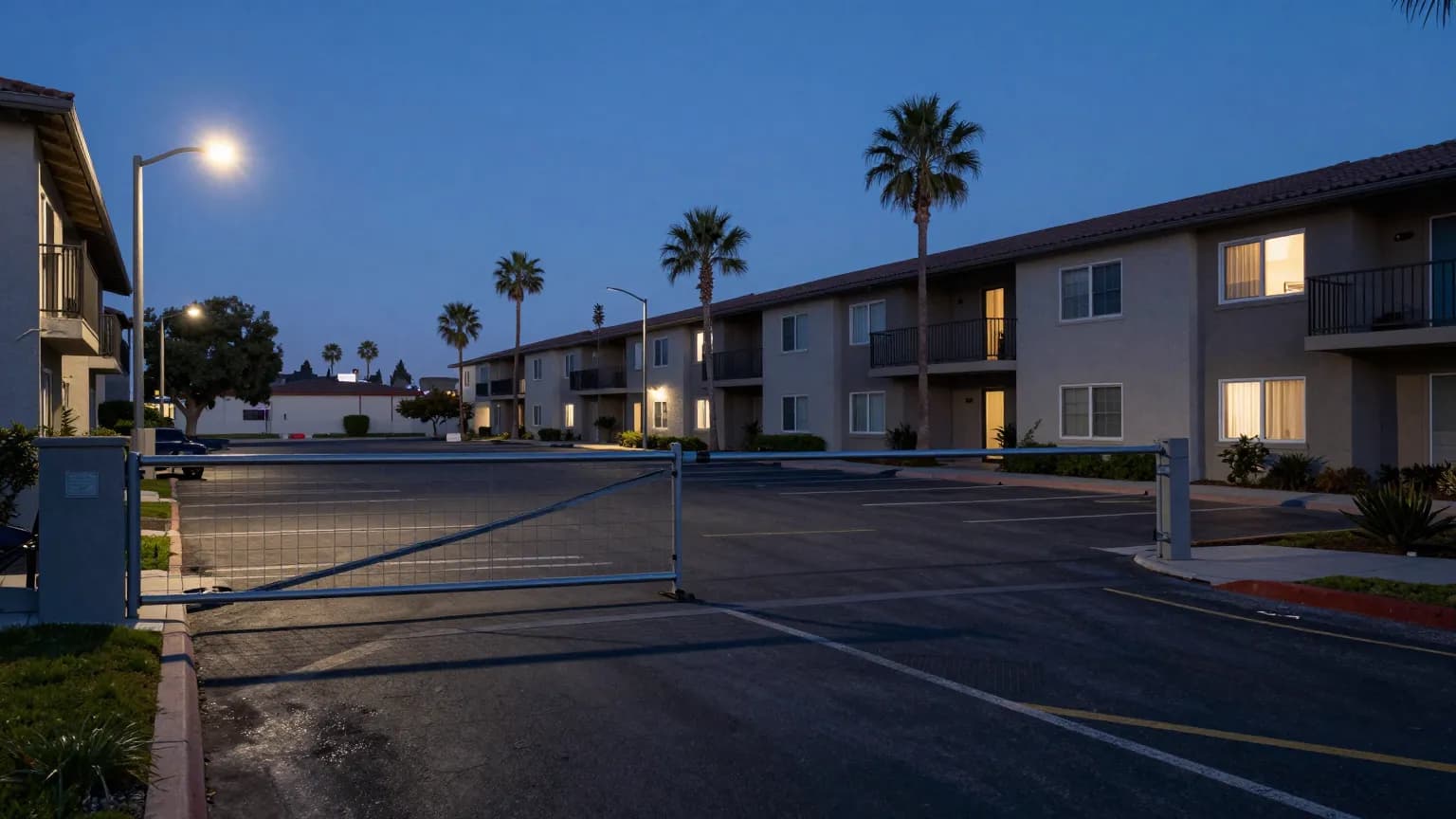
A broken gate that nobody fixed. A parking garage where half the lights have been out for months. A security guard who was supposed to be on duty at 11 p.m. but clocked out at nine. When a violent crime happens in a place like that, the attacker is not always the only party responsible — and in California, the property owner may share the blame.
That is the idea behind a negligent security claim. This guide explains how these cases work under California law, what you have to prove, and how long you have to act.
What Negligent Security Means in California
Negligent security is a branch of premises liability. Under California Civil Code § 1714, everyone is responsible for injuries caused by their lack of ordinary care. For property owners, that duty includes taking reasonable steps to protect people they invite onto the property from foreseeable criminal acts by third parties.
Note what the claim is not. You are not arguing that the owner committed the crime. You are arguing that the owner knew — or should have known — that this kind of attack could happen there, and did nothing reasonable to prevent it. A landlord who ignores a smashed lobby lock after three break-ins is a very different defendant from one who had no warning at all.
An inadequate security lawyer brings these cases because the criminal is often never caught, or has no insurance and no assets. The property owner, by contrast, usually carries a commercial liability policy.
When Is a Property Owner Actually Liable?
California courts use a sliding scale that weighs how foreseeable the harm was against how burdensome the prevention would have been. The California Supreme Court set this out in Ann M. v. Pacific Plaza Shopping Center (1993) and refined it in Delgado v. Trax Bar & Grill (2005).
In practice, that means:
- Expensive measures — hiring armed guards, installing a full camera system — require heightened foreseeability, usually shown through prior similar crimes at or near the property.
- Simple, low-cost measures — calling 911, warning a guest, separating two people who are about to fight, escorting someone to their car — require only ordinary foreseeability. Delgado held that a bar owner can be liable for failing to take these "relatively simple and minimally burdensome" steps when danger is obvious and imminent.
What counts as notice
Prior incidents do not have to be identical to yours. Evidence that often establishes foreseeability includes:
- Police call logs and crime reports for the address and surrounding blocks
- Prior tenant or guest complaints about broken locks, gates, lighting, or loitering
- Internal incident reports, security logs, and guard schedules
- Maintenance records showing repair requests that were never completed
- The owner's own security assessment or an insurer's loss-control recommendation
Landlords have specific statutory duties
California rental law is concrete about some of this. Civil Code § 1941.3 requires landlords of residential buildings to install and maintain an operable deadbolt on each main entry door and working locking devices on windows designed to open. A landlord who leaves a reported broken deadbolt unrepaired for weeks has a serious problem if a tenant is then assaulted inside the unit.
Where Negligent Security Claims Come From
These claims most often arise at:
- Apartment complexes and condominium properties — assaults in stairwells, laundry rooms, and unsecured parking areas
- Hotels and motels — broken door hardware, key cards that are not deactivated, no staff presence overnight
- Bars, nightclubs, and restaurants — fights that staff saw coming, over-aggressive or untrained bouncers
- Parking lots and structures — burned-out lighting, no cameras, no attendant
- Shopping centers and office buildings — propped-open service doors, unmonitored entrances
- Schools, gyms, and event venues — no crowd control or access control at a known-risk event
Proving the Case
A negligent security claim has four elements: the owner owed you a duty, the security was unreasonable under the circumstances, that failure was a substantial factor in causing your injuries, and you suffered damages.
Causation is where these cases are won or lost. The defense will argue the crime would have happened anyway. Your side answers with specifics — a working gate would have kept the attacker's car out; a camera at the stairwell would have deterred him; a guard on the posted schedule would have intervened. Security experts, lighting studies, and crime-pattern analysis of the neighborhood all do work here.
Evidence disappears fast. Surveillance video is frequently overwritten in 30 days or less, and guard companies rotate staff. A prompt evidence-preservation letter is often the single most valuable thing done in the first month.
Deadlines That Can End Your Case
- Two years from the date of injury for most California personal injury claims (Code of Civil Procedure § 335.1). See our overview of the California personal injury statute of limitations.
- Six months to file an administrative claim if the property is owned by a government entity — a public housing authority, a city-owned garage, a transit station, a public college (Government Code § 911.2). This is the deadline people miss most.
- Sexual assault survivors generally have a longer window — commonly 10 years from the assault or three years from discovering the resulting injury, whichever is later (Code of Civil Procedure § 340.16).
Deadlines shift with the facts, including the injured person's age and the type of defendant. Have a lawyer confirm yours rather than relying on a general rule.
What These Claims Are Worth
Honest answer: it depends on the injuries, the strength of the foreseeability evidence, and the available insurance. Recoverable damages include past and future medical expenses, lost income and lost earning capacity, pain and suffering, and — where a property owner's conduct was despicable and in conscious disregard of safety — punitive damages under Civil Code § 3294, though that bar is high.
Cases involving permanent disability or a death are valued very differently from those involving injuries that resolve in a few months. Be skeptical of any firm that quotes you a number before reviewing your records. If your injuries are life-altering, see our catastrophic injury page.
California also follows pure comparative negligence, so being partly at fault reduces your recovery by your percentage of fault — it does not eliminate it.
Frequently Asked Questions
What is negligent security?
It is a premises liability claim alleging that a property owner or manager failed to provide reasonable security — lighting, locks, gates, cameras, guards, or staff response — and that this failure allowed a foreseeable crime to injure someone lawfully on the property.
Can I sue an apartment complex for an assault?
Potentially, yes. The key question is whether the assault was foreseeable and whether reasonable measures could have prevented it. Broken entry doors, disabled gates, unlit walkways, and a history of prior crime on the property are the facts that make these claims viable.
Can I sue the security company too?
Often. A contracted security firm can be liable for its own negligence — guards who left early, failed to patrol, or ignored a disturbance — and property owners generally cannot escape responsibility simply by outsourcing security to a contractor.
Does a criminal case have to happen first?
No. A civil claim is separate and uses a lower standard of proof — "more likely than not" rather than beyond a reasonable doubt. You can pursue a negligent security case even if the attacker is never identified, charged, or convicted.
What if the victim was killed?
Surviving family members may bring a wrongful death claim under Code of Civil Procedure § 377.60, plus a survival action for the losses the victim suffered before death. Crime victims and their families may also be eligible for help from the California Victim Compensation Board. For general court information, the California Courts self-help center is a reliable starting point.
Talk to a California Negligent Security Lawyer
If you or a family member was hurt by a crime that better security could have prevented, MMG Law Firm offers a free, no-obligation consultation. We work on a contingency fee for injury cases — no fee unless we win — and we serve clients across California. The sooner we can send preservation letters for video and security records, the stronger your case will be. Contact us to talk through what happened. You can also read more about our premises liability and slip-and-fall work.