
Slip and Fall · Premises Liability
Slip and Fall Lawyer California: Proving Negligence
California property owners aren't automatically liable when you fall — here's exactly what you must prove, and the evidence that decides these cases.
Mihran M. Ghazaryan··6 min read
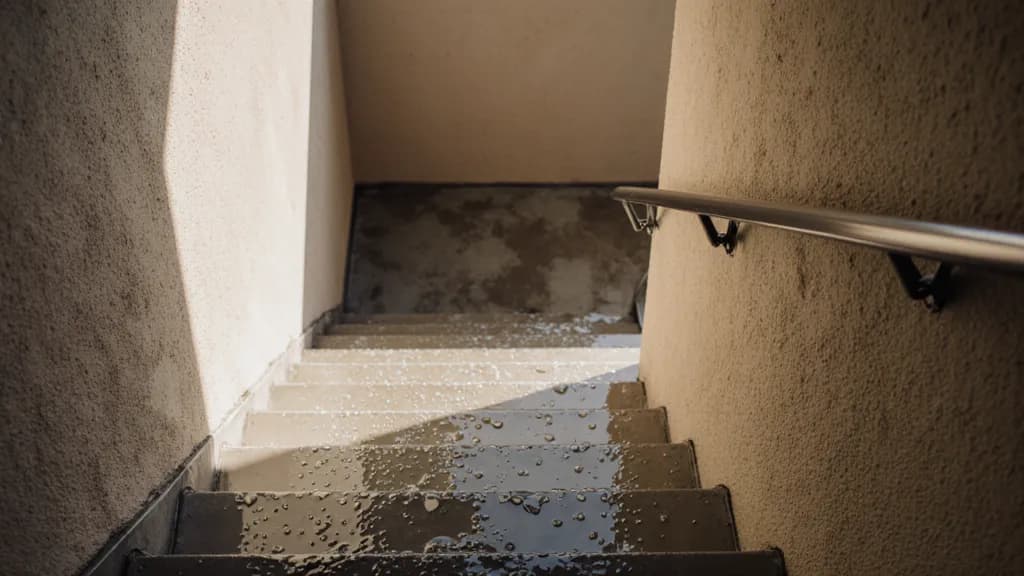
A wet floor in a grocery aisle, a broken step on an apartment stairwell, a dark parking garage with a missing handrail — these are the cases insurance companies fight hardest. Not because the injuries are minor, but because California law puts the burden on you to prove the property owner did something wrong.
That single word — negligence — is what separates a paid claim from a denied one. Here is how a slip and fall lawyer in California actually builds that proof, and what you can do in the first days after a fall to protect your case.
What California Law Requires You to Prove
California does not treat a property owner as an automatic insurer of everyone who walks onto the premises. Under Civil Code section 1714(a), a landowner owes a duty of ordinary care to keep the property reasonably safe. To win a premises liability claim in California, you generally have to establish four things:
- The defendant owned, leased, occupied, or controlled the property. This is often a landlord, a retailer, a property management company, or a public agency — sometimes more than one at once.
- A dangerous condition existed. A spill, a torn mat, an uneven walkway, inadequate lighting, an unmarked step-down.
- The defendant knew or should have known about it. This is the notice element, and it decides most cases.
- That failure substantially caused your harm.
One helpful point of California law: our state abolished the old categories that treated "invitees," "licensees," and "trespassers" differently. Since the California Supreme Court's decision in Rowland v. Christian, the question is simply whether the owner acted reasonably under the circumstances — not what label applies to your visit.
The Notice Problem — And How It Gets Solved
Most slip and fall accident claims are won or lost on notice. There are two kinds:
- Actual notice — someone told the store about the spill, an employee saw it, a prior complaint or work order exists.
- Constructive notice — the hazard was there long enough that a reasonably careful owner conducting reasonable inspections would have found and fixed it.
Constructive notice is why timing evidence matters so much. If a puddle had been on the floor for forty-five minutes in a busy store with no inspection log, that is a very different case from a spill that happened ninety seconds earlier.
Evidence that actually moves the needle
- Surveillance video. Many businesses overwrite footage in 14–30 days. A written preservation letter sent quickly is often the single most valuable step in the case.
- Sweep logs and inspection records. Retailers frequently keep them, and gaps in them are powerful.
- Incident reports prepared by the store — request a copy before you leave.
- Photographs from every angle, including what you were wearing on your feet and the lighting conditions.
- Witness names and phone numbers, not just "a manager was there."
- Maintenance and repair history, obtained later in discovery.
Deadlines You Cannot Miss
In California, the general statute of limitations for a personal injury claim — including slip and fall — is two years from the date of injury under Code of Civil Procedure section 335.1.
The critical exception: if you were hurt on government property — a city sidewalk, a county building, a public transit station, a public school — you generally must file an administrative government claim within six months, and only then can a lawsuit follow. Miss that six-month window and the claim is usually gone regardless of how strong the facts are.
There are narrower rules that can shorten or extend these periods depending on who the defendant is and when the injury was discovered. Deadlines are unforgiving, so confirm yours with an attorney rather than relying on a general article. You can also review California's official self-help guidance at selfhelp.courts.ca.gov.
What If You Were Partly at Fault?
You can still recover. California follows pure comparative negligence, which means your compensation is reduced by your percentage of fault but is not eliminated — even if you were found mostly responsible.
Practically, this is the defense's main play. Expect arguments that you were distracted by your phone, wearing unsuitable shoes, ignored a warning cone, or entered an area that was closed off. None of these end a case. They change the math, and they can often be answered with evidence about visibility, cone placement, and store layout.
What a Slip and Fall Settlement Actually Covers
There is no formula and no guaranteed number. A California claim generally seeks:
- Medical expenses, past and future
- Lost wages and reduced earning capacity
- Pain and suffering and loss of enjoyment of life
- Out-of-pocket costs such as transportation and home assistance
Realistically, value tracks the severity and documentation of the injury far more than the drama of the fall. A soft-tissue sprain that resolves in six weeks is a modest claim. A hip fracture requiring surgery, a herniated disc, or a traumatic brain injury falls into an entirely different range — and those cases often overlap with our catastrophic injury practice. Be skeptical of any firm quoting you a number before reviewing your records.
Steps to Take in the First 72 Hours
- Get medical care, even if you feel merely shaken. Gaps in treatment become the insurer's favorite argument.
- Report the incident in writing to the property owner or manager and ask for a copy.
- Photograph the hazard before it is cleaned up — this evidence disappears fastest.
- Keep the shoes and clothing you were wearing, unwashed.
- Do not give a recorded statement to the property's insurer before speaking with a lawyer.
- Write down what happened while your memory is fresh, including the time and the exact location.
Frequently Asked Questions
Are slip and fall cases hard to win?
They are harder than a typical rear-end car collision, because you must prove the owner knew or should have known about the hazard. They are very winnable when notice evidence exists — inspection logs, prior complaints, video, or a condition that clearly developed over time.
Do I need a lawyer for a slip and fall?
For a minor fall with no real injury, often not. Once there is emergency treatment, imaging, time off work, or any surgery recommendation, the gap between a self-handled claim and a represented one is usually substantial — largely because evidence preservation and liability investigation happen early and cannot be redone later.
How long after a slip and fall can you sue in California?
Generally two years from the date of the injury. Against a public entity, you usually must present a government claim within six months first. Confirm your specific deadline promptly, because exceptions cut both ways.
How long do slip and fall settlements take?
Most resolve in several months to a year or more. The biggest variable is your medical treatment — cases are typically not valued accurately until you reach maximum medical improvement or a clear prognosis exists.
How are slip and fall settlements calculated?
Insurers start with documented economic losses (medical bills, wage loss), then assess non-economic damages based on injury severity, treatment duration, permanence, and how the injury affects daily life. That total is then adjusted for comparative fault and the available insurance limits.
Talk to a California Premises Liability Attorney
If you were injured on someone else's property, the most valuable thing you can do right now is preserve evidence before it disappears. MMG Law Firm offers a free, no-obligation consultation, and injury cases are handled on a contingency fee — no fee unless we win. We represent injured clients across California. Contact us to have a lawyer review what happened and tell you honestly whether you have a case. You can also learn more about our slip and fall practice or browse our other practice areas.