
Delivery Driver Accidents · Personal Injury
Delivery Driver Accident Lawyer California: Who Pays?
Hit by a DoorDash, Amazon, or FedEx driver in California? Liability and insurance coverage depend on who employed them and what they were doing.
Mihran M. Ghazaryan··6 min read
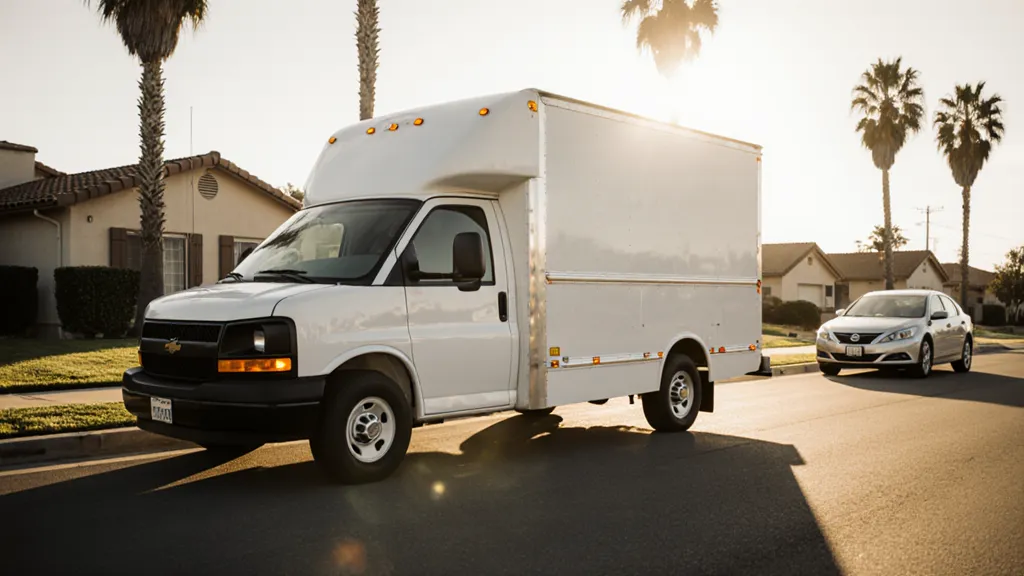
A van double-parked with its hazards on, a driver sprinting back to the wheel to keep a route on schedule, and suddenly your car is the one being loaded onto a flatbed. Delivery traffic has exploded across California, and the crashes that come with it are legally messier than a normal fender bender — because the person who hit you may not be the one who has to pay.
Why a Delivery Crash Is Not an Ordinary Car Accident
In a typical two-car collision, there are two drivers and two personal auto policies. A delivery driver accident can involve four or five parties at once: the driver, the company whose logo is on the van, a subcontractor that actually employs the driver, a commercial insurer, and sometimes a gig platform's contingent policy.
That complexity is not bad news. It usually means more available insurance coverage than a private driver carries. It also means the first adjuster who calls you is working to narrow the case down to the cheapest policy available — and often to the driver's personal insurance, which in California may carry limits of just $30,000 per person.
Who Is Liable After a Delivery Driver Hits You in California
Liability turns on the driver's employment relationship and on what they were doing at the moment of impact.
Employee Drivers
If the driver is a W-2 employee — a UPS driver, a grocery chain's in-house delivery staff, a driver working for an Amazon Delivery Service Partner — California's doctrine of respondeat superior generally makes the employer responsible for negligence committed within the scope of employment (Civil Code § 2338). The employer's commercial policy becomes the primary source of recovery, and California requires motor carriers of property to carry far more coverage than private drivers: generally $300,000 for lighter vehicles and $750,000 or more once a vehicle exceeds 10,000 pounds (Vehicle Code § 34631.5).
You may also have a claim against the company for its own negligence — negligent hiring, inadequate training, unrealistic delivery quotas, or poor vehicle maintenance. These "direct negligence" theories matter because they survive even when a company tries to distance itself from the driver.
Gig and App-Based Drivers
DoorDash accident and Uber Eats accident claims work differently. Under Proposition 22, app-based delivery drivers in California are generally treated as independent contractors, which weakens a vicarious-liability argument against the platform. But the platforms carry contingent auto liability coverage that can apply while a driver is on an active delivery — typically as excess coverage that sits above the driver's personal policy.
The practical consequence: the driver's status at the moment of the crash decides which policy pays. Was the app on? Was food already picked up? Was the driver heading home after logging off? Those minutes are worth six figures in coverage, and the answer lives in data only the company has.
Federal and Government Vehicles
If a USPS truck hit you, you are in a different system entirely. Claims against the Postal Service fall under the Federal Tort Claims Act, which requires an administrative claim (Form SF-95) presented to the agency within two years, and then a lawsuit within six months of a final denial. A city or county vehicle triggers the California Government Claims Act and a much shorter six-month claim deadline.
The Evidence That Disappears First
Delivery cases are won with data, and that data is on a retention schedule. Within days of a crash, a lawyer should send a preservation letter demanding:
- App and dispatch records showing delivery status, timestamps, and route assignment
- Telematics and GPS data — speed, braking, and hard-stop events
- In-cab and forward-facing camera footage, which many fleets overwrite in as little as a week or two
- Driver qualification and training files, plus hours worked that shift
- Vehicle maintenance and inspection records
For larger delivery trucks operating in interstate commerce, Federal Motor Carrier Safety Administration rules add hours-of-service logs and driver-qualification requirements — a violation there is powerful evidence of negligence. The same investigative approach applies to heavier vehicles in our truck accident cases, and the coverage-tier analysis mirrors what we do in rideshare accident claims.
Deadlines That Control Your Case
- Personal injury: generally two years from the date of injury (Code of Civil Procedure § 335.1)
- Property damage: generally three years
- Claims against a California public entity: generally a written claim within six months
- USPS and other federal agencies: administrative claim within two years, suit within six months of denial
These are general rules and exceptions exist — for minors, for injuries discovered later, and for certain contract-based claims. Have your specific dates reviewed rather than assuming. The California Courts self-help center at selfhelp.courts.ca.gov is a useful starting point for understanding the process.
What a Delivery Accident Claim Can Recover
California allows recovery for both economic and non-economic harm:
- Emergency care, surgery, physical therapy, and projected future treatment
- Lost income and, in serious cases, diminished future earning capacity
- Pain, suffering, and loss of enjoyment of life
- Vehicle repair or replacement, rental costs, and out-of-pocket expenses
Two California rules shape the number. Pure comparative negligence means your recovery is reduced by your own percentage of fault but never eliminated — being partly at fault does not end your claim. And under Civil Code § 3333.4, a driver who was uninsured at the time of the crash is generally barred from recovering non-economic damages, even when the other driver was entirely at fault. Any realistic valuation depends on injury severity, available policy limits, liability clarity, and medical documentation — not on a formula.
Frequently Asked Questions
Who is liable for a delivery driver accident — the company or the driver?
Both may be. If the driver was an employee acting within the scope of employment, the company is generally responsible alongside the driver. If the driver was an app-based contractor, the platform's contingent policy may apply instead of vicarious liability. Most cases name every potentially responsible party until the relationships are documented.
What happens if the delivery driver was off shift or logged out?
Coverage usually drops to the driver's personal auto policy, which may have low limits. That is exactly why app and telematics records matter — and why your own uninsured/underinsured motorist coverage may become the difference between a small recovery and a full one.
Does a personal auto policy even cover deliveries?
Frequently not. Standard personal policies often exclude commercial or livery use, which is why platforms offer contingent coverage and why insurers fight over which policy is triggered. A denial from the driver's insurer is not the end of the analysis.
Should I give the delivery company's adjuster a recorded statement?
You are not required to give a recorded statement to another party's insurer, and doing so early — before your injuries are fully diagnosed — often works against you. Get advice first.
How long does a delivery accident claim take to resolve?
Straightforward claims with clear liability may resolve in a few months. Cases involving disputed employment status, multiple insurers, or serious injuries commonly take a year or more, particularly if a lawsuit is filed.
Talk to a California Delivery Accident Lawyer
If a delivery van, box truck, or gig driver injured you anywhere in California, the window for preserving app data and camera footage is short. MMG Law Firm offers a free, no-obligation consultation, and injury cases are handled on a contingency fee — no fee unless we win. We serve clients throughout California. Contact us to have your case reviewed, or learn more about our practice areas.