
motorcycle-accidents · beverly-hills
How a Beverly Hills Motorcycle Accident Lawyer Can Maximize Your Compensation
What actually drives the value of a California motorcycle claim — and the one rule most riders have never heard of.
Mihran M. Ghazaryan··10 min read
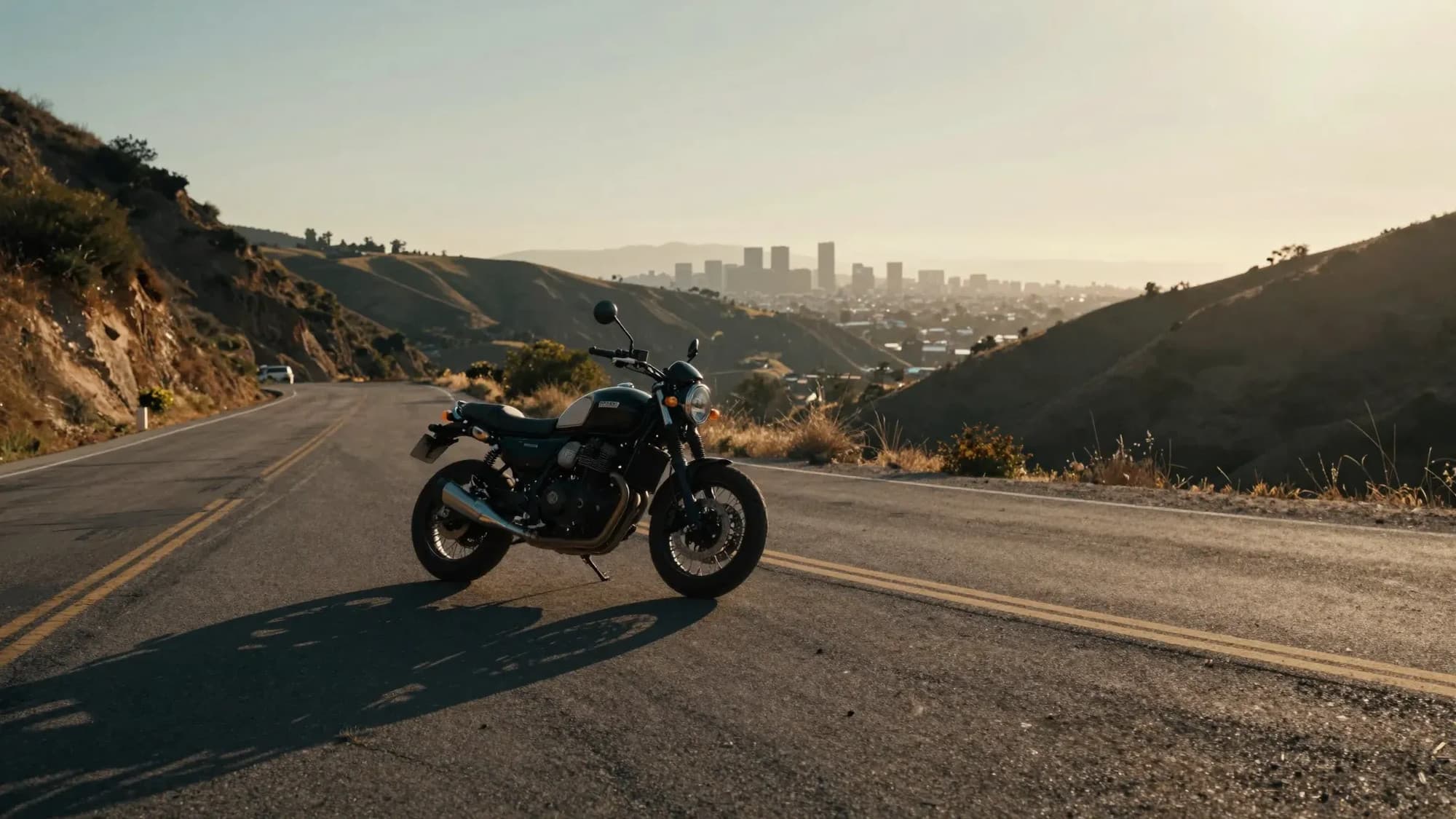
A motorcycle crash rarely ends when the ambulance leaves. What follows is months of treatment, an insurance adjuster who calls early and often, and a claim whose value is decided by evidence you may not know you need to preserve. Riders in Beverly Hills face an additional headwind: the reflexive assumption that the person on two wheels must have been going too fast.
That assumption is not the law, but it shapes how claims get evaluated. A Beverly Hills motorcycle accident lawyer's job is to replace assumption with proof — and to build the record that determines what your case is actually worth before the insurer sets its own number.
This guide explains how that work is done: what drives compensation, how liability is established under California law, what you can recover, and how to evaluate the attorney you hire. Nothing here is a promise about your case. Every claim turns on its own facts.
Understanding the Role of a Motorcycle Accident Lawyer in Beverly Hills
People often assume a lawyer's value is negotiation — that the job is arguing harder for a bigger number. Negotiation matters, but it is the last step, and it is almost entirely constrained by work done in the first weeks.
A motorcycle accident lawyer in Beverly Hills is really doing four things. First, preserving evidence that disappears. Traffic and security camera footage from commercial corridors is frequently overwritten within days. Vehicle event data recorders get lost when a car is repaired or totaled. Skid marks and gouge marks weather. A preservation letter sent in week one can be worth more than any argument made in month ten.
Second, establishing the mechanism of the crash. Motorcycle cases turn on physics that a general adjuster is not equipped to reconstruct — sight lines, closing speed, perception-reaction time, and whether a driver's turn was survivable for a rider who had no cage around them.
Third, documenting the full arc of your medical future. A settlement closes your claim permanently. If you settle before anyone has projected the revision surgery, the hardware removal, or the years of reduced earning capacity, that cost becomes yours.
Fourth, managing the liens. Health insurers, Med-Pay carriers, hospital liens, and Medicare all assert repayment rights against your recovery. The gross number in a settlement is not the number you keep. Lien negotiation is often where a meaningful share of a rider's net outcome is won or lost, and it is invisible from the outside.
Key Factors Influencing Compensation in Motorcycle Accident Cases
Two riders with similar injuries can end up with very different outcomes. The variables that move the number most are liability clarity, the quality of medical documentation, available insurance coverage, and — critically for motorcyclists — your own insurance status at the moment of the crash.
The Importance of Liability in Personal Injury Claims
California uses pure comparative negligence. You are not barred from recovering because you were partly at fault; your recovery is reduced by your percentage of responsibility. A rider found 30% at fault on a claim valued at $100,000 recovers $70,000. There is no cutoff — even a rider assigned majority fault recovers something.
This makes every percentage point worth fighting for, and it explains why insurers invest so heavily in assigning fault to riders. The most common tactic is lane-splitting. California expressly permits it under Vehicle Code section 21658.1, and splitting lanes is not negligence in itself. But "legal" and "reasonable under the conditions" are different questions, and adjusters routinely conflate them. Rebutting that argument means reconstructing speed differential and traffic conditions — not simply citing the statute.
Two deadlines govern whether you get to make the argument at all. Under Code of Civil Procedure section 335.1, you generally have two years from the injury to file suit. But if a public entity contributed — a dangerously designed intersection, an unrepaired road defect, a municipal vehicle — Government Code section 911.2 requires an administrative claim within six months. Miss that shorter window and the claim against the public entity is typically gone regardless of how strong it was.
Types of Compensation Available for Victims
California recognizes two categories of compensatory damages.
Economic damages cover measurable financial loss: emergency and ongoing medical treatment, future surgeries and rehabilitation, assistive equipment and home modification, lost wages, and diminished earning capacity. Note that under Howell v. Hamilton Meats & Provisions (2011), recovery for medical expenses is generally limited to amounts actually paid or incurred — not the hospital's sticker price. This is why the billing record and the payment record both matter.
Non-economic damages cover pain, suffering, disfigurement, and loss of enjoyment of life. For riders with road rash scarring, permanent orthopedic limitation, or traumatic brain injury, this is frequently the larger component.
Here is the provision most riders have never heard of, and it is the single most consequential rule in California motorcycle claims. Under Civil Code section 3333.4 — Proposition 213 — an uninsured motorist is barred from recovering non-economic damages, even when the other driver was entirely at fault. An uninsured rider with catastrophic injuries can be limited to medical bills and wage loss alone, losing the pain-and-suffering component entirely. If you ride, maintaining continuous insurance is not merely a licensing requirement; it protects the largest part of your potential recovery.
Coverage limits also cap reality. When the at-fault driver carries California's minimum policy, your own uninsured/underinsured motorist coverage may become the primary source of recovery. Reviewing every applicable policy — yours, the driver's, any employer's if the driver was working, and any umbrella policy — is routine early-case work.
Punitive damages are available only for despicable conduct with conscious disregard for safety, such as a drunk driver. They are the exception, not the expectation.
What Separates the Best Motorcycle Accident Lawyer in Beverly Hills
Any firm can say it handles motorcycle cases. When people search for the best motorcycle accident lawyer in Beverly Hills, what they should be evaluating is narrower and more verifiable than marketing language.
Experience and Expertise in Motorcycle Accident Cases
Motorcycle claims are not car claims with a different vehicle. Ask a prospective motorcycle injury attorney in Beverly Hills concrete questions:
- Do you handle motorcycle cases regularly, or occasionally? Rider bias is a real jury and adjuster dynamic, and countering it is a learned skill.
- How do you approach a lane-splitting comparative-fault argument? A specific methodology beats reassurance.
- Will you retain an accident reconstructionist, and at whose cost? On contested liability with serious injuries, the answer should usually be yes.
- Who actually handles my file? Ask whether the attorney you are meeting will be the one working the case.
- How do you handle lien negotiation? This directly determines your net.
- What is your fee, and what costs come out of my share? Contingency percentages and cost treatment vary. Get it in writing.
Language access matters too. Being able to discuss a claim in your first language — MMG Law Firm works in English, Armenian, and Russian — changes the quality of the information a lawyer can gather from you, which changes the quality of the claim.
One point of transparency: MMG Law Firm is based in Glendale and serves Beverly Hills clients from that office. Any firm implying a Beverly Hills storefront it does not staff is telling you something about how it operates.
Client Testimonials and Success Stories
Reviews are useful, but read them for pattern rather than praise. Look for repeated mentions of communication — the most common complaint against personal injury firms is not outcome, it is silence. Look for reviews describing the same attorney you would be hiring. Be appropriately skeptical of any firm advertising a specific result as if it predicts yours; California requires that past results not create unjustified expectations, because they genuinely do not transfer between cases.
Verify independently through the State Bar of California, which publishes licensure status and any public discipline for every attorney, and through established directories rather than a firm's own curated selection.
Steps to Take After a Motorcycle Accident
Immediate Actions to Protect Your Rights
Get medical attention the same day, even if you feel able to walk away. Adrenaline masks injury, and traumatic brain injuries and internal bleeding frequently present late. A gap between the crash and first treatment is the single most common argument insurers use to devalue a claim.
Report the crash. A police report creates a contemporaneous record. If you are able, photograph the scene widely — vehicle positions, sight lines, traffic controls, road surface, your gear, and your injuries. Damaged gear is evidence; do not discard a cracked helmet or torn jacket.
Get independent witness contact information. Witnesses leave, and their accounts are often what defeats a rider-blame narrative.
Be careful with the other driver's insurer. You are not obligated to give a recorded statement to the at-fault carrier, and early statements made on pain medication are routinely used to establish comparative fault. Decline politely and refer them to counsel.
Do not post about the crash. Social media content is discoverable and is regularly used to contradict injury claims.
Preserve the motorcycle itself. Do not authorize repairs or let the insurer dispose of it before it has been inspected.
How a Beverly Hills Personal Injury Lawyer Can Assist
Once retained, a Beverly Hills personal injury lawyer takes over the parts of this you should not be managing while recovering. That means issuing evidence preservation demands before footage is overwritten, identifying every applicable insurance policy, and becoming the single point of contact so adjusters stop calling you directly.
It also means coordinating treatment access. Riders without health coverage, or facing high deductibles, often delay care they need — which harms both their recovery and their claim. Attorneys can frequently arrange treatment on a lien so care proceeds while the claim is pending.
Then the file is built: medical records and billing assembled, wage loss documented through employment records, treating physicians asked for prognosis and future care projections, and where warranted, life care planners or economists retained to quantify long-term cost. Only after your medical condition is stable enough to project — a point clinicians call maximum medical improvement — does a considered demand make sense. Settling before then means guessing at your own future.
Most claims resolve without trial. But the credible willingness to file suit is itself leverage, and adjusters track which firms actually litigate.
Common Questions About Hiring a Motorcycle Accident Lawyer in Beverly Hills
What does a motorcycle accident lawyer in Beverly Hills CA charge? Personal injury work is almost always contingency-based: no fee unless there is a recovery. Percentages and how case costs are handled vary between firms, so ask for the fee agreement in writing and confirm whether costs are deducted before or after the fee is calculated. That single detail can change your net meaningfully.
How long do I have to file? Generally two years from the crash under Code of Civil Procedure section 335.1 — but only six months if a public entity is involved, under Government Code section 911.2. Because the shorter deadline is easy to miss and hard to undo, early evaluation matters more than most people expect.
Will lane-splitting ruin my claim? No. It is lawful in California under Vehicle Code section 21658.1. Insurers still raise it to argue comparative fault, and because California applies pure comparative negligence, even a partially at-fault rider recovers — reduced by their share.
I was uninsured when I crashed. Do I still have a case? Possibly, but Proposition 213 (Civil Code section 3333.4) bars uninsured motorists from recovering non-economic damages. Economic losses such as medical bills and lost wages may still be recoverable. This is worth reviewing with a motorcycle injury attorney in Beverly Hills promptly, because coverage questions shape strategy from day one.
Do I have to talk to the other driver's insurance company? No. You are not required to give the at-fault carrier a recorded statement, and doing so early — often while medicated — is a common way riders undercut their own claims.
How long will my case take? It depends primarily on your medical course. Resolving before your condition stabilizes means estimating future care blind. Clear-liability cases with completed treatment can resolve in months; disputed-liability or catastrophic-injury cases take considerably longer.
Contact a Motorcycle Injury Attorney in Beverly Hills Today
If you were injured riding in or around Beverly Hills, the useful next step is a conversation — before the two-year statute runs, before a six-month government claim deadline passes unnoticed, and before footage is overwritten.
MMG Law Firm offers free consultations and handles injury matters on contingency: no fee unless we recover for you. Attorney Mihran M. Ghazaryan works with riders across California in English, Armenian, and Russian.
Request a free case review or read more about our Beverly Hills motorcycle accident practice.