
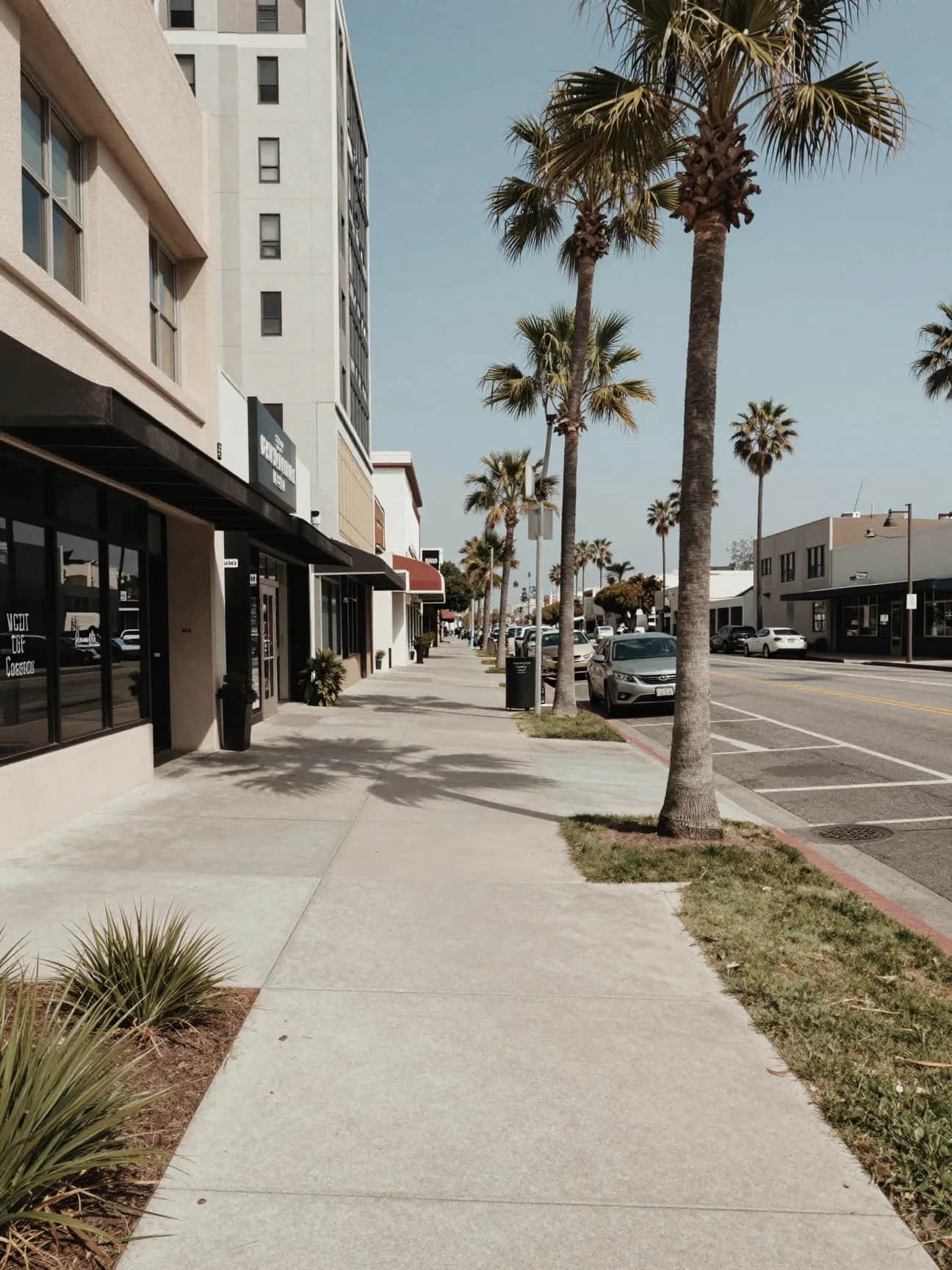
Pedestrian Accidents matters in Beverly Hills
Few places in California concentrate foot traffic like Beverly Hills, where Rodeo Drive, Canon Drive, and the blocks along Wilshire and Santa Monica Boulevards draw crowds of shoppers and visitors on foot. Valet stands, double-parked rideshares, and drivers craning to find parking create a constant stream of conflict points between vehicles and people crossing the street.
Tourists unfamiliar with signal timing and locals rushing between luxury storefronts share crosswalks with turning cars, and the result is a steady risk of serious pedestrian injury. When a driver fails to yield, California law is firmly on the pedestrian's side.
Why pedestrian crashes happen here
- Heavy foot traffic on Rodeo Drive, Canon Drive, and the surrounding retail blocks
- Valet-dense corners where vehicles pull in and out across walkways
- Turning drivers who fail to yield in marked crosswalks on Wilshire and Santa Monica Blvd
- Tourists unfamiliar with the grid and signal patterns
- Double-parked rideshares forcing pedestrians around blind spots
California crosswalk right-of-way
Under Vehicle Code section 21950, drivers must yield the right-of-way to pedestrians crossing within a marked crosswalk or an unmarked crosswalk at an intersection. Pedestrians still have a duty not to suddenly leave a curb into the path of a close vehicle, but the core rule places responsibility on drivers to watch for and yield to people on foot. Under pure comparative negligence, a pedestrian found partly at fault can still recover damages reduced by their share.
Injuries and case types
- Fractures and pelvic injuries from direct impact
- Traumatic brain injuries from falls and strikes
- Spinal cord injuries
- Internal injuries
- Wrongful death in the most severe cases
Compensation and a key government deadline
California law allows injured pedestrians to recover economic damages such as medical bills, future care, and lost income, along with non-economic damages for pain, suffering, and diminished quality of life. One critical issue is whether a public entity shares responsibility, for example through a dangerous crossing or signal. If a government body is involved, Government Code section 911.2 generally requires filing an administrative claim within six months, far shorter than the usual deadline. We do not guarantee outcomes, but we identify every responsible party early.
Deadlines, venue, and how we help
Most pedestrian claims carry a two-year deadline under Code of Civil Procedure section 335.1, while a public-entity claim falls under the six-month rule of Government Code section 911.2. Beverly Hills cases proceed in the Los Angeles County Superior Court, with Westside matters commonly heard at the Santa Monica Courthouse or the Stanley Mosk Courthouse downtown. From our Glendale office about fifteen miles away, MMG Law Firm preserves evidence, secures camera footage, and pursues every avenue of recovery. We offer free consultations in English, Armenian, and Russian on contingency, so you pay nothing unless we win.
Our attorney
How Mihran M. Ghazaryan helps with pedestrian accidents
Pedestrian injuries are usually severe, and the right-of-way analysis is everything. Mihran M. Ghazaryan investigates the crosswalk, signal timing, and roadway conditions, and where a city vehicle or dangerous public road is involved he protects the short six-month government-claim deadline that can otherwise end a case before it starts. He coordinates your care and documents the full extent of your losses.
Types of pedestrian accidents we handle
Crosswalk strikes
Marked or unmarked, California pedestrians retain right-of-way. We identify the sight-line failures and signal timing that tell the real story.
Parking-lot and back-over collisions
Often involve fleet vehicles, rideshare drivers, or delivery contractors. Surveillance footage matters and disappears fast.
Hit-and-run pedestrian claims
Your own UM/UIM policy may reach. Even when the driver is unidentified, recovery is often possible.
Damages
What compensation can cover
Every pedestrian accident claim is different, but California law allows injured plaintiffs to seek several categories of damages. We build each one with documentation — medical records, wage statements, expert opinions — so nothing is left on the table.
Medical expenses
Emergency care, hospitalization, surgery, rehabilitation, and the future treatment your providers say you'll need.
Lost wages
Income you lost while recovering — and, where the injury affects your ability to work, diminished future earning capacity.
Pain and suffering
Compensation for physical pain, emotional distress, and the ways the injury has changed how you live day to day.
Property damage
Repair or replacement of your vehicle and other property damaged in the incident.
Out-of-pocket costs
Transportation to appointments, medical equipment, household help, and the other expenses an injury forces on you.
How we work
- 1
Free, no-pressure consultation
We listen first. We answer your questions. There is no fee for the initial conversation — and you decide whether to engage us at the end of it.
- 2
Investigation and evidence preservation
Police reports, scene photos, witness statements, vehicle data, surveillance video, medical records. The earlier we collect, the harder it is for the other side to reshape the story later.
- 3
Treatment, demand, and negotiation
We coordinate with your providers, document the full extent of damages — medical, lost income, pain — and present a demand backed by evidence. We push back firmly when an insurer lowballs.
- 4
Litigation when necessary
Most matters settle. When an insurer refuses to be reasonable, we file. Preparing every case as if it will be tried is what makes the settlement number move.
What to do right away
- Accept emergency medical evaluation on scene, even if you can walk.
- Take photos of the location — crosswalk, signs, signals — and the vehicle's resting position.
- Get witness names; pedestrian witnesses are common but rarely contacted by police.
- Save the clothing you were wearing — it may be evidence.
- Call us before giving any statement.
The information on this website is for general information purposes only. Nothing on this site should be taken as legal advice for any individual case or situation. This information is not intended to create, and receipt or viewing does not constitute, an attorney-client relationship.
Deadlines that matter
Most California personal-injury claims must be filed within two years of the injury (Code of Civil Procedure §335.1). Miss the window and the court will almost always dismiss the case, no matter how strong it is.
Claims against government entities are much shorter — generally a written claim within six months (Government Code §911.2). Crashes involving city vehicles, public buses, or dangerous public-road conditions can fall under this rule.
Exceptions exist in both directions — discovery rules, minors, continuing violations, out-of-state defendants — so don't assume your deadline has passed or that you have time to spare. Call (818) 539-7969 and we'll tell you exactly where you stand.